
 By, Kristyn Simpson
With Global Champagne Day fast approaching (yes, there is a Global Champagne Day–the 4th Friday in October), I thought we could traipse down the vineyard-lined memory lane of Champagne’s origins.
We begin in 1697 when Champagne is said to have been invented by Dom Perignon (1), a Benedictine Monk in Champagne, France, who utilized a technique of bottling wine before the fermentation was complete, aptly named “méthode champenoise”. This seemed to be done by accident, and the wines were originally considered defective or faulty. However, the bottles that subsisted became a novelty with French Royalty, and by the early 18th century, Champagne grew to be the favorite drink of the French upper crust. By the early 1700s, Champagne houses were popping up all over to capitalize on this newfound popularity and demand, with notable houses like Moet in 1743 and Clicquot in 1772. (2)
Madame Clicquot
Speaking of Clicquot, Veuve Clicquot has a remarkable origin story. In summary, Barbe Nicole married Francoise Clicquot, whose family owned a small winery and textile business, with a heavy focus on the textile business. She and Francoise decided to learn more about wine and try to grow the winery together, but the Napoleonic Wars got in the way. In her late 20s, her husband Francoise dies, and “Madame Clicquot” becomes a widow with a young daughter and a failing winery (Francoise willed the vineyard to her). Fast-forward a few years, the wars are winding down, and our protagonist is running out of options to support herself and her daughter. Determined to make the winery a success, she smuggles over 10,000 bottles to Russia by way of Amsterdam to beat the competition to market after the war is over. By the time they ink the treaties, she’s selling bottles left and right with no competition for weeks. (3)
Victory, of course, brings new challenges. The existing processes wasted time, product, and even bubbles, so Madame Clicquot worked to find a new technique for removing the yeast from the second fermentation (where all the fun bubbles come from). She created a process known as riddling (still used in the Champenoise Method today), which gathered all the yeast at the neck of the bottle, making removal fast and easy. This also created less waste, saving more Champagne from each harvest, and enabled her expansion into the mass-market luxury world! (3) If you want to hear more about this incredible story, check out one of our previous book club selections, The Widow Clicquot by Tilar J. Mazzeo.
Champagne Widows
So where does “Veuve” come in? Veuve means widow, and the history of widows in the Champagne world is fascinating! Widows were the only women allowed to be business owners. Unmarried women were dependent on their fathers or brothers, and married women were dependent on their husbands. Only widows were allowed to have bank accounts, own property and businesses, and travel solo. (4) #FightThePatriarchy
Champagne Widows have created some of the most distinct Champagnes still on the market. Louise Pommery is credited with creating Brut Champagne in 1874, a drier Champagne for the English, who did not care for the sweeter Champagne at the time. (4) Mathilde Emilie Laurent-Perrier’s husband inherited the Champagne house after his employer died without an heir (no nepo babies here) and then left it to her when he died in 1887. She took Brut even closer to bone dry by creating the first “sans sucre” vintage with no sugar prior to the second fermentation. (5)
Did You Know?
Aside from accidental discoveries and widows, there are many more captivating facts about Champagne. Did you know that 300 MILLION bottles of Champagne are produced every year? Did you know that a standard bottle of Champagne holds approximately 49 million bubbles – almost 10 million bubbles per glass!? (1)
Did you know that Champagne can only be called “Champagne” if it is grown in the Champagne region in France and bottled within 100 miles of Champagne? Crémant is from other areas in France, Prosecco is from Veneto, Italy, and Cava is from Catalonia, Spain. American sparkling wines must be sold as “sparkling wine” since the U.S. and the European Union entered into an actual legal agreement saying as such in 2005. (“Champagne” only being from the Champagne region was previously included in the Treaty of Versailles – because, priorities…). The one stipulation to this new agreement was that if a U.S. winery was utilizing the term “Champagne” prior to 2006, they were allowed to call it “California Champagne”. (6)
Did you know that the first Champagne corks were made with hemp to prevent bottles from exploding? A French inventor created the wire cage to make them more secure (2) —which is important because a Champagne cork can reach almost 25 MPH!?! (PSA: Open away from your face). (1)
Did you know that WineStyles Norwood Park is hosting a Champagne Telmont event on Friday, November 15th, at 7:00 PM?!? Well, we are! Join us to sample five Champagnes and enjoy some traditional pairings of fried chicken and caviar! Get more details here.

(1) https://thechampagnecompany.com/blog/champagne-facts.html
(2) https://thechampagnecompany.com/blog/history-of-champagne.html#mistake
(3) https://www.smithsonianmag.com/arts-culture/the-widow-who-created-the-champagne-industry-180947570/
(4) https://www.bbc.com/travel/article/20230301-the-little-known-history-of-champagne
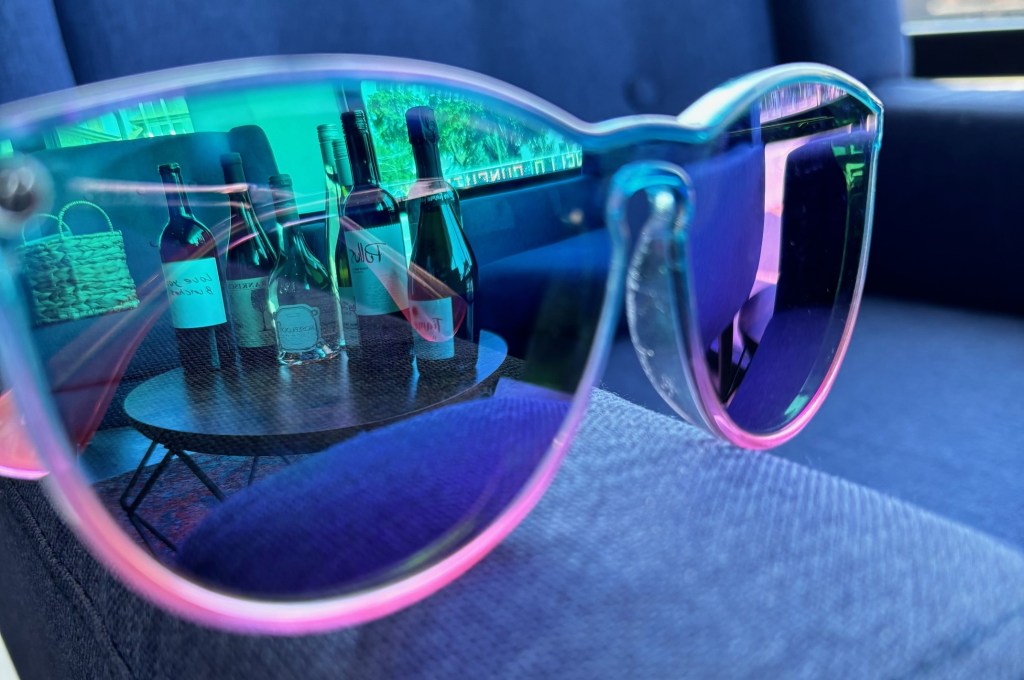
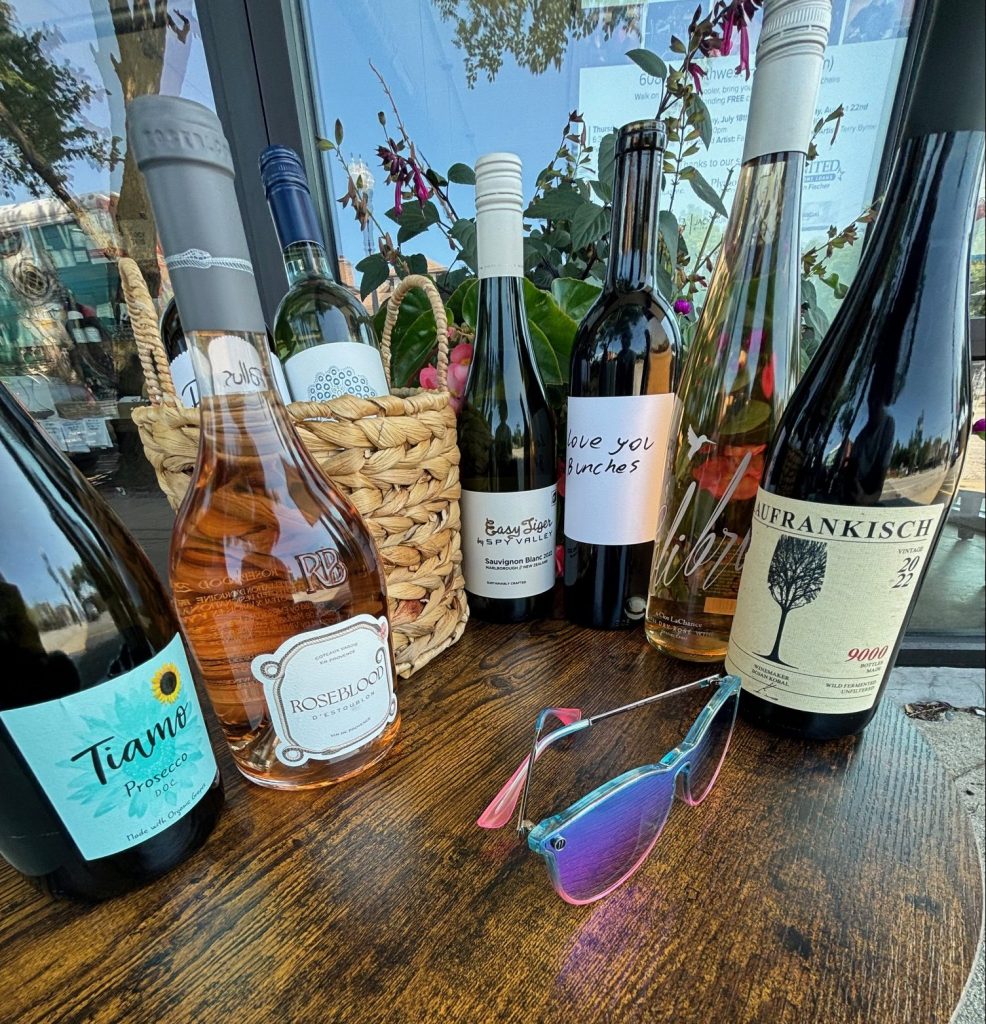
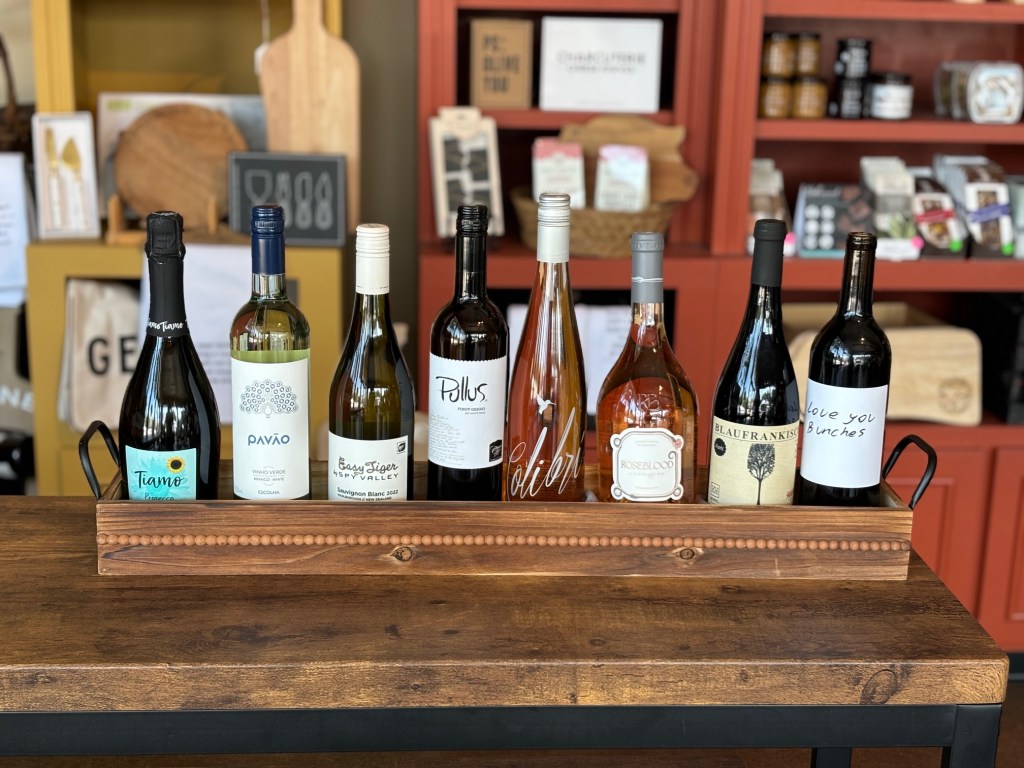
 Pullus is a Slovenian Pinot Grigio that is actually light pink in color due to longer skin contact. You’re greeted with aromas of pear, nectarine, and green melon. The palate is perfectly balanced with bright acidity and minerality. This porch pounder pairs amazingly with a luxurious charcuterie board.
 Calibri is dry Rosé from California but made in the Provençal style. Notes of honeydew melon and strawberry on the nose are met with flavors of watermelon and strawberry on the palate. Could it get more Summer-sounding than strawberry and watermelon?!? Pair this porch pounder with a backyard barbecue!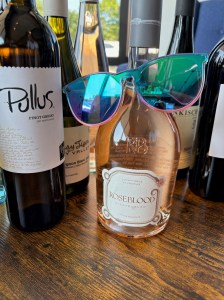
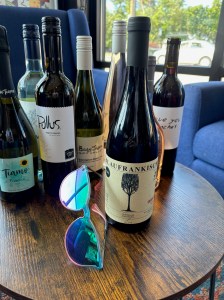 Blaufränkisch is a lighter-bodied red wine with bold and bright acidity. On the nose, you’ll get red currant, black cherry, and blackberry notes. On the palate, the acidity wakes up the fruit flavors. While it’s delicious on its own, this porch pounder really shines with game day foods like bratwurst or a soft pretzel with mustard.
 Love You Bunches is a Sangiovese with a 12.5% ABV (uncharacteristically low for red wine) that has notes of fresh red berry fruit, cherries, lychee, and plum. With its tartness and acidity, this porch pounder pairs really well with desserts! I’m thinking some white chocolate mousse or crème brulée!
 WineStyles Tasting Station