March Premium Club

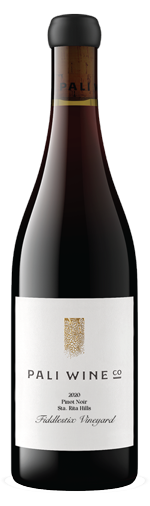
Pali-2020-Fiddlestix-Vineyard-Pinot-Noir-bottleMellow style logoPali Wine Co.
Fiddlestix Vineyard
Pinto Noir 2020
Santa Rita Hills, California

MELLOW WINE STYLE

In the glass, the Fiddlestix Pinot Noir displays a luminous ruby hue hinting at its intensity. The nose is expressive and layered: ripe red cherry, wild raspberry, and strawberries mingle with rose petal, black tea, and a whisper of coastal sage. On the palate, a vibrant core of cranberry and pomegranate is framed by notes of cinnamon, clove, and a touch of forest floor. The vineyard’s marine influence lends a subtle vein of minerality and bright acidity that lifts the wine’s plush texture. Fine-grained tannins and well-integrated oak provide structure, leading to along, polished finish.

Elegant yet grounded, this Pinot Noir captures the distinct character of Fiddlestix—its cool maritime climate and sandy clay loam soils. It’s a wine of poise and precision, made with an eye toward balance, and will reward both immediate enjoyment and several years of thoughtful cellaring.

Varietal: Pinot Noir
Alcohol: 14.6% alcohol / volume
Production: 150 cases made
Mellow Style Pairings: Pasta, veal, beef, pork or lamb

THE FIDDLESTIX STORY:
From the famed Fiddlestix Vineyard in the Sta. Rita Hills. Fiddlestix sits in a cool pocket of Santa Barbara County where consistent pacific breezes, morning fog, and ancient marine soils nurture Pinot Noir of exceptional depth and elegance. In 2020, the vineyard’s low-yielding vines delivered small, concentrated clusters brimming with flavor. The winery hand-harvested at optimal ripeness to preserve natural acidity, then gently destemmed all fruit for a pure, transparent expression. After a five-day cold soak, fermentation unfolded in open-top tanks with selected yeast and daily punchdowns by hand to extract color and flavor while maintaining silkier tannins. Each clone (115, 667, and 777) was harvested, fermented, and aged separately. The wine matured for 18 months in French oak barrels, 50% new and 50% neutral, allowing structure and spice to integrate without overshadowing the fruit. The final blend was assembled just before bottling.


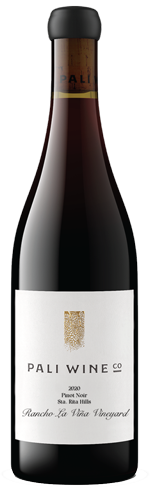
Pali-2020-Pinot-Noir-Rancho-La-Vina-Vineyard-bottleMellow style logoPali Wine Co.
Rancho La Viña Vineyard
Pinot Noir 2020
Santa Rita Hills, California

MELLOW WINE STYLE

This vintage captures the richness and depth of Ranch La Viña Vineyard. Aromas of ripe blackberry, black cherry, and plum are layered with hints of violet, baking spice, and forest floor. The palate is plush and concentrated, delivering bold, dark fruit flavors balanced by vibrant acidity and refined tannins, leading to a long, structured finish.

Varietal: Pinot Noir
Alcohol: 14.7% alcohol / volume
Production: 122 cases made
Mellow Style Pairings: Pasta, veal, beef, pork or lamb

THE RANCHO LA VIÑA VINEYARD PINOT NOIR STORY:
The ‘Rancho La Viña Vineyard’ Pinot Noir hails from a remarkable ranch with a rich history and abundance of life. The ranch is farmed locally for its heirloom tomatoes, squash, and green beans grown beneath a historic, certified organic walnut orchard. Crowning this beautiful property is a small vineyard exclusively planted to Pinot Noir. Rancho La Viña’s roots run deep, with ownership by the Cooper family dating back to 1872. The Pali Wine Co. team have proudly worked with this site since 2010, and the vineyard consistently produces one of the most fruit-drive expressions in their lineup. Fertile soils, a natural spring, and the specific clonal selections of 115 and 777 contribute to the darker, brooding berry character found in this wine. Grapes were hand-harvested, destemmed, and fermented in small open-top tanks, then aged for 18 months in 50% new French oak barrels before bottling.

ABOUT THE WINERY:
What started as backyard dinners and a love of wine has grown into a family-run winery with roots across California’s Central Coast. Founded by Tim and Judy Perr in 2005, Pali Wine Co. blends tradition, curiosity, and community. From their early days in a Lompoc garage to their estate vineyard, natural wine project, and coastal tasting rooms. Today, Pali is guided by two generations of the Perr family, their longtime winemaker Aaron Walker, and a commitment to wines that reflect people, place, and purpose. Learn more here.

The Perr Family, Pali Wine Co.

Information & Photos © Pali Wine Co. – All Rights Reserved


Wine club logoJoin our PREMIUM WINE CLUB, enjoy amazing wines every other month. Plus, you’ll receive 10% off all retail wine purchases! 

Learn more about our Premium Club >

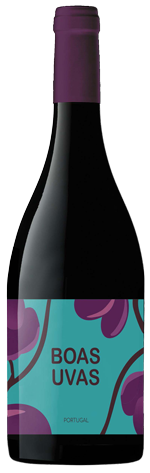
Boas Uvas Red

MARCH WINE CLUB:

Bold wine Style logoBoas_Uvas_Red_bottleTaboadella Winery
Boas Uvas
Red

Dão, Portugal

BOLD WINE STYLE

Boas Uvas Red displays a deep ruby color, with aromas of blue fruits, plums, and blackberries, accompanied by subtle floral and spicy notes from its aging in wood. With a well-defined structure, it reveals smooth yet firm and well-integrated tannins. It boasts lively acidity and a long, elegant finish.

WINE DETAILS:

  • Varietals: Touriga Nacional, Jaen, Tinta Roriz, Alfrocheiro
  • Appellation: Dão, Castendo sub-region
  • Alcohol: 13.5% vol.
  • Producer: Bucozal
  • Recommended Serving Temperature: 60.8ºF-64.4ºF
  • Pairing Suggestion: Pairs well with game meats, lamb, veal dishes, aged cheeses, and cuisine with intense flavors.

VINEYARD HARVEST:
From September 6th to October 3rd. An atypically cold spring, combined with the delayed pruning decided by the technical team, resulted in a slight delay in the vegetative cycle. This strategy successfully avoided exposure to the late frosts that occurred during the first half of April in the Dão Demarcated Region. Flowering took place under sunny conditions, enabling a generous berry formation with fully developed clusters. June, July, and August were dry months, with high daytime temperatures, but cool nights that allowed the clusters to develop with balanced ratios. These temperature variations, along with perfectly adapted and well-established vineyards and the richness of water in the subsoil, facilitated a balanced ripening process. This resulted in an exceptional grape quality, reflected in wines with a unique profile and richness.

VINIFICATION AND AGING:
The grapes were carefully selected in the vineyard and destemmed. Fermentation occurred in stainless steel tanks under temperature control. Approximately 30% of the wine aged in 500-liter French oak barrels for about 12 months.

ABOUT THE WINES:
Boas Uvas, meaning “Good Grapes”, is a fresh and fun line of wines from the team at Taboadella Winery in Portugal’s Dão region. Featuring a smooth, fruit-forward red blend and a richer, oak-aged Red Reserva, these wines highlight native Portuguese grapes like Touriga Nacional and Alfrocheiro. With a playful spirit and serious quality, Boas Uvas brings the charm of Dão to every glass.  

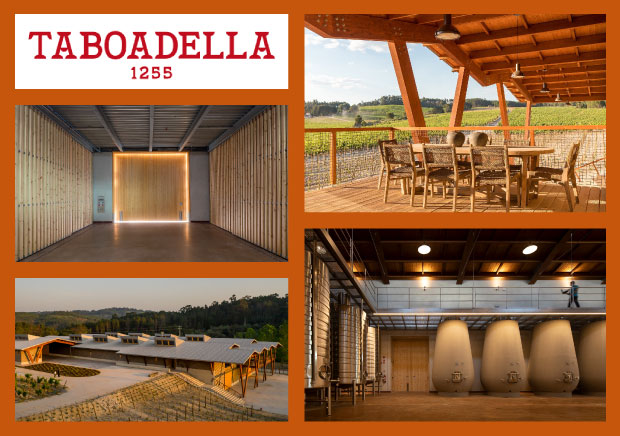
ABOUT TABOADELLA WINERY:
The Amorim family have been involved with the world of wine since 1870, when they first started producing cork stoppers for the Port Wine cellars, in Vila Nova de Gaia. Today, it is one of the most renowned family groups in Portugal with businesses in many countries and many different sectors.

Since 1999, the fourth generation of the family has been involved in wine, through the capable hands of Luísa Amorim, upholding profound respect for the historical heritage and the reputation of two of Portugal’s most important wine regions. In the Dão and Douro, with a total of 127 hectares of vineyards, the Amorim family solely grows indigenous grape varieties, parcel by parcel, in a practice that combines traditional processes and sophisticated technology to produce exceptional wines.

Two estates, where the vineyards and wine have ancestral roots. Two pioneering wine tourism projects in Portugal that maintain the local culture and uphold a profound respect for the historical heritage of two great wine regions – the Douro and the Dão. Learn more about the history of Taboadella>


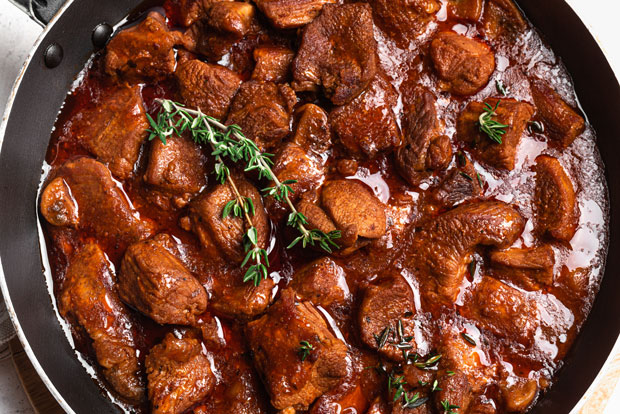
Portuguese-beef-stewPortuguese Stewed Beef

INGREDIENTS:

  • one (4 ½-pound) chuck roastcut into 2- to 3-inch (5- to 8-cm) chunks
  • 2 tablespoons crushed red peppers, or more to taste, or ½ teaspoon crushed red pepper flakes
  • 1 large (9 oz) onioncut into slices
  • 1 bunch parsleycoarsely chopped
  • 6 to 8 cloves garlicsmashed and peeled
  • 2 bay leaf
  • ½ teaspoon allspice berries
  • 4 whole cloves
  • kosher saltto taste (optional)
  • 3 tablespoons (1 1/2 oz) unsalted butter or lard
  • 2 cups hearty red table wine
  • 2 tablespoons store-bought or homemade tomato paste
  • ½ teaspoon ground cinnamon

For serving:

  • Boiled white potatoes(optional)
  • Roasted red peppers(optional)
  • Cooked greens(optional)

DIRECTIONS:

  1. The day before cooking, in a large bowl, coat the beef with the crushed red pepper, cover, and refrigerate overnight.
  2. About 4 hours before you intend to sit down at the table, scatter the onion slices, parsley, garlic, and bay leaves in the bottom of a Dutch oven. Tuck the allspice and cloves in a piece of cheesecloth tied together with kitchen twine or in a tea ball and toss them in the Dutch oven. If desired, season the beef with salt. Place the beef on top and dot with the butter or lard. 
  3. In a measuring glass or bowl, stir together the wine, tomato paste, and cinnamon and pour it over the beef.
  4. Bring the mixture to a boil, reduce the heat to a very gentle simmer, cover, and cook until the meat is very tender, 3 to 3 ½ hours, turning the pieces occasionally. For a more stew-like version, keep the lid on for the duration of cooking. For a more concentrated, glaze-like sauce version, about halfway through cooking, remove the lid to let some of the liquid evaporate so the sauce can concentrate in consistency and flavor.
  5. Remove the bay leaves and the cheesecloth pouch or teaball. If desired, serve the caçoila with boiled white potatoes, roasted red peppers, and cooked greens.

Information & Photos © Boas Uvas, Taboadella, and Weinbauer – All Rights Reserved.
© Recipe courtesy of Leite’s Culinaria – All Rights Reserved.


Wine club logoJoin our WINE CLUB and enjoy these amazing wines and pairing recipes each month. Plus, you’ll receive 10% off all retail wine purchases!
Learn about our Memberships >

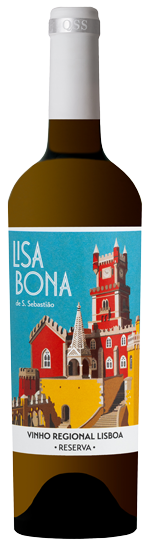
Quinta de S. Sebastião Lisabona Reserva

MARCH WINE CLUB:

Silky styleLisa_Bona_White_Reserva_bottleQuinta de S. Sebastião
Lisa Bona Reserva
Arinto, Semillion
Lisbon, Portugal

SILKY WINE STYLE

Wine of citric color, complex nose with notes of apricot and some citrus, happily paired with a characteristic minerality. The palate is intense, smooth and with a lively and refreshing acidity.

WINE DETAILS:

  • Varietals: Arinto, Semillon
  • Location of the Vineyards: Arruda dos Vinhos, Portugal. Mostly hillside vineyards.
  • Alcohol: 13% vol.
  • pH: 3.18
  • TA: 7.1 g/L
  • Climate: Mediterranean with strong Atlantic influence
  • Soil: Clay-limestone
  • Vinification: In an open spout at a temperature of 53.6ºF, followed by a partial stage in new and used barrels.
  • Winemaker: Filipe Sevinate Pinto
  • Recommended Serving Temperature: 53.6ºF
  • Pairing Suggestion: Soft cheeses, fatty fish and white meats.

VINEYARD NOTES:
The combination of mild climatic factors, sunny slopes, geographical location, proximity to the sea, the mountain’s protection, and of course the people who live and care for the Quinta de S. Sebastião land and vineyards every day give shape to the rebirth of wines with a distinctive freshness and a very unique identity. 

Quinta Sebastiao Portugal winery

ABOUT THE WINERY:
Quinta de S. Sebastião is located in a small town north of Lisbon called Arruda dos Vinhos, a historic region with more than 1,000 years of winemaking tradition. The heraldic symbol that inspires the logo of the Quinta de São Sebastião tells the story of a martyr and a Christian Saint who believed he could deter the Roman Empire from persecuting Christians.

Founded in 1755 – the same year the Lisbon earthquake reshaped the region – the estate has played an important role in preserving local heritage while producing outstanding wines.  The vineyards sit on the hills of Forte do Cego, part of the historic Linhas de Torres fortification system that once defined Lisbon during the Napoleonic invasions.

Today, under the leadership of Portuguese entrepreneur António Parente and winemaker Filipe Sevinate Pinto, the Quinta continues to gain global recognition. Its wines reflect a unique combination of sunny slopes, maritime influence, mountain protection, and the dedicated stewardship of the people who care for the land. Learn more here.


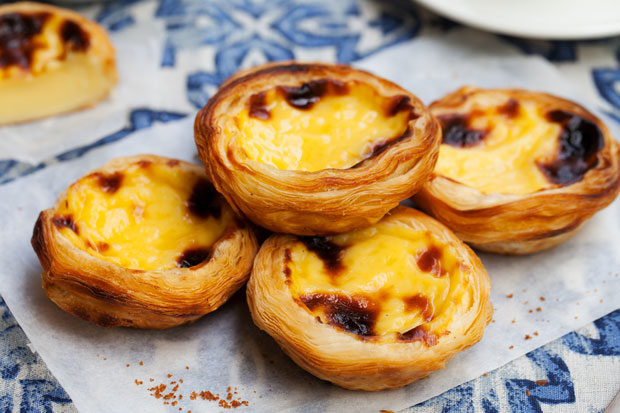
Portuguese-custard-tartPastel de Nata

INGREDIENTS:

  •  cup all-purpose flour
  • ¼ teaspoon salt
  • 1 ½ cups whole milk
  • 1 ⅓ cups granulated sugar
  •  cup water
  • 6 large egg yolks
  • 1 teaspoon vanilla extract
  • 1 cinnamon stick
  • peel of 1 lemon cut in thin strips
  • 1 sheet puff pastry
  • ground cinnamon for dusting optional

DIRECTIONS:

  1. Preheat the oven to 550°F, and lightly grease a 12-cup muffin tin.
  2. Bring the sugar, water, vanilla extract, lemon peel, and cinnamon stick to a boil in a medium, heavy-based saucepan. Cook without stirring until it reaches 220°F, then remove the cinnamon stick and take the pan off the heat.
  3. Meanwhile, in a separate saucepan, whisk the milk, flour, and salt until well blended. Whisk constantly and cook over medium heat until thickened, about 5 minutes. Remove it from the heat and let cool for 10 minutes.
  4. Once the milk mixture has cooled, whisk in the egg yolks, then add the sugar syrup and mix until everything is well combined. Pour through a sieve into a measuring cup to remove any lumps.
  5. Cut the puff pastry sheet into two pieces and place them on top of each other. Tightly roll the sheets into a log from the short side, then cut it into 12 evenly sized pieces.
  6. Place one piece of pastry in each of the 12 wells of the muffin tin. Dip your thumb in cold water, then use your thumb to press the pastry against the sides to form a cup. Make sure the pastry comes slightly above the edge of each well.
  7. Fill each pastry cup ¾ of the way with custard.
  8. Bake at 550°F for 10-12 minutes. The tarts are done when the custard starts to caramelize and blister, and the pastry turns golden brown.
  9. Dust with powdered sugar and cinnamon if desired, and serve warm. Enjoy!

Information & Photos © Quinta de S. Sebastião – All Rights Reserved.
© Recipe courtesy of Spanish Sabores.


Wine club logoJoin our WINE CLUB and enjoy these amazing wines and pairing recipes each month. Plus, you’ll receive 10% off all retail wine purchases!
Learn about our Memberships >

March Wine Club Pairing Recipe

MARCH WINE CLUB:

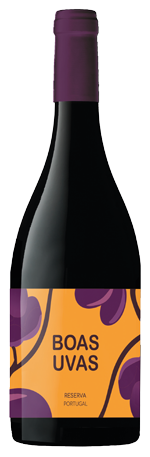
Bold wine Style logoBoas_Uvas_Red_Reserva_bottleTaboadella Winery
Boas Uvas
Reserva Red

Dão, Portugal

BOLD WINE STYLE

Deep ruby color, with prominent fresh and fruity aromas of red fruits such as cherry and plum, complemented by a subtle touch of spice. A well-balanced wine with smooth tannins, revealing lively acidity and a persistent, slightly fruity finish.

WINE DETAILS:

  • Varietals: Touriga Nacional, Jaen, Tinta Roriz, Alfrocheiro
  • Appellation: Dão, Castendo sub-region
  • Alcohol: 13% vol.
  • Producer: Bucozal
  • Recommended Serving Temperature: 59ºF-62.6ºF
  • Pairing Suggestion: Pairs well with grilled meats, game dishes, aged cheeses, and traditional Portuguese cuisine.

VINEYARD HARVEST:
From September 6th to October 3rd. An atypically cold spring, combined with the delayed pruning decided by the technical team, resulted in a slight delay in the vegetative cycle. This strategy successfully avoided exposure to the late frosts that occurred during the first half of April in the Dão Demarcated Region. Flowering took place under sunny conditions, enabling a generous berry formation with fully developed clusters. June, July, and August were dry months, with high daytime temperatures, but cool nights that allowed the clusters to develop with balanced ratios. These temperature variations, along with perfectly adapted and well-established vineyards and the richness of water in the subsoil, facilitated a balanced ripening process. This resulted in an exceptional grape quality, reflected in wines with a unique profile and richness.

VINIFICATION AND AGING:
Fermentation occurred in stainless steel tanks under temperature control. Approximately 20% of the wine aged in 500-liter French oak barrels for about 12 months.

ABOUT THE WINES:
Boas Uvas, meaning “Good Grapes”, is a fresh and fun line of wines from the team at Taboadella Winery in Portugal’s Dão region. Featuring a smooth, fruit-forward Red Blend and a richer, oak-aged Red Reserva, these wines highlight native Portuguese grapes like Touriga Nacional and Alfrocheiro. With a playful spirit and serious quality, Boas Uvas brings the charm of Dão to every glass.


ABOUT TABOADELLA WINERY:
The Amorim family have been involved with the world of wine since 1870, when they first started producing cork stoppers for the Port Wine cellars, in Vila Nova de Gaia. Today, it is one of the most renowned family groups in Portugal with businesses in many countries and many different sectors.

Since 1999, the fourth generation of the family has been involved in wine, through the capable hands of Luísa Amorim, upholding profound respect for the historical heritage and the reputation of two of Portugal’s most important wine regions. In the Dão and Douro, with a total of 127 hectares of vineyards, the Amorim family solely grows indigenous grape varieties, parcel by parcel, in a practice that combines traditional processes and sophisticated technology to produce exceptional wines.

Two estates, where the vineyards and wine have ancestral roots. Two pioneering wine tourism projects in Portugal that maintain the local culture and uphold a profound respect for the historical heritage of two great wine regions – the Douro and the Dão. Learn more about the history of Taboadella>


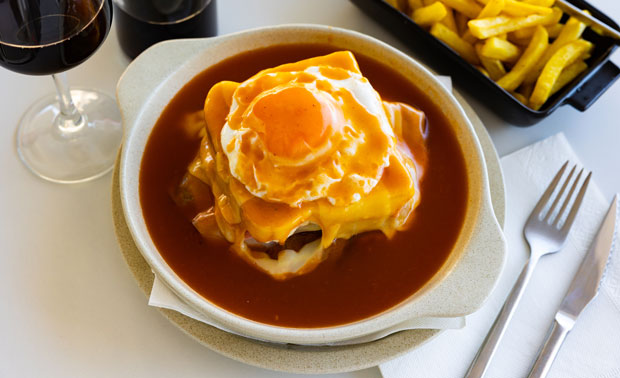
Portuguese-francesinha-sandwichPortuguese Francesinha Sandwich

INGREDIENTS:

  • 8 slices of bread
  • 4 slices of ham
  • 8 slices of cheese
  • 150 grams sirloin steak (about 5.2 oz.)
  • 4-6 linguiças (Portuguese sausage)
  • kosher salt
  • black pepper

For the sauce:

  • 1 large blonde beer
  • 1 cup fried tomato sauce
  • 2 tbsp port wine
  • ½ cup beef broth
  • 1 tbsp salted butter
  • 1 onion chopped
  • 1 garlic minced
  • 1 tbsp cornstarch
  • ½ tbsp olive oil
  • 1 tbsp piripiri (Portuguese chili)

DIRECTIONS:

For the sauce:

  1. In a big saucepan, heat the olive oil and add the garlic and the onions. Cook them until golden.
  2. Pour the beer and simmer until the alcohol evaporates (about 5 minutes).
  3. Pour the beef broth, the fried tomato sauce, the port wine, the Piri Piri (chili) and the butter to give shine to the sauce. Add the cornstarch slowly avoiding lumps.
  4. Simmer for a couple of minutes until the sauce is thick.

Francesinhas:

  1. Preheat the oven to 350ºF
  2. Cook the beef chopped in small strings. Season with salt and black pepper.
  3. Cook the linguiças sliced in half lengthwise.
  4. Take 4 slices of bread for each Francesinha. Cut the center of two slices to make room for the filling. The other two will be the bottom and top of the francesinhas.
  5. Fill the bread with the sausages, the beef and the ham roughly chopped. Cover the francesinhas with the cheese and melt in the oven for 5 minutes.
  6. Cover with the sauce and serve with french fries.

Information & Photos © Boas Uvas, Taboadella, and Weinbauer – All Rights Reserved.
© Recipe courtesy of The Cookware Geek.


Wine club logoJoin our WINE CLUB and enjoy these amazing wines and pairing recipes each month. Plus, you’ll receive 10% off all retail wine purchases!
Learn about our Memberships >

Zinfinity Sonoma County Zinfandel

FEBRUARY WINE CLUB:

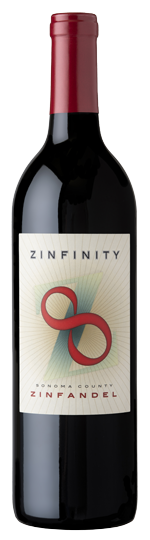
Bold wine Style logoZinfinity-bottleWilliam Knuttel Winery
Zinfinity
Sonoma County Zinfandel
Sonoma, California

BOLD WINE STYLE

Dense aromas of black plum, ripe cherry, blackberry and bramble are lifted by notes of creamy oak. Flavors follow on, with the entry adding hints of raspberry and cassis. Dense, juicy tannins flesh out the mid-palate, which leads to a firm finish of great length and persistence. The Zinfinity displays excellent balance, allowing great versatility in food pairing, and, like all wines well-crafted in claret style, will further develop with extended cellar aging.

WINE DETAILS:

  • Varietal: 80% Zinfandel, 15% Petite Sirah, 5% Malbec
  • Alcohol: 13.9%
  • ph: 3.78
  • TA: 0.57 g/100ml
  • Vineyards: Biglieri, Cartee, Windsor Oaks, Doug Rafanelli
  • Barrel Aging: 21 months in French Oak (Francois Freres, Demptos, Tonnelleries)
  • Production: 2350 cases

WINEMAKING:
Sonoma County Zinfinity is a beautifully balanced, densely structured, age-able wine.  At its foundation is the fruit from 55-year-old vines in Biglieri Vineyard at the southern edge of Dry Creek Valley, blended with additional Old Vine Zin from the nearby Cartee Vineyard. To these finely nuanced Zins, the winemaker added concentrated hillside fruit from Windsor Oaks Vineyard in the Chalk Hill sub-appellation of Russian River Valley, and Petite Sirah from Doug Rafanelli’s steep hillside vines in Dry Creek Valley, to enhance the density and structure of the blend. The lots were aged separately for twenty months, then fashioned into Zinfinity and racked to French oak for additional aging.  Winemaking was similar for all the lots in the blend: cold-extraction of gently crushed fruit, lengthy fermentation with vigorous pumpovers, extended maceration, French oak aging, quarterly racking—and minimal intervention.  And, of course, there are copious (infinite!) rounds of blend trials to make the ultimate Zinfinity!


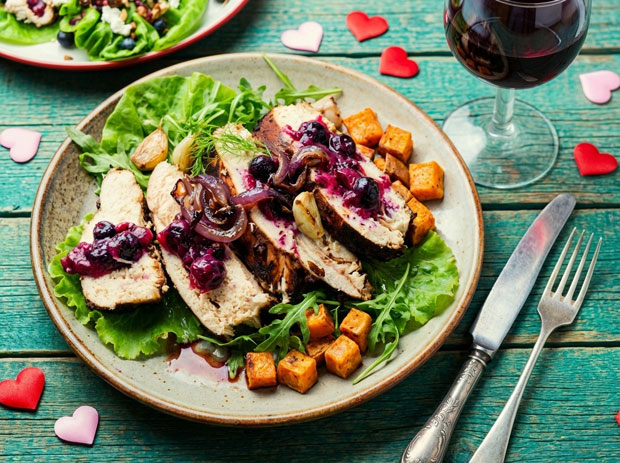
blueberry-chicken-valentines-dishBlueberry Chicken

INGREDIENTS:

  • 2 chicken breasts cut into smaller pieces, if required
  • 1 ½ cups blueberries
  • ½ small white onion diced
  • 1 small fennel diced
  • 2 tablespoon olive oil
  • 2 garlic cloves minced or finely diced
  • 2 tablespoon fresh thyme leaves
  • 2 tablespoon maple syrup
  • 2 teaspoon apple cider vinegar
  • pinch salt
  • pinch black pepper

DIRECTIONS:

  1. Preheat the oven to 400°F.
  2. Cut the chicken breasts into smaller pieces if required. Season with salt and black pepper (if using). Add a tablespoon of olive oil to your skillet and fry the chicken each side on a medium heat until light golden brown (you may need to do this in two batches if your skillet is on the smaller size). Cook time is about 10-12 minutes overall, depending upon the size of the fillets. Set aside on a plate.
  3. Reduce the heat to low and, in the same skillet, fry the onion and fennel in olive oil until softened for about 5 minutes.
  4. Add the garlic, blueberries, maple syrup, apple cider vinegar, salt and black pepper to the skillet. Bring to a light simmer, and cook for around 10 minutes until the blueberries have broken down into around half liquid.
  5. Add your chicken to an ovenproof dish and then spoon the blueberry sauce over it. Bake in the oven for 20 minutes, or until the chicken has an internal temperature of 165°F.

Information & Photos © William Knuttel – All Rights Reserved.
© Recipe courtesy of Through the Fibro Fog.


Wine club logoJoin our WINE CLUB and enjoy these amazing wines and pairing recipes each month. Plus, you’ll receive 10% off all retail wine purchases!

Learn about our Memberships >

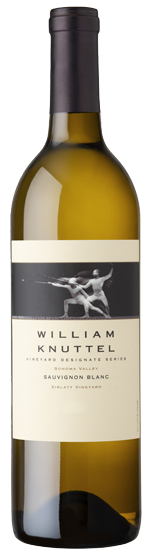
William Knuttel Sauvignon Blanc

FEBRUARY WINE CLUB:

William Knuttel-Ziblatt-vineyard-Sauvignon-Blanc-bottleSilky styleWilliam Knuttel Winery
Vineyard Designate Series
Sauvignon Blanc
Sonoma Valley, California

SILKY WINE STYLE

This Sauvignon Blanc delivers prototypical varietal characters and excellent concentration, and, as always, straddles the elusive balance between old and new world styles.  A classic Sancerre-like minerality anchors a complex array of aromas, where peach, pear and tropical fruits mingle with herbs and grassiness.  The palate is light and crisp, adding flavors of spicy grapefruit, tangerine and lemon zest.  The wine’s balance, elegance and intensity beg another sip over and over again!

WINE DETAILS:

  • Varietal: Sauvignon Blanc
  • Vineyard: Ziblatt
  • TA: 6.1 g/L
  • pH: 3.35
  • RS: 0.18 g/100ml
  • Aging: 100% tank-fermented
  • Brix: 22.9 wtd. average
  • Yield: 4.5 tons/acre average
  • Cases: 548
  • Accolades: 92 pts. Wine Enthusiast 2021

WINEMAKING:
Winemaker William Knuttel began producing Sauvignon Blanc in a Graves style during his tenure at Chalk Hill Estate, and later in a Sancerre style with the wines of Teira.  This Sonoma County blend merges those two styles to achieve the best of both worlds.  Some of the blend components are picked quite ripe to emphasize fruit, richness, and creaminess, while others highlight the quintessential herbaceous characters of SB. All lots in the final blend were tank fermented at 50°F utilizing yeast with high-tone fruit characteristics. The wine was cold filtered for bottling, but did not require fining.

VINEYARD:
The predominant vineyard source for Knuttel’s Sonoma Valley Sauvignon Blanc is Ziblatt Vineyard, in the heart of Sonoma Valley, near Kenwood. They also produce as a single vineyard wine, but in a Graves style, different than the Sancerre style employed here. The vineyard naturally splits into sections that are lower and higher yielding, and these are harvested at separate times, giving two distinct fruit and acidity profiles. They blend aliquots of these with Sauvignon Blanc from Wilson Vineyards in the Clarksburg appellation, which enhance the minerality of the blend.

ABOUT THE LABEL ART:
Designer Jeffrey Caldewey captured William Knuttel’s kinetic wine world with Etienne-Jules Marey’s 1890 “chronophotograph”, in which multiple exposures are superimposed to show the complete motion of “le coup d’epee”. The image metaphorically highlights the balance, finesse, powder and poise valued by the winemaker.

ABOUT WILLIAM KNUTTEL:
William Knuttel was formerly Winemaker & Vice President with Chalk Hill Estate from 1996 to 2003, specializing in ultra-premium Cabernet Sauvignon, Chardonnay, and Sauvignon Blanc and Dry Creek Vineyard’s Executive Winemaker from 2003 to 2011. As proprietor of Tria, 1995 to 2003, he produced fine Pinot Noir and Zinfandel. As Saintsbury’s winemaker from 1983 to 1996, Knuttel established that brand as a leader in ultra-premium Pinot Noir and Chardonnay.

The Knuttle Family. Left to right, Sebastian Knuttel (Cellar Master), Kate Knuttle (Business Manager), and William Knuttel (Proprietor and Winemaker).


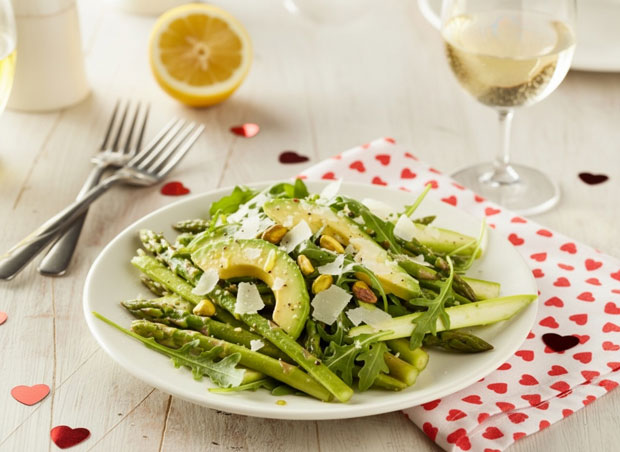
asparagus-salad-valentines
Shaved Asparagus Salad

INGREDIENTS:

For the Dressing:

  • ¼ cup olive oil
  • 2 tablespoons lemon juice
  • 1 tablespoon champagne vinegar
  • 1 teaspoon honey
  • 1 clove garlic, minced
  • kosher salt and black pepper, to taste

For the Salad:

  • 1 lb large asparagus, woody ends trimmed
  • 3 oz fresh arugula
  • 1 large avocado, pitted, peeled, and chopped
  • ½ cup shaved Parmesan cheese
  • 1/3 cup chopped pistachios
  • sea salt and freshly ground black pepper, to taste

DIRECTIONS:

  1. First, make the dressing. In a small bowl or jar, whisk together the olive oil, lemon juice, vinegar, honey, and garlic. Season with salt and pepper, to taste. Set aside.
  2. Use a vegetable peeler to shave the asparagus. Lay an asparagus spear flat on a cutting board. Starting at the bottom end, use the peeler to shave it into long thin strips or ribbons. Place the asparagus shavings in a large bowl and repeat with remaining asparagus.
  3. Add the arugula to the bowl. Toss the shaved asparagus and arugula together. Add the avocado, shaved Parmesan cheese, and pistachios. Drizzle desired amount of dressing over the salad and gently toss. Season with salt and pepper, to taste. Serve the salad immediately.

Information & Photos © William Knuttel – All Rights Reserved.
© Recipe courtesy of Maria Lichty of Two Peas & Their Pod.


Wine club logoJoin our WINE CLUB and enjoy these amazing wines and pairing recipes each month. Plus, you’ll receive 10% off all retail wine purchases!

Learn about our Memberships >

February Wine Club Pairing Recipe

FEBRUARY WINE CLUB:

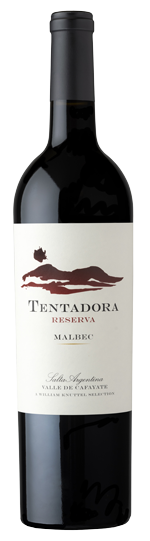
Bold wine Style logoTentadora-Malbec-Reserva-bottleWillam Knuttel Winery
Tentadora

Malbec Reserva

Valle de Cafayate, Argentina

BOLD WINE STYLE

Brimming with aromas of blackberries and blueberry compote, laced with hints of spicy earth. The color is deeply hued, and a succulent core of fruit broadens into a velvety finish with seamlessly integrated and fully resolved tannins. The Tentadora Malbec is eminently suited to the table, and pairs especially well with roasted meats—all the better if the meats are grilled at an asado, or Argentine-style barbecue.

WINE DETAILS:

  • Varietal: Malbec
  • Appellation: Valle de Cafayate, Salta, Argentina
  • Alcohol: 14.5%
  • TA: 5.8 g/L
  • pH: 3.72
  • Yield: 2.8 tons/acre
  • Aging: 32 months in French oak, 25% new

VINEYARD NOTES:
While Argentina is recognized mostly for the wines of Mendoza to the south, the smaller Cafayate region is rapidly gaining favor, after over 100 years of grape growing!  Knuttel believes the region may eventually out rival Mendoza’s reputation, much as Napa Valley often does with larger Sonoma County. Land purchases and winery construction in the last few years are bearing out this prediction. 

ABOUT THE WINEMAKER:
Winemaker William Knuttel first visited Cafayate fifteen years ago, and quickly became captivated with the area and its people, culture, and climate.  The town is in the Calchaqui Valley, nestled in the foothills of the Andes at over 5000’ elevation. This high mountain desert has the feel of Napa Valley plunked down into Zion Canyon National Park. Vineyards seemingly grow in nothing but rock and sand, surrounded by towering mountains of red rock and granite.

After his tenure at Chalk Hill, which included extensive experiments with Malbec clones, pruning techniques, and winemaking styles, Knuttel could not resist temptation in Cafayate, and Tentadora, “the temptress,” materialized from some of the finest Malbec vineyards he had ever seen, all at elevations of 5000 to 8000 feet in altitude.

ABOUT THE WINERY:
William Knuttel created the Tentadora brand within his broader winemaking portfolio to focus on Malbecs from Argentina’s Cafayate Valley. While he continues to operate William Knuttel Winery in Sonoma, California, his interest in this high-altitude region has been long-standing. The name Tentadora—Spanish for “the temptress”—speaks to the irresistible pull of Cafayate’s exceptional Malbec vineyards and Knuttel’s desire to bring their character into his work. Learn more about William Knuttel here.

Willam Knuttel


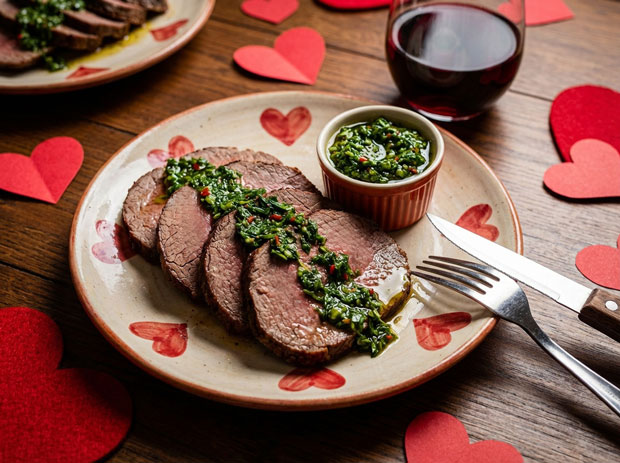
Roast beef chimichurri dish with red wine and valentines day heartsTop Round Roast Beef with Chimichurri

INGREDIENTS:

  • 1 ½ c minced parsley (roughly 2 bunches)
  • 8 cloves garlic, minced
  • 1 Tbsp dried oregano
  • 1 ½ tsp salt
  • ½ tsp red pepper flakes
  • ½ tsp ground black pepper
  • 1 c olive oil
  • ½ c red wine vinegar
  • 3 lb. top round roast beef

DIRECTIONS:

  • Mix minced parsley, minced garlic, oregano, salt, red pepper flakes, and black pepper in a bowl.
  • Add oil and vinegar. Mix well. Taste and adjust the salt and pepper as desired.
  • Reserve ½ of chimichurri (1 c) in an airtight container. Store it in the refrigerator until ready to use as a garnish for the roast.
  • The other half (1 c) of the chimichurri, use to marinade the meat. Place the meat in a zipper-sealed bag and pour in the marinade. Marinade overnight, at least 12 hours (up to 24 hours).
  • Remove the roast from the refrigerator 1.5 – 2 hours before roasting for it to come to room temperature.
  • Preheat your oven to 450°F.
  • Line a roasting pan with aluminum foil. Drain the marinade from the roast and place the roast on the roasting rack in your roasting pan.
  • Cook the roast at 450ºF for 15 minutes.
  • Reduce the heat setting of your oven to 325°F. Cook the roast for an additional 60-70 minutes, for medium doneness, or until your desired doneness is reached. Use an instant-read thermometer, inserted into the side of your roast (not in fat), to check the doneness of your meat. You should remove the roast 5-10 degrees lower than your desired temperature, as the roast will continue cooking as it rests.*
  • When your desired doneness has been reached, remove the roast from the oven and let it rest for 10 minutes before slicing.
  • Take the reserved chimichurri out of the refrigerator and let it come to room temperature before serving.
  • After resting, slice the roast thinly against the grain and serve with the reserved chimichurri.
    *Desired ending temperatures – Rare: 125ºF, Medium Rare 135ºF, Medium 145ºF, Medium Well 150ºF, Well Done 160ºF

Information & Photos © William Knuttel – All Rights Reserved.
© Recipe courtesy of Curious Cuisinière.


Wine club logoJoin our WINE CLUB and enjoy these amazing wines and pairing recipes each month. Plus, you’ll receive 10% off all retail wine purchases!

Learn about our Memberships >

January Premium Club

Bold wine Style logoOur Lady Guadalupe Pinot Noir wine bottleOur Lady of Guadalupe
Pinot Noir 2023
Santa Rita Hills, California

BOLD WINE STYLE

An endearing pour of a brooding crimson core with flashes of vermilion and neon pink as the glass swirls. Aromatics spill in double time with notes of muddled strawberry, “Pinot crunch”, cranberry, pomegranate, orange peel, and the coastal hills of lavender and sagebrush surrounding the vineyard. Without missing a beat, the palate flaunts rich and concentrated flavors of black cherry, ripe strawberry, fennel and a kiss of Maldon salt, kept in check by the layers of acid that dominate wines from the region. A multitude of sensations culminates with mild tannins and an energized finish that seems to perpetually exist.

Varietal: 100% Pinot Noir
Appellation: Sta. Rita Hills, California
Clonal Selection: 828, 777, Pommard 4, 667, 459, 115, 943, Swan, Calera
Élevage: Aged in French Oak for 10 months, 45% New
Alcohol: 14.8% alcohol / volume
pH: 3.76
Titratable Acidity: 6.09 g/L
Accolades:

  • Wine Enthusiast – 95 points and Editors’ Choice
  • Decanter – 96 points
  • Vinous – 95 points
  • Jeb Dunnuck – 95 points

WINEMAKER’S NOTES:
In the summer of 2021, Dave Phinney (proprietor and winemaker), decided to produce his own wine from the Our Lady of Guadalupe Vineyard, giving him complete control in the vineyard and cellar.  Simply put, this is the only project in the US where Dave makes wine from a vineyard he owns.

The 2023 vintage will go down as one of the best in the Sta. Rita Hills AVA. A very long, cool growing season led to ideal ripening, gorgeous fruit and wonderfully complex aromatics and concentrated flavors. With near-perfect weather during harvest, the crew were able to pick each individual block on schedule. Comprised of blocks from all over Our Lady of Guadalupe Vineyard, this is the best representation of the entire vineyard, transporting you to this special place in the AVA.

ABOUT THE WINERY:
After years of sourcing Pinot Noir from top vineyards in Santa Barbara, the team fell in love with the Sta. Rita Hills and in 2015 purchased an abandoned row-crop farm on the western edge of the AVA, later transforming it into Our Lady of Guadalupe Vineyard. Careful soil rehabilitation preceded planting, with the first vines established in 2018 and additional plantings through 2020. The vineyard now spans 127 acres of Pinot Noir across nine clones and six acres of Old Wente Chardonnay, with each clone and rootstock precisely matched to site-specific soils, microclimates, wind exposure, and ripening potential, using rigorously tested, mostly Protocol 2010–certified plant material. Sta. Rita Hills’ cool temperatures, wind, fog, and ocean influence naturally limit yields and disease pressure, while challenges like saline groundwater were addressed through a proprietary filtration method inspired by similar conditions in Baja California. Designed as a true winemaker’s vineyard and planted with fermenter-scale precision, OLG reflects Dave Phinney’s meticulous approach and commitment to terroir, sustainability, and people, producing single-vineyard wines beginning with the 2021 vintage and earning Sustainability-in-Practice certification, all while honoring the vineyard’s namesake and the crew who bring it to life. Learn more here.

Information & Photos © Our Lady of Guadalupe Vineyard – All Rights Reserved


Bold wine Style logoRombauer Zinfandel Napa ValleyRombauer Vineyards
Zinfandel 2023
California

BOLD WINE STYLE

Aromas of cherry jam and blackberry, underscored by notes of nutmeg. The dark berry notes continue to the palate, leading to a rich body with soft tannins and a lovely acidity, ending with a lingering finish.

Varietal: 91% Zinfandel, 9% Petite Sirah
Appellation: California
Alcohol: 15.9% alcohol / volume
Release Date: October 2025
Harvested: Sept. 25th-Oct. 30th, 2023
Average Brix at Harvest: 27.2
Cooperage: 14 months in American (10% new) and French oak

VINEYARDS:
This wine comes from select vineyards in four top growing regions: Amador County (56%), El Dorado County (25%), Lake County (18%), and Napa County (1%).

WINEGROWING:
Rombauer’s winemakers believe that 2023 was one of the best vintages in recent memory. The year was cool and consistent, ending with warm spells in September. These perfect conditions allow for longer hang time, which results in more fruit intensity and concentration of flavors. Sustainable farming practices throughout the growing season were tailored to each block with the assistance of aerial photos produced using NDVI (Normalized Difference Vegetation Index) technology. Harvest was long, with ideal conditions allowing us to pick each block at its optimal ripeness and at night to preserve its natural acidity.

WINEMAKING:
The grapes were carefully destemmed and optically sorted to ensure only perfect fruit made it into the wine. A cold soak extracted color and flavor before primary fermentation began in tank. The wine was gently basket-pressed and then racked to oak barrels for malolactic fermentation and aging.

ABOUT THE WINERY
Rombauer Vineyards was established in 1980, when the Rombauer family harvested their first grapes — Cabernet Sauvignon from Napa Valley’s Stags Leap District. Nearly 35 years later, the winery remains family owned and operated with members of the first and second generations involved in all aspects of the business.  When founders Koerner and Joan Rombauer moved their two children, two horses and five dogs to Napa Valley in 1972, they had no intention of starting a winery. They chose the area because it reminded them of the small-town, agricultural environment in which they had grown up, and it appeared to be a clean, safe place to raise their children. They purchased 40 acres of beautiful hilltop land on the Silverado Trail near the town of St. Helena in California. Learn more here.

Information & Photos © Rombauer Vineyards – All Rights Reserved


Wine club logoJoin our PREMIUM WINE CLUB, enjoy amazing wines every other month. Plus, you’ll receive 10% off all retail wine purchases! 

Learn more about our Premium Club >

Bronzino Dolcetto di Ovada DOC

JANUARY WINE CLUB:

Mellow style logoBronzino Dolcetto Di Ovada wine bottleBronzino
Dolcetto di Ovada DOC
Piedmont, Italy

MELLOW WINE STYLE

Red ruby in color with very fruity nose and taste with hints of plums and raspberry.

WINE DETAILS:

  • Varietal: 100% Dolcetto
  • Alcohol: 12.5-13%
  • Vineyards: located in Monferrato area with a yield of 8 tons/hectare. Manual harvest.
  • Winemaking: Temperature-controlled alcoholic fermentation with short maceration on skins. Then aging in steel tanks for at least 6 months.
  • Pairing: Ideal with delicate dishes such as pasta and soup.

WINEMAKER’S NOTES:
Dolcetto di Ovada is a fruity red wine with a dry lingering aftertaste. It is smooth and balanced with a touch of spiciness.

ABOUT THE WINERY:
Bronzino isn’t just a name. It’s a place—a small hamlet in Mombercelli, where they are located, that is particularly valued for its exceptional terroir which offers the ideal conditions for growing high-quality grapes. Characterized by its gentle slopes and unique soil composition, this terroir creates the ideal conditions for producing wines with depth, complexity, and exceptional character. Every Bronzino bottle carries with it the unique imprint of Mombercelli, from the breathtaking views over the vineyards to the quiet whispers of the local history that have shaped the land. Whether it’s an elegant and fruity Barbera, or a fresh and fragrant Cortese dell’Alto Monferrato, each wine is an expression of their passion for excellence and their dedication to produce something truly special.


eggplant dish with chickpeas and tomatoesEasy Greek-Style Eggplant

INGREDIENTS:

  • 1.5 lb eggplant cut into cubes
  • kosher salt
  • extra virgin olive oil
  • 1 large yellow onion chopped
  • 1 green bell pepper stem and innards removed, diced
  • 1 carrot chopped
  • 6 large garlic cloves minced
  • 2 dry bay leaves
  • 1 to 1 ½ tsp sweet paprika OR smoked paprika
  • 1 tsp organic ground coriander
  • 1 tsp dry oregano
  • ¾ tsp ground cinnamon
  • ½ tsp organic ground turmeric
  • ½ tsp black pepper
  • 1 28- oz can chopped tomato
  • 2 15- oz cans chickpeas reserve the canning liquid
  • fresh herbs such as parsley and mint for garnish

DIRECTIONS:

  1. Heat oven to 400ºF.
  2. Place eggplant cubes in a colander over a large bowl or directly over your sink, and sprinkle with salt. Set aside for 20 minutes or so to allow eggplant to “sweat out” any bitterness. Rinse with water and pat dry.
  3. In a large braiser, heat ¼ cup extra virgin olive oil over medium-high until shimmering but not smoking. Add onions, peppers, and chopped carrot. Cook for 2-3 minutes, stirring regularly, then add garlic, bay leaf, spices, and a dash of salt. Cook another minute, stirring until fragrant.
  4. Now add eggplant, chopped tomato, chickpeas, and reserved chickpea liquid. Stir to combine.
  5. Bring to a rolling boil for 10 minutes or so. Stir often. Remove from stove top, cover and transfer to oven.
  6. Cook in oven for 45 minutes until eggplant is fully cooked through to very tender. (While eggplant is braising, be sure to check once or twice to see if more liquid is needed. If so, remove from oven briefly and stir in about ½ cup of water at a time.)
  7. When eggplant is ready, remove from oven and add a generous drizzle of extra virgin olive oil, garnish with fresh herbs (parsley or mint). Serve hot or at room temperature with a side of Greek yogurt or even Tzatziki sauce and pita bread.

Information & Photos © Bronzino – All Rights Reserved.
© Recipe courtesy of The Mediterranean Dish.


Wine club logoJoin our WINE CLUB and enjoy these amazing wines and pairing recipes each month. Plus, you’ll receive 10% off all retail wine purchases!

Learn about our Memberships >

Bronzino Cortese dell’Alto Monferrato DOC

JANUARY WINE CLUB:Crisp Wine Style

Bronzino Cortese Dell Alto MonferratoBronzino
Cortese dell’Alto Monferrato DOC
Piedmont, Italy

CRISP WINE STYLE

Light straw-yellow wine with green reflexes and a personal aroma of flowers and fruits, with hints of apple and pear. The taste is fresh, dry and savory.

WINE DETAILS:

  • Vineyards: Monferrato area. Manual harvest.
  • Varietal: 100% Cortese
  • Alcohol: 11.5-12% alcohol / volume
  • Winemaking: The hand-picked grapes are soft-pressed and temperature-controlled alcoholic fermentation. Aged on the lees for 3 months in steel tanks.
  • Pairings: Ideal with seafood, fish and as an aperitif

WINERY’S NOTES:
Cortese is one of the most cultivated vine variety in Piedmont, Italy. It has a delicate bouquet hinting at green apple and exotic fruits. The taste is fresh with notes of pear and peach. It pairs well with fish-based dishes.

ABOUT THE WINERY:
Bronzino isn’t just a name. It’s a place—a small hamlet in Mombercelli, where they are located, that is particularly valued for its exceptional terroir which offers the ideal conditions for growing high-quality grapes. Characterized by its gentle slopes and unique soil composition, this terroir creates the ideal conditions for producing wines with depth, complexity, and exceptional character. Every Bronzino bottle carries with it the unique imprint of Mombercelli, from the breathtaking views over the vineyards to the quiet whispers of the local history that have shaped the land. Whether it’s an elegant and fruity Barbera, or a fresh and fragrant Cortese dell’Alto Monferrato, each wine is an expression of their passion for excellence and their dedication to produce something truly special.


pan fried fish

Perfect Pan Fried Fish in Basil Lemon Butter Sauce

INGREDIENTS:

  • 1 ½ pounds cod, tilapia, rockfish, or any other white fish you like
  • ¾ teaspoon garlic salt (or ½ teaspoon salt + ¼ teaspoon garlic powder)
  • ⅓ cup flour
  • ¼ cup olive oil
  • 4 cloves minced garlic
  • pinch of red pepper flakes
  • ¾ cup low sodium chicken stock
  • 4 tablespoons cold butter, cut into 16 cubes
  • 3 tablespoons each: fresh lemon juice and fresh chopped basil, for finishing the sauce

DIRECTIONS:

  1. SEASON: To get the best crisp on the fish, pat both sides of the fish with paper towels until dry. Season the fish with a small pinch of salt, making sure to flip and salt both sides. Place the flour in a shallow dish and season with garlic salt. Whisk to combine. Dredge the fish in the flour, making sure to coat both sides. Make sure to shake off excess flour.
  2. FRY: Add the olive oil to the pan over medium heat and allow for it to heat through. When hot, fry the fish for 3-4 minutes flipping halfway. Depending on the thickness, you might need to cook the fish for longer until it’s cooked through. Remove the fish to a plate and set aside.
  3. SAUCE: There should only be about a tablespoon of oil remaining. If there is more, drain all but a tablespoon from the pan. Add the garlic into the skillet and fry in the oil for just 15 seconds. Add in a pinch of red pepper flakes, chicken stock, and lemon. Kick the heat to the highest setting, allow the sauce to reach simmer then reduce the sauce for 2 minutes. Lower the heat to the lowest setting, then add in two small cubes of butter and allow it to melt into the sauce slowly while you stir or swirl the pan with the handle. Continue adding two small cubes of butter at a time until all the butter is used up. Take your time here, don’t rush this. Add in chopped basil and stir to combine. Plate the fish with cooked rice or roasted vegetables and top with basil lemon butter sauce.

Information & Photos © Bronzino – All Rights Reserved.
© Recipe courtesy of Little Spice Jar.


Wine club logoJoin our WINE CLUB and enjoy these amazing wines and pairing recipes each month. Plus, you’ll receive 10% off all retail wine purchases!

Learn about our Memberships >