Dirt Nap³ is a triple dry-hopped DIPA with Mosaic, Citra, Nelson, and Galaxy hops. Incredible depth of flavor showcasing the best hops from the Northern and Southern Hemispheres. There are concentrated notes of Melon, grapes, passionfruit and pineapple.
Sunshine Sorbet Tastee returns! This smoothie-style, sour ale is a brewed with milk sugar and conditioned with peach, pineapple, and passionfruit. It tastes like a summer cocktail slushy, tropicana fruit juice and sunshine in a glass.
ABOUT THE VEIL BREWING COMPANY: Founded in April 2016, The Veil Brewing Co. focuses on hop forward beers, high gravity and barrel aging, lagers, wild ales and spontaneous fermentation. They are dedicated to quality and strive to provide a unique drinking experience through all of their beers. Check them out on Untappd, or learn more about their company here.
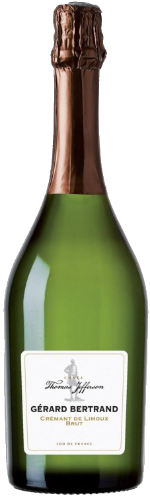
Gérard Bertrand Thomas Jefferson Cremant de Limoux Brut France
BUBBLY WINE STYLE
The Chenin and Chardonnay grapes bring texture and balance, with the Chardonnay also providing the fine bubbles. The Chenin adds vivacity and enhances the impressive longevity of the Cremant. This wine reveals a beautiful, golden yellow robe. It has a complex, aromatic nose with hints of white flower, honey, green apple and toast. It is crisp with elegant structure on the palate, where the fine texture of the bubbles complements the wine naturally.
Varieties: Chardonnay, Chenin, Pinot Noir, Mauzac Analysis: 12.5% alcohol / volume Appellation: AOP Crémant de Limoux, France Serving Temperature: 50ºF Pairing: Enjoy as an aperitif or with goat’s cheese (Cabecou, Pelardon, Rocamadour), and sweet desserts.
VINIFICATION AND MATURING: The grapes are harvested early by hand, in order to retain a good level of acidity. Upon arrival at the winery, the fruit is immediately pressed in a pneumatic pressing machine. The must is transferred to the vats for alcoholic fermentation, using the same process used for still wines. The wine is then transferred to sealed bottles for fermentation, in accordance with the champagne method. To finish, the winemakers will disgorge the bottles and perform the traditional dosage, which is very precise in order to keep a real freshness and wine balance.
SPECIAL NOTES: Limoux is the area where sparkling wine originated. In 1531, the monks of Saint Hilaire discovered the first wine with bubbles. Situated in the foothills of the Pyrenees, these vineyards benefit from the cool conditions required to make sparkling wines of quality. This exceptional quality had even found an echo across the Atlantic at the White House. Indeed, Thomas Jefferson, was Limoux’ greatest admirer, and he discretely cultivated his love for France and for Limoux sparkling wine. Actually, wine from Limoux was the only sparkling wine to be found in his personal cellar. – Gérard Bertrand Winery
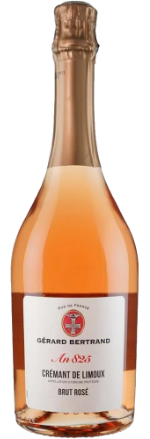
Gérard Bertrand Heritage Cremant de Limoux An 825 Brut Rosé France
BUBBLY WINE STYLE
This wine is beautiful, salmon-pink in color with glimmering reflections. The nose has a complex bouquet with long-lasting aromas of red fruit (such as strawberry and raspberry), backed with hints of toasted bread. The bubbles are delicate with an extraordinary vivacity on the palate, with a rich, indulgent texture.
Varieties: Chardonnay, Chenin, Pinot Noir Analysis: 12.5% alcohol / volume Appellation: AOP Crémant de Limoux. Serving Temperature: 50ºF Pairing: Perfect served as an aperitif, or accompanied with delicately smoked fish, both savory, sweet or spicy dishes, or even with red fruit desserts.
VINIFICATION AND MATURING: The grapes are harvested when their acid-sugar balance reach their best. The fruit is transferred to the winery and immediately pressed in a pneumatic pressing machine. In addition to the reinforcement of the perception of freshness and balance, the dosage is very precise. The Pinot Noir grapes are not macerated, in order to preserve their color. The must is transferred to the vats for an alcoholic fermentation, using the same process used for still wine. After the malolactic fermentation in the vats, the wine is blended and then transferred to the barrels to mature for 8 months.
SPECIAL NOTES: Gérard Bertrand reveals the history of the great terroirs of the South of France. The first written trace of the Abbey of Saint Hilaire date back to 825. The Abbey is located near Limoux and is famous for having housed the monks who discovered the secrete of effervescent wines. – Gérard Bertrand Winery
ABOUT GÉRARD BERTRAND WINERY: Now in the fourth generation of winegrowers, in 1987 Gérard Bertrand took over the family business at Domain d Villemajou after the unexpected death of his father. Five years later, Gérard founded the Gérard Bertrand wine company to develop a range of wines from the South of France. Today, the Gérard Bertrand group is comprised of 15 different wine estates. Since 2002, Gérard Bertrand has been committed to biodynamic viticulture, as it allows him to reinforce the balance of the vine and its environment. Learn more about his story here.
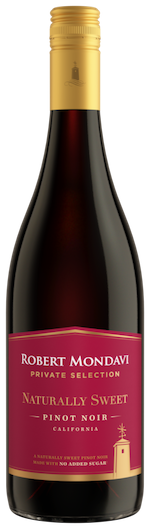
The Naturally Sweet Pinot Noir is made sweet naturally by pausing fermentation early in the winemaking process, so 100% of the sweetness comes from the grapes’ naturally occurring sugar. This means the wine is made with no added sugar, and it is also lower in alcohol to offer a more thoughtful indulgence.
The wine shows off rich color, fruit-forward aromatics, and exceptionally soft tannins. There are notes of black cherry, plum, and raspberry, followed by notes of vanilla and spice due to the judicious oak aging.
WineStyles Wine and Cheese Pairing: Sweet wines from our ‘Nectar’ section pair well with a sharp cheese. Learn more about our wine and cheese pairings here.
ABOUT ROBERT MONDAVI WINERY: Robert Mondavi built his winery in Northern California in 1966, planting Cabernet Sauvignon, Cabernet Franc and other key grape varieties to create some of the world’s finest wine. Today, Robert Mondavi Winery produces critically acclaimed, top-rated, world-class wines adored by industry experts, master sommeliers and consumers alike. Robert Mondavi Private Selection captures Roberts 26 years of legendary winemaking expertise in a different way to seek depth and substance. By balancing longstanding traditions with a forward-looking approach, the winery is able to explore what wine can be, not just what it “ought” to be to offer the most flavorful of wine experience. Learn more here.
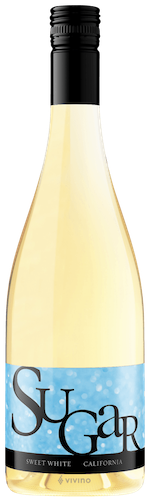
This soft, sweet, delicious Californian Moscato has just the right kiss of sweetness. It is super fruity and refreshing with a lower alcohol content. There are notes of honeyed citrus blossom, lush peach and sweet Meyer lemonade with a bright and refreshing finish.
Varietal: 100% Muscat Analysis: 8.5% alcohol / volume Serving: Chilled straight from the fridge, or kept cool in an ice bucket Food Pairing: This wine pairs well with a variety of flavors:
Have a little salty-sweet moment with your favorite bag of potato chips (nothing fancy).
Look for something spicy such as a Spicy Pad Thai, or Kung Pow Chicken.
Take a bite of bitter with pickle, or a batch of Parmesan Crusted Brussel Sprouts
Double down on dessert and pair with your favorite sweet treat.
WineStyles Wine and Cheese Pairing: Sweet wines from our ‘Nectar’ section pair well with an herbal or spicy cheese. Learn more about our wine and cheese pairings here.
ABOUT JaM CELLARS: Second-generation Napa Valley vintners, John and Michele (the “J’ and “M” in JaM) are the master-minds behind JaM Cellars. After a decade of crafting ultra-premium wines in the Napa Valley, the husband & wife team decided to launch a line of super-approachable wines that could be enjoyed anytime. Learn more about their story here.
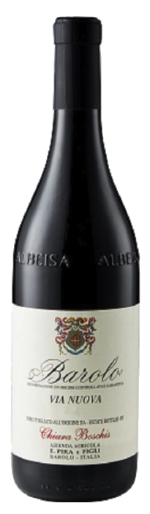
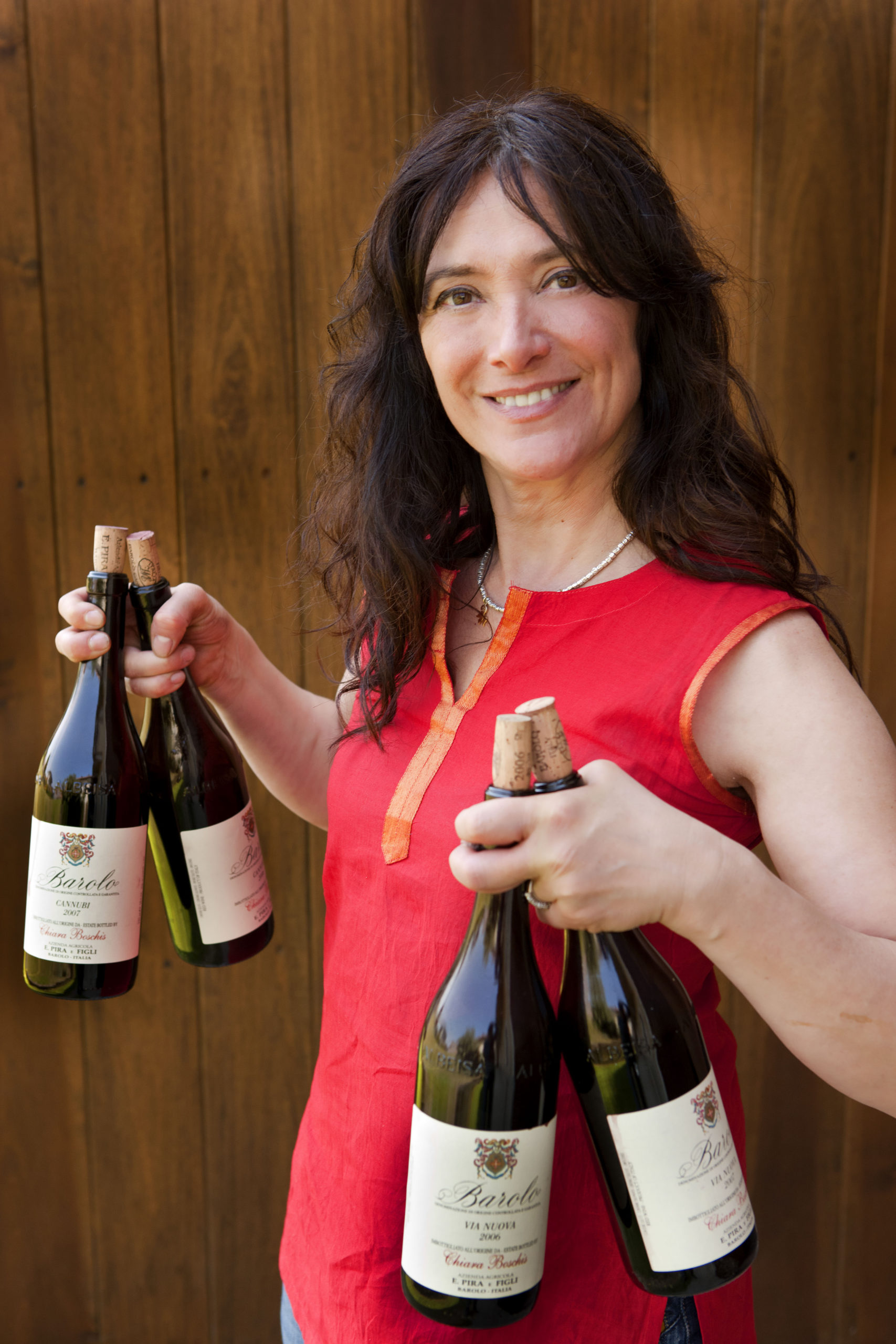
E. Pira e Figli Barolo Via Nuova DOCG 2018 Nebbiolo Piedmont, Italy
BOLD WINE STYLE
This classic Barolo blend combines structure with elegance and complexity, emphasizing the particularities of each vineyard site. Though a bit timid when first opened, some time in the glass (or decanter) will reveal Via Nuova’s alluring ethereal floral and fruit perfumes. This wine is clear and lively garnet red in color. It is dry, savory and harmonious; soft in flavor but full with a lasting persistence due to the tannin.
Analysis: 14% alcohol / volume Varietal: 100% Nebbiolo, certified organic grapes Region: Piedmont, Italy Vineyard: Terlo and Liste in Barolo, Ravera and Mosconi in Monforte d’Alba, and Gabutti and Baudana in Serralunga d’Alba Yield: 450 kg/ha Aging: Aging for 24 months in lightly toasted 30% new French oak barriques Average age of vines: 30 years Acidity: 6.37 g/L Production: 4,500 bottles Soil: Calcareous clay, Sant’Agata marl (sandstone) Average Altitude: 340 m (1,115 feet) above sea level Vinification: Fermentation in stainless steel tanks at controlled temperature with daily punch downs and pump-overs Harvest: Mid-October Cellar: E. Pira Chiara Boschis, Barolo Bottling: Aged an additional 1 year in bottle Release: Spring, 3.5 years after harvest Critical Acclaim:
WINEMAKER NOTES: Via Nuova (New Road) was the name of a small vineyard on the edge of the historical center of Barolo, the name coming from its proximity to the road (new at that time) connecting Barolo to Novello. All that remains today of the road is a small walking path through the vineyards. The wine was produced as a single-vineyard Barolo for many years until, in 2010, this small Cru was incorporated into the larger Terlo subzone. And so, as a sort of homage to tradition, Barolo Via Nuova is now produced as a blend of 6 different vineyards: Terlo and Liste in Barolo, Ravera e Mosconi in Monforte d’Alba and Gabutti and Baudana in Serralunga d’Alba. – E. Pira e Figli
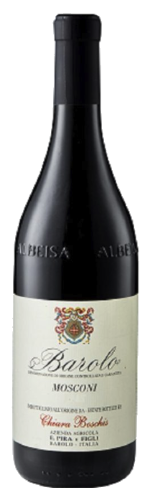
E. Pira e Figli Barolo Mosconi DOCG 2018 Nebbiolo Piedmont, Italy
BOLD WINE STYLE
Garnet red in color, this wine is complimented by open perfumes of flowers and mature fruit with some spicy notes. This is a long-lasting wine of power and concentration with firm, velvety tannins.
Analysis: 14% alcohol / volume Varietal: 100% Nebbiolo, certified organic grapes Region: Piedmont, Italy Vineyard: Mosconi (a single-vineyard property acquired in 2009) in Moforte d’Alba Yield: 450 kg/ha Aging: Aging for 24 months in lightly toasted 30% new French oak barriques Average age of vines: 30 years Acidity: 6.37 g/L Production: 4,700 bottles Soil: Calcareous clay marl soils from the tertiary period, with areas rich in calcium carbonate and iron Average Altitude: 400 m (1,312 feet) above sea level Vinification: Fermentation in stainless steel tanks at controlled temperature with daily punch downs and pump-overs Harvest: Mid-October Cellar: E. Pira Chiara Boschis, Barolo Bottling: Aged an additional 1 year in bottle Release: Spring, 3.5 years after harvest Critical Acclaim:
WINEMAKER NOTES: The most recently acquired parcel, the famous Mosconi Cru in Monforte d’Alba was purchased in 2009. The vineyard’s particular heavy clay soil (in some areas calcium carbonate and iron give the soil a reddish-gray color) lends considerable structure to this wine, making it a Barolo ideal for aging. – E. Pira e Figli
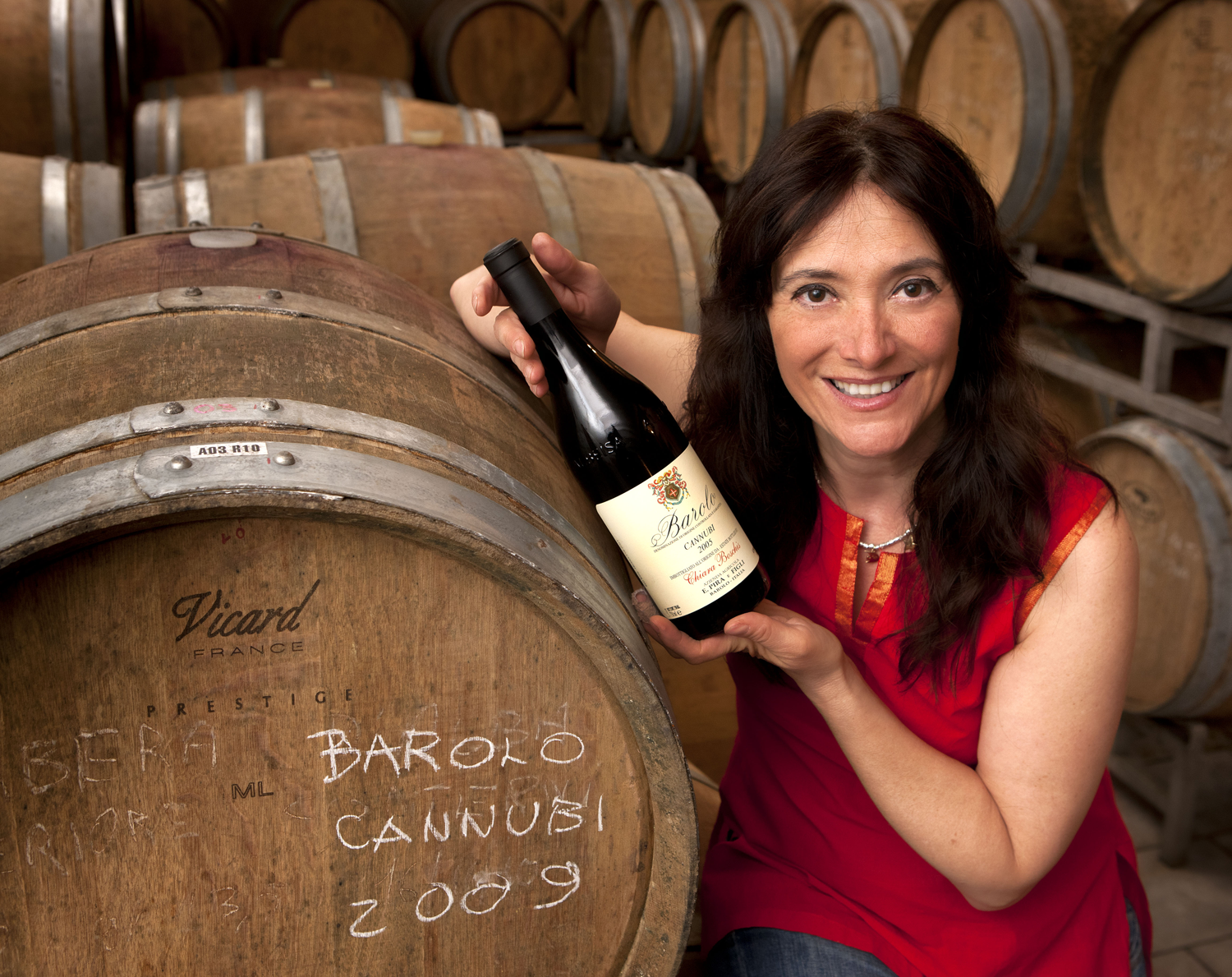
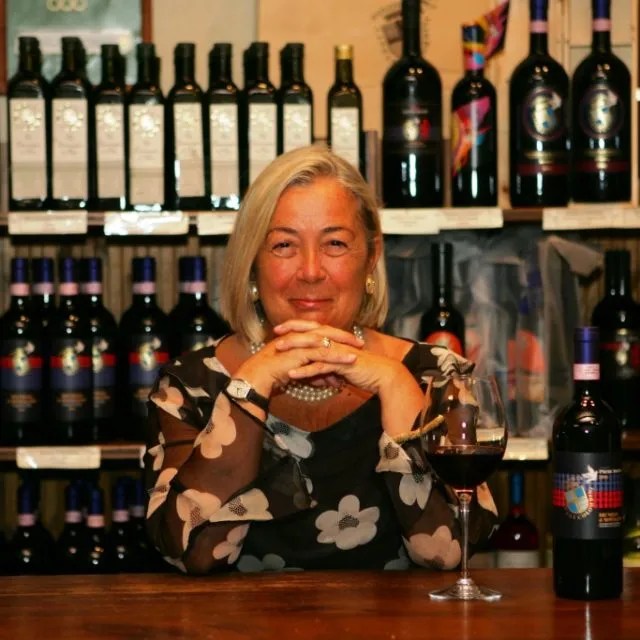
E. Pira e Figli is a key player in the history of Barolo. The Pira family, whose members have been vignerons since the seventeenth century, started producing and bottling wines by the 19th century, and received immediate praise for their work.
In late 1980, the Pira lineage came to a tragic end with the death of the legendary, Luigi (Gigi) Pira (one of the last remaining winemakers to carry out the pressing on foot and the production without the support of any technical means). The estate was then sold to the Boschis family, who had deep family ties with the Pira family. By the end of the 1980’s, Chiara Boschis took the reins of the winery, becoming one of the first women producers in the Langhe. She quickly became a ‘Superwoman’ of the region with her daring and innovative decisions – garnering much acclaim from international publications.
Since 2010, Chiara has been joined by her brother, Giorgio, who shares her same great passion for work in the vineyard and in the cellar. Learn more about their story here.
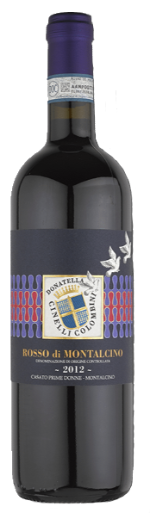
This wine is “Brunello’s younger and smiley brother”. Obtained from the same Sangiovese grapes and the same Montalcino area, but designed to be consumed sooner. This young red wine is very intense and brilliant ruby red in color. The nose is fine, rich, and well expressed; there are notes of ripe small red berries, spices and dark flowers, such as violets. The palate is full, harmonious and pleasant. The tannins are silky and well balanced by the richness of the fruit. The persistence is pleasant and lengthy.
Analysis: 14% alcohol / volume Varietal: 100% Sangiovese Serving: Serve at a temperature between 60.8ºF-64.4ºF, in a balloon shapes wine goblet. Those who wish to open and drink immediately will find it useful to use a decanter. Food Pairing: Versatile and perfect for the table. Opt for important first courses, roasts, tasty cheeses and cold cuts. This wine requires food that is intense in taste, but not too fatty or greasy. Critical Acclaim: 90-91/100 from some of the most prestigious international wine magazines
ABOUT THE VINEYARDS: The vineyards at Casato Prime Donne are cultivated following the organic regime and cover a total of 16 hectares, three of which are always designated to the production of Rosso di Montalcino. These vineyards are on the northern, and coolest, area of Montalcino, on a hill about 225 m. above sea level, where the soil is made up of clays and sea sands. Each vineyard is divided into 6 small parcels and contain about 5,000 vines per hectare. The grapes are cultivated with the spurred cordon method, and the average production is about 6 tons of grapes per hectare.
HARVEST AND VINIFICATION: The grapes are harvested by hand between September 15th and October 10th (depending on the climate of the year). The clusters are chosen right in the vineyard and then the berries are selected on an automatic sorting table where two women work. Generally the grapes for Rosso di Montalcino arrive first and then those for the Brunello. To learn more about the vinification process, click here.
AGING: After the racking/separation of the wine from the lees, the Rosso di Montalcino begins its aging in oak barrels around February. The oak barrels are chosen according to the characteristics of the vintage – from 5 to 40 hl in size – with or without toasting. Duration of barrel aging also varies according to the wine, and can go for some months. As for home aging, aim for 3-4 years, and not much more. Keep the bottles lying down in a dark and cool place to keep the Rosso di Montalcino perfectly harmonious and pleasant, rich in taste with soft tannins and great finesse.
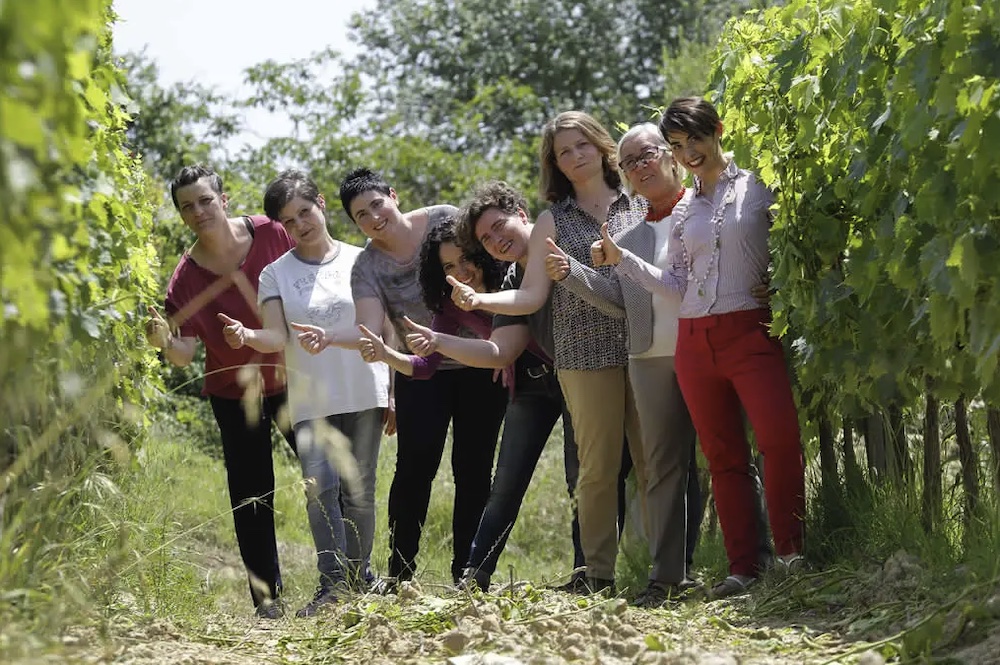
Born in 1953 to a family of producers of Brunello di Montalcino, Donatella Cinelli Colombini founded her own estate in 1998 comprising of Fattoria del Colle in Trequanda and Casato Prime Donne in Montalcino.
Casato Prime Donne is about a 40 hectare property on the northern slope of Montalcino. This estate has belonged to the Colombini family at least since the end of the 16th century and was originally used by Donatella’s maternal forefathers for hunting and to host brides for their honeymoons.
The last three generations, the farm has been passed from mother to daughter – it belonged to grandmother Giuliana Tamanit, then mother Francesca Colombini, now Donatella Cinelli Colombini, who will give it to her daughter, Violante. Donatella has given this location a special meaning, as it is the first winery in Italy to be all female staffed, a flagship for women who work in wine. She has received countless awards and international success for her achievements within the industry. Learn more about their story here.
Named after the town where it is made, in the Midi-Pyrenees region of France, this washed rind, pasteurized, sheep’s milk cheese is a cross between a traditional tomme and a sheep’s milk alpine cheese. The paste is moist and creamy, and the flavor starts with notes of toasted bread and finishes richly with notes of sweet cream, chives and leeks. The flavors are complex and exciting. WINE & CRAFT BEER PAIRINGS:
Pair with any of the wines from our October Wine Club Selections. For beer, look for a light or pale ale or lager. WINESTYLES: BoldBEERSTYLES: Crisp & Clean
Don’t let your Wine Club go home alone!
Join our Cheese Club and bring home a match made in heaven!
If you enjoy pairing cheese with wine, this is your club! Each month you’ll discover specialty and artisan cheeses to pair with your Wine Club. Monthly cheese selections are chosen by your local WineStyles participating location. It’s the perfect opportunity to Taste, Learn and Enjoy® amazing artisan cheese every month! Only $19.99/month and your wine won’t be lonely! Click to learn more >
3.5 lbs sirloin tip roast cut into large pieces (about double or triple the size of regular stewing meat)
1 cup white wine
1 cup beer
1 small can of tomato paste (5.5 fl oz)
2 tsp salt
2 tsp paprika
1 tsp ground allspice
3 bay leaves
1 cinnamon stick
4 cloves garlic minced
1 medium onion diced
1 cup water
6 white potatoes chopped into large pieces
DIRECTIONS:
Cut the beef into large chunks.
In a large bowl add the white wine, beer, tomato paste, salt, paprika, allspice and whisk until well combined. Add the bay leaves and cinnamon stick.
Add the meat to the bowl and mix well to cover all the meat pieces. Cover the bowl with a plastic wrap or put place the entire contents into a ziplock. Store in the fridge for at least two hours or even over night.
Place a large pot on the stove and add the meat contents to the pot. Add the onions and garlic and bring to a slow boil for 30 minutes covered.
Remove the lid, add the water and cover again. Simmer for 2 hours.
Uncover, add the potatoes, mix well, cover and continue to simmer for 30 minutes.
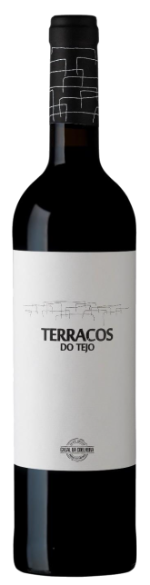
Deep red in color, this wine has a lively aroma with ripe fruit. On the palate, despite its youthfulness, the tannins are presented but well rounded and accompanied by a good structure. It makes for a very tasty wine, easy for daily consumption but with lots of personality.
Varietal: Aragonês, Syrah, Castelão Region: Tejo, Portugal Analysis: 13.6% alcohol / volume Total Acidity: 6.10 g/L pH: 3.64 Total Sugar: 0.9 g/L Soil Type: Sandy European Vegetarian Union: Vegan Serving Temperature: 60ºF-64ºF Pairing: Pasta and white or red meat Longevity: Drink now or keep it until the end of 2025 Winemaker: Nuno Falcão Rodrigues
WINEMAKING NOTES: Destemming, maceration and fermentation with temperature control, malolactic fermentation and filtration.
ABOUT THE WINERY: Located at parallel 39 North, Casal da Coelheira Estate has been benefiting from the Mediterranean climate for over three generations. For years, they have been committed to producing the best and most innovative wines within the Tagus River wine region. While the winery has seen many upgrades to their production and winemaking technology over the years, the facade at Tramagal remains the same – showcasing a traditional Portuguese facility with timeless architecture and impressive white and yellow walls.Learn more about the winery here.
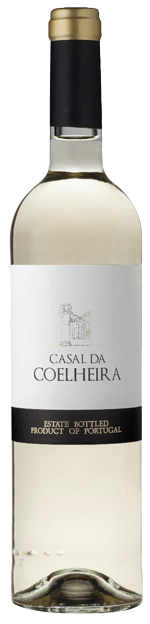
The nose is very fresh with notes of kiwi, lemon and lightly smoked. The palate continues to show a fresh profile, with a well balanced acidity and a persistent taste.
Varietal: Verdelho, Fernão Pires and Arinto Region: Tejo, Portugal Analysis: 13.1% alcohol / volume Total Acidity: 6.59 g/L pH: 3.21 Total Sugar: 0.6 g/L Soil Type: Sandy European Vegetarian Union: Vegan Serving Temperature: 48ºF-50ºF Pairing: Fish or Seafood Longevity: Drink now or keep it until the end of 2025 Winemaker: Nuno Falcão Rodrigues
WINEMAKER’S NOTES Destemming, pneumatic pressing, cold settling, fermentation temperature control, cold stabilization and filtration.
ABOUT THE WINERY: Located at parallel 39 North, Casal da Coelheira Estate has been benefiting from the Mediterranean climate for over three generations. For years, they have been committed to producing the best and most innovative wines within the Tagus River wine region. While the winery has seen many upgrades to their production and winemaking technology over the years, the facade at Tramagal remains the same – showcasing a traditional Portuguese facility with timeless architecture and impressive white and yellow walls.Learn more about the winery here.
½ red chili pepper without excessive seeds, sliced
1 tin of sardines
basil leaves, to taste
200 grams of dried spaghetti
black pepper
lemon zest
½ cup of white wine/lemon juice
DIRECTIONS:
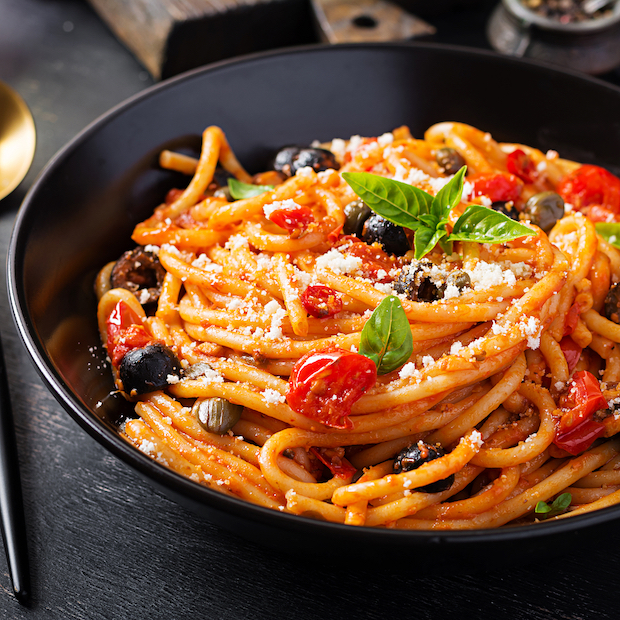
Place a big frying pan over a medium heat, add the olive oil and a drizzle of the sardine oil. When hot, add the bell pepper and cook until slightly soft.
Add the red onion and garlic and sauté for a further 2-3 minutes.
Add the olives and let everything slowly fry until it reaches a softer texture.
Move the ingredients to one side of the frying pan and if necessary add another splash of olive oil and lightly fry your cherry tomatoes and basil leaves.
Once the skin of the tomatoes start wrinkling, combine it with the rest of the pan, and add our chili pepper and the sardines, breaking it into smaller pieces.
Add zests of one lemon and a splash of white wine or lemon juice to deglaze the pan and bring all those flavors together. Let it sizzle for another couple of minutes.
While you wait, bring a large pot of salted water to a boil.
Once the pasta water is boiling, begin cooking your spaghetti. Following the recommended instructions. For “al dente” pasta, remove from the water a minute early to taste.
Add the tomato paste and half of a cup of the pasta water into your sauce. Reduce the heat and let it simmer for 3-5 minutes. The starch from the pasta water will help the sauce to bond with the spaghetti. Try the sauce and check if you need to adjust the salt or add another splash of pasta water. As some of the ingredients already contain salt, extra salt may not be needed.
Drain the pasta and add it immediately into the saucepan and gently combine everything.
Serve the finished sardine pasta into two pasta bowls and add some freshly grated black pepper and Parmesan cheese on top (we know that this goes against the rules but as cheese lovers we think that cheese goes well with everything. Who invented this silly rule anyway?).
Intense color, resulting from a skin maceration prior to fermentation. The aromas are intense with berry notes and red fruits – strawberry and raspberry – combined with a slight floral note as violet. In the mouth it is with great elegance revealing a very gastronomic wine with good body, fruit and a well balanced acidity.
Varietals: Touriga Nacional, Alicante Bouchet, Touriga Franca Region: Tejo, Portugal Analysis: 13.0% alcohol / volume Total Acidity: 7.8 g/L pH: 3.20 Total Sugar: 0.6 g/L Soil Type: Sandy European Vegetarian Union: Vegan Serving Temperature: 46ºF-50ºF Pairing: Drink as a starter, or pair with salads, pasta, fish or seafood Longevity: Drink now or keep it until the end of 2024 Winemaker: Nuno Falcão Rodrigues
WINEMAKING NOTES: Destemming, crushing, maceration and fermentation with temperature control, malolactic fermentation, partly matured in American oak, filtration.
ABOUT THE WINERY: Located at parallel 39 North, Casal da Coelheira Estate has been benefiting from the Mediterranean climate for over three generations. For years, they have been committed to producing the best and most innovative wines within the Tagus River wine region. While the winery has seen many upgrades to their production and winemaking technology over the years, the facade at Tramagal remains the same – showcasing a traditional Portuguese facility with timeless architecture and impressive white and yellow walls.Learn more about the winery here.

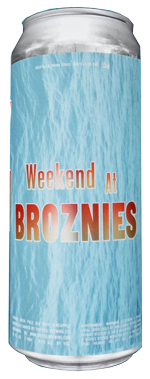 The Veil Brewing Co.
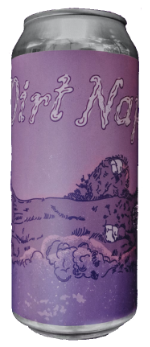 The Veil Brewing Co.
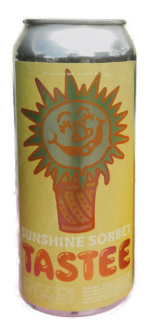 The Veil Brewing Co.







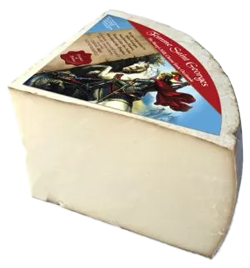 Tomme Saint Georges
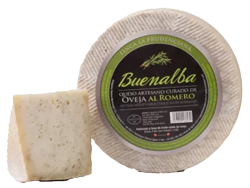 Romero Fino-Buenalba
Toledo, Spain
Romero Fino-Buenalba
Toledo, Spain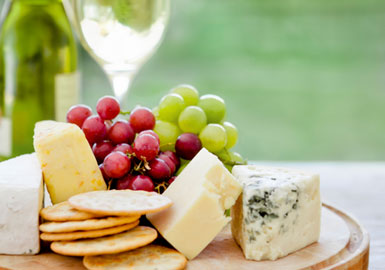
 MOLHA DE CARNE (Azores Beef Stew with Potatoes)


 GAMBAS AL AJILLO (Garlic Shrimp)


 PORTUGUESE STYLE SARDINE SPAGHETTI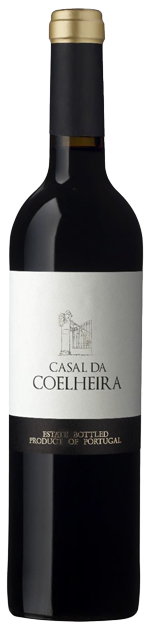
 WineStyles Tasting Station