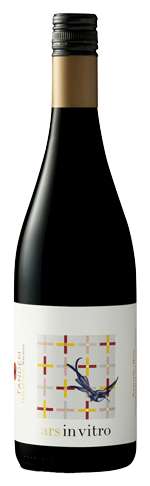
Cherry red in color, this mountain wine has a powerful expression of the terroir. Mineral, with intense floral aromas predominately violets, on a background of cherries and strawberries. On the palate it is a fresh wine, lengthy, persisting for a long time, and displaying again the Merlot variety’s floral character. Pairs well with casseroles, red meat, charcuterie, pasta, poultry, and light cheese.
Varietal: 92% Tempranillo, 8% Merlot Analysis: 14% alcohol / volume Soil: Clay loam Vinification: Pre-fermentation cold maceration. Fermentation at 77-80.6ºF in stainless steel without pumps, with cap immersion or pigeages. The wine is racked by gravity to the concrete vats on the lower floor of the production plant where malolactic fermentation takes place and clarification occurs naturally through decantation. Bottled by gravity with minimal filtration. Aging: Minimum 24 months in concrete vats. No time spent in oak. Serving Temperature: 60.8ºF Critical Acclaim:
2012 – 90 Stephen Tanzer
2013 – The Wine Merchant Top 100
2014 – 90 points Decanter
2017 – 88 points Robert Parker Wine Advocate
2019 – 92 points Tim Atkin
WINERY’S NOTES/ABOUT THE NAME: Ars In Vitro translates into “art in glass” or “in bottle” in Latin. This wine expresses the freshness and powerfulness of the cool climate grapes from the Yerri Valley without the presence of wood. Fresh, enjoyable, pleasant and ideal for any occasion.
ABOUT BODEGA TANDEM: Compañía Vitivinícola Tandem was founded in January 2003 by Alicia Eyaralar, José María Fraile and a small group of wine-loving friends and family. With extensive experience in winemaking and marketing—both together and separately—they were driven by a shared dream to create something unique. The name Tandem, meaning “at last” in Latin, reflects this long-held aspiration. Their mission is to craft elegant, expressive wines that reflect the character of their land in the Navarra DO, while following a path rooted in respect for nature, minimum intervention, and meticulous care. Committed to consistency, sincerity, and continual improvement, Tandem strives to become a benchmark for quality in the region. Learn more about the winery here.
Spanish Skewers
INGREDIENTS:
200 g (.4 lbs) waxy potatoes, peeled and cut into 3/4 in. chunks
1 tbsp mild olive oil
2 tsp finely chopped fresh rosemary
1 large red pepper, deseeded and cut into 3/4 in. chunks
1 large yellow pepper, deseeded and cut into 3/4 in. chunks
200g cooking chorizo, cut into 24 pieces
24 short bamboo skewers
For the Garlic Dip:
200 g half-fat crème fraîche
1 garlic clove, crushed
½ small pack flat leaf parsley, finely chopped
DIRECTIONS:
Heat oven to 400ºF. Half-fill a large pan with water and bring to the boil. Add the potatoes and return to the boil. Cook for 1 min, then drain in a colander and tip into a bowl. Pour over the olive oil, sprinkle with the rosemary and season. Toss together.
Scatter the potatoes over a large baking tray and cook for 5 mins. Turn the potatoes, add the peppers and cook for a further 10 mins or until just beginning to soften. Set aside to cool.
Thread a chunk of yellow pepper, a chunk of potato and a chunk of red pepper onto bamboo skewers, finishing with a piece of chorizo. Place on a parchment-lined baking tray, cover and chill (up to 8 hrs). To make the dip, mix all the ingredients in a bowl, cover and chill.
When ready to serve, bake the skewers for 10 mins or until the vegetables are softened and nicely browned, and the chorizo slices are cooked through. Serve with the dip.
Ars Nova, contains the winery’s signature blend of Tempranillo, Cabernet Sauvignon and Merlot. It is deep ruby red in color with a violet rim. Complex and fresh on the nose, this wine revels ripe red and black fruit with balsamic hints. It is very elegant with many layers featuring notes of bramble berry fruits, blueberries, licorice and blackberries, scrubland, thyme and mint. It’s delightful, long, enveloping and extraordinary. A fresh mountain wine with a strong expression of its terroir. Pairs well with casseroles, lamb, red meat, game, stuffed pasta, poultry and cheese.
Varietal: 40% Tempranillo, 40% Cabernet Sauvignon, 20% Merlot Analysis: 14.5% alcohol / volume Acidity: 5.8 g/l Residual sugar: 0.4 g/l Soil: Clay loam Vinification: Fermentation temperature of 86ºF, slow extraction with pigeages; they do not use pumps in fermentation. Racking by gravity to concrete vats. Malolactic fermentation and natural clarification by decanting into concrete vats. It is not cold stabilized nor fined. Serving Temperature: 62.2ºF Critical Acclaims:
2003 – Selected blind for KLM business class, 3 stars Selection magazine, 17/20 John Radford Wine Wire
92 pts. Ray Jordan West Weekend Magazine Perth
2005 – Gold Sommelier Wine Awards
2008 – 90 points Stephen Tanzer International Wine Cellar
2010 – Gold Medal Mundus Vini 2015
2012 – 91 points Vinous Antonio Galloni
2014 – 89 points Robert Parker Wine Advocate
2018 – 90 points James Suckling, 90 points Guia Peñin, 94 points Tim Atkin
WINERY’S NOTES/ABOUT THE NAME: Latin for “new art”, is very applicable to the philosophy of this wine. Ars Nova was a musical movement in the 14th Century which brought about the advent of volume in music. Until that time music was flat and monochrome. This new way of creating music was more complex, marked by harmony and rhythm. This was the origin of polyphony. Music which was composed from then onwards was called ars nova and music prior to that time was termed ars antiqua. It has been compared with the introduction of perspective in painting which occurred during the same period. Ars Nova is an elegant wine, feminine, multi-layered, a wine for reflection and enjoyment.
ABOUT BODEGA TANDEM: Compañía Vitivinícola Tandem was founded in January 2003 by Alicia Eyaralar, José María Fraile and a small group of wine-loving friends and family. With extensive experience in winemaking and marketing—both together and separately—they were driven by a shared dream to create something unique. The name Tandem, meaning “at last” in Latin, reflects this long-held aspiration. Their mission is to craft elegant, expressive wines that reflect the character of their land in the Navarra DO, while following a path rooted in respect for nature, minimum intervention, and meticulous care. Committed to consistency, sincerity, and continual improvement, Tandem strives to become a benchmark for quality in the region. Learn more about the winery here.
Balsamic Grilled Portobello Mushrooms
INGREDIENTS:
2tablespoonsbalsamic vinegar
2tablespoonsolive oil
1tablespoonlemon juice
2clovesgarlicminced
½teaspoonDiamond Crystal kosher saltor ¼ teaspoon of any other salt, including Morton kosher salt
4portobello mushrooms
2tablespoonschopped parsleyfor garnish
DIRECTIONS:
In a small bowl, combine the balsamic vinegar, olive oil, lemon juice, garlic, and kosher salt.
Wipe the mushrooms clean with a damp paper towel. Gently twist or cut off the stems. Use a spoon to scrape out the gills.
Using a pastry brush, coat the gill side with about a third of the marinade.
Heat a 2-burner griddle, a grill pan, or an outdoor grill on medium heat. Grease the grill well.
Place the mushrooms, gill side down, on the grill. Grill until the gill side is browned and tender, 4-5 minutes.
When the gill side is almost ready, brush the tops of the mushrooms with another third of the marinade.
Flip the mushrooms so that they’re gill side up. Continue grilling them until they are browned and tender, 2-3 more minutes.
Transfer the mushrooms to a plate. Brush them with the remaining marinade, sprinkle them with parsley, and serve.
Böen Wines2023 Reserve Pinot Noir
Santa Maria Valley, California
MELLOW WINE STYLE
Scarlet red with glimmers of garnet. The nose has notes of ripe blackberry, boysenberry, and tart cherry are followed by subtle hints of tobacco and cocoa powder. On the palate, vibrant flavors of very ripe boysenberry, blueberry, and plum pie are complemented by layers of rosemary and cocoa. These flavors are balanced by firm tannins that carry through to a long, structured, and mouthwatering finish.
Varietal: Pinot Noir Analysis: 14.7% alcohol / volume Appellation: Santa Maria Valley AVA, California Vineyards: Haribach V. Vineyard Oak Maturation: 100% French oak, 40% new for nine months with limited use of S02 to maintain phenolic profile Harvest Dates: Late September to early October 2023 Food Pairing: Roasted lamb, rib eye with mashed potatoes, chicken mole, or a hearty charcuterie platter. Awards: 95 pts Wine Enthusiast; 94 pts. Tasting Panel
Winemaker’s Notes:“The label on our Böen Reserve pays homage to the agricultural legacy of Napa Valley and the family roots that shaped our winemaking journey. It features a woodcut-style image of a traditional farm, with my grandfather, Charlie Wagner Sr., standing at its center, surrounded by livestock and Bamse, the German shepherd who was a familiar face around the Copper Cane winery for years. Napa Valley was once more about farming than the renowned wine destination it is today, and I was fortunate to grow up in that era. My grandparents took a bold leap from being farmers of various crops to cultivating vineyards and making wine—an endeavor that, at the time, was as risky as it was rewarding and the legacy continues on as we farm & make wine from many coastal regions. This label is a tribute to my grandfather’s deep farming roots and serves as a reminder to always work hard, stay grounded, and never forget where we come from.” – Joseph Wagner, Fifth Generation Winemaker
Growing Season:The 2023 growing season in Santa Maria Valley AVA began with cooler temperatures and average rainfall, which led to a slightly delayed budbreak. A warm spell in February and March accelerated vine growth, but cooler conditions and frost events in April reduced yields. From late April to August, consistent warm days and cool nights promoted optimal ripening, with veraison completing by the end of August. A mild sub-tropical storm in September brought moderate rainfall, but dry weather afterward prevented rot. The resulting Pinot Noir grapes showcased vibrant colors, rich flavors of cherry and blackberry, excellent acidity, and smooth tannins. Harvesting took place from late September to early October, resulting in a promising vintage.
Winemaking:The Böen team harvested early in the morning so the fruit would arrive at the winery while the grapes were still cool to preserve their vineyard-fresh flavors. After destemming (but not crushing) the berries, they cold-soaked the must for 14 days to soften the skins and allow for ideal extraction. Both punch-down and pump-over techniques were used to ensure balanced extraction of flavor, aromatics, structure, and color. To allow both the sweet and structural influences from the barrels to intermingle seamlessly with the rich fruit and ripe tannins of the wine, they aged this Pinot Noir in 100% French oak, 40% new for nine months with limited use of S02 to maintain the phenolic profile.
About Böen Wines:
Böen Wines was founded by Joseph Wagner, a fifth-generation Napa Valley winemaker who grew up immersed in viticulture at his family’s Caymus Vineyards. In 2001, he established Belle Glos, focusing on vineyard-designated Pinot Noirs from California’s coastal regions. With Böen, Wagner continues his family’s legacy, producing Pinot Noir and Chardonnay that reflect his signature style of rich, ripe fruit flavors balanced with bright acidity and subtle oak nuances. The name “Böen,” meaning “The Farm,” serves as a personal reminder of the inseparable connection between the wine and its land, emphasizing Wagner’s identity as a farmer first and foremost. Learn more here.
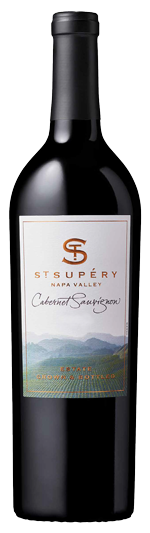
This Estate Cabernet of deep purple hues, presents dark blackberry aromas combined with an elegant toasted oak nuance, threads of boysenberry, rich opulence with subtle notes of jam and graphite. Flavors follow with ripe blackberry jam, a luscious approach of dark fruits, terrific structure supported with elegant moments of oak and a finishing hint of anise. This is a supple yet generous wine with an excellent structure, feel and approach.
Varietals: 90% Cabernet Sauvignon, 4% Malbec, 3% Petit Verdot, 3% Merlot
Analysis: 14.5% alcohol / volume
pH: 3.70
Total Acidity: 6.2 g/L
Appellation: Napa Valley, California
Vineyards: Dollarhide Estate Vineyard, Rutherford Estate Vineyard
Farming: Sustainably farmed, estate grown and bottled
Oak Maturation: 100% French Oak (38% new) for 19 months
Harvest Dates: September 20-October 16, 2019
Bottling Date: July 12-21, 2021
Vintage 2019:The 2019 growing season had a very wet winter and spring, capturing 41” of rain at Dollarhide. A mild spring with one late-May rainfall resulted in damp soils and healthy canopy growth. Other than one mid-June heat spell, summer was warm and dry, allowing for consistent and balanced ripening. Late summer and early fall continued to provide steady warmth. As evenings began to cool, the fall growing season was extended. The even ripening season with a mild summer resulted in excellent wine of great flavor and density. Winemaking:The fruit was hand-harvested in the cool morning hours. At the winery, the clusters were sorted using a double sorting system. First, the clusters were sorted by hand. The fruit then ran through a small de-stemmer before the individual berries being sorted to ensure the ideal grapes were selected. These berries were delivered to a fermenter where there was a period of resting on skins. Warm fermentation temperatures with gentle cap maceration achieved the desired color and structure before an extended maceration time on skins, prior to final pressing. The wine was transferred directly to barrel for 19 months of maturation.
About the Winery:
St. Supéry Estate Vineyards and Winery is a 100% Estate Grown, sustainably farmed winery located in the renowned Rutherford growing region in the heart of Napa Valley. Committed to producing the highest quality estate wines without compromise, they focus on sustainable winery and farming operations to protect the land and environment for future generations. Their Napa Valley Estate collection includes Sauvignon Blanc, Cabernet Sauvignon and Rosé. These wines are balanced and showcase fruit-forward flavors. Learn more here.
Join our PREMIUM WINE CLUB, enjoy amazing wines every other month. Plus, you’ll receive 10% off all retail wine purchases!Learn more about ourPremium Club >
This barrel-select Zinfandel opens with toasted oak, blueberries and boysenberries. It has an enticing palate consisting of blue plums and mixed berry coulis, followed by a long elegant finish, with rich tannins.
Varietal: 100% ZinfandelAnalysis: 14.4% alcohol / volume
pH: 3.73
Residual Sugar: 0.25
Appellation: El Pomar District AVA, California
Vineyards: 100% Pomar Junction VineyardAging: 19 monthsCooperage: 33% new oakAccolades (for 2015 vintage):Gold Medal San Francisco Chronicle Wine Competition; Gold Medal Central Coast Wine Competition
About Pomar Junction Vineyard and Winery:
Dating back at least eight generations, the Merrill Family has been growing and producing grapes on California’s Central Coast since the 19th Century. Originally, the family was growing grapes for other wineries in California – from premium small producers to large international brands. Today, Dana and Marsha Merrill, along with their son, Matthew, and winemaker, Jim Shumate farm the vineyards and produce elegant wines of their own.Learn more here.
Try this wine with the following recipe…
Slow Cooker Korean Pulled Pork Sliders
INGREDIENTS:
Pork:
3-4lbsboneless pork shoulder
2-4tbspgochujang (Korean chili paste)add more for spicier meat
¼ cupbrown sugar
¼ cuphoisin sauce
Gochujang BBQ Sauce:
2-4tbspgochujang (Korean chili paste)(more to make more spicy)
½ cupketchup
¼ cuprice wine vinegar
¼ cupbrown sugar
2tbspsoy sauce
2tbsphoney
4clovesgarlic, minced
Quick Pickled Vegetables:
2tspgranulated sugar
¼ cuprice wine vinegar
½ mediumcucumber, thinly sliced
1mediumcarrot, thinly sliced
2mediumcelery stalks, thinly sliced, including leaves
Sliders:
16slider buns
2tbspchopped cilantro
DIRECTIONS:
Pork:
Mix gochujang, brown sugar and hoisin sauce together in a small bowl and rub over pork shoulder.
Place in slow cooker and add 1/2 cup water. Cook on low for 7-8 hrs or high for 3-4 hrs.
Gochujang BBQ Sauce:
Whisk all ingredients together (gochujang, vinegar, brown sugar, soy sauce, honey and garlic) in a small sauce pan. Heat over medium and bring to a simmer, reduce heat and simmer on low for 10-15 minutes until flavors blend. Remove from heat and allow to cool.
Pickled Vegetables:
In a bowl mix together sugar and vinegar. Add vegetables and toss. Cover and chill until meat is ready.
Assembly:
Mix half the BBQ sauce with pulled pork and serve with buns, quick pickled vegetables, reserved BBQ sauce, and chopped cilantro (if using).
Join our WINE CLUB and enjoy these amazing wines and pairing recipes each month. Plus, you’ll receive 10% off all retail wine purchases!Learn about our Memberships >
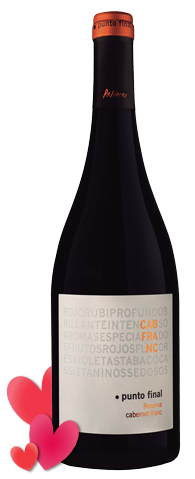
Intense ruby red color with violet reflections. Its aromas are of sweet spices, black pepper, cloves interwoven with soft notes of eucalyptus with a hint of pepper. As the wine opens, aromas of vanilla and chocolate appear from its aging in oak. The palate has great concentration, intensity and sweet impact, with ripe black fruit flavors and a distinctive caramel macchiato note. Soft, round tannins with good acidity and a long, lingering finish.
Varietal: Cabernet Franc Analysis: 14.1% alcohol / volume pH: 3.7 Total Acidity: 5.5 g/L Appellation: Luján de Cuyo, Mendoza, Argentina Grapes: From Vista Flores (1300 m.a.s.l. – calcareous and stony soils) and Perdriel – Luján de Cuyo (950 m.a.s.l. – loam soils). Vineyards: More than 15 years old with yields of less than 8 tons per hectare Selection: Double manual selection of clusters and berries Maceration: For 2 days at 46.4°F Alcoholic Fermentation: With indigenous yeasts for 12 days in stainless steel tanks at temperatures between 71.6 and 75.2°F Malolactic Fermentation: In stainless steel tanks Aging: In French oak barrels for 12 months Critical Acclaims: 90 pts James Suckling 2019; 91 pts James Suckling 2017; Silver Medal 90 pts Decanter 2017; 91 pts Decanter 2014: 91 pts Robert Parker 2011
About the Winery: Nestled in Luján de Cuyo—one of Mendoza’s premier regions for producing premium wines—Bodega Renacer was purposefully designed to craft high-end wines. Founded by Patricio Reich, a wine industry veteran since the late 1980s, his journey began as a partner and managing director at Viña San Pedro in Chile. Over time, his passion for winemaking deepened, inspiring him and his family to launch a new venture focused on creating exceptional wines. Established in 2003 at the base of the Andes Mountains, the winery features Tuscan-inspired architecture, pergolas, and Italian-style gardens—a tribute to its family heritage and a warm invitation to visitors. Bodega Renacer is driven by their key principles: a relentless pursuit of quality, a commitment to innovation, a strong family spirit, sustainability, and a dedication to specializing in Malbecs and Cabernets. Learn more here.
Try this wine with the following recipe…
Authentic Cacio e Pepe (classic Roman dish)
INGREDIENTS:
1 lb. of dried spaghetti
8 ounces of finely shredded Pecorino Romano cheese
1 teaspoon of black pepper roughly ground
salt to taste
DIRECTIONS:
Set timer, bring a large pot of salted water to boil and add the Spaghetti.
Add pepper to a large sauté pan and slowly heat until you can smell the pepper.
To prevent burning, add a ladle (or two) of the pasta water and let it lightly boil. Make sure the pan doesn’t go dry and burn the pepper.
Add the cheese and a couple of ladles of boiling water to a bowl and mix it until it is creamy like a paste.
When the Spaghetti is cooked, add it to the sauté pan with the water and pepper. Quickly stir the pasta and try to develop a sauce from the pepper and starchy pasta water.
After two minutes of stirring, take off the heat and continue to stir while letting the pasta and pan cool a little, for about a minute.
Add the cheese mixture while the pasta is off the heat. Stir vigorously and mix the cheese throughout the pasta.
Put the pasta and cheese mixture back on a low flame and continue to stir it. If the sauce gets too dry, and one more ladle of pasta water to loosen up the mixture.
Once everything is well mixed and creamy, serve immediately. When it is in the serving bowl, top with a little bit of fresh ground pepper and some more cheese.
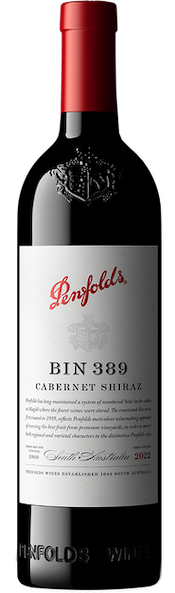
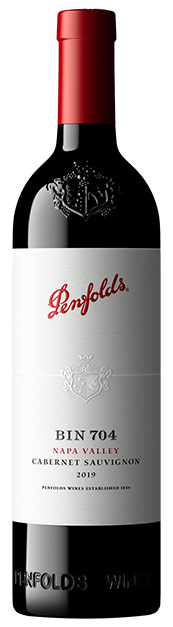
The color is glossy, dark red and purple. The nose is an “old school” Penfolds nose—a classic and comforting homage to their storied past. It opens with the rich, deep tones of mahagany and the refined scent of a cigar box. Sweet oak spices are neatly interlaced with a dusty character. This foundation is lifted by summer berries, offering a balance between richness and vitality. Baking spice is present alongside tart red currant and cranberry, while the aroma of fresh pastries rounds out the nose. The palate is immediately enveloped by cocoa powder-like tannins—smooth yet profound in their impact. The wine boasts volumes of Cabernet character, showcasing cool fruits that are well lifted and vibrant. A barrel ferment nuance adds depth without overshadowing the fruit’s purity. Sourdough notes bring a rustic edge which complement the lush profiles of plum fruits, blackberry, mulberry, wild cherries and more distinctly tart morello cherries.
Varietal: 51% Cabernet Sauvignon, 49% Shiraz Vineyard Region: McLaren Vale, Coonawarra, Barossa Valley, Padthaway, Wrattonbully Analysis: 14.5% alcohol / volume pH: 3.62 Total Acidity: 6.7 g/L Maturation: 12 months in American oak hogsheads (36% new) Peak Drinking: 2025-2050 Awards:
96 Points – Andrew Caillard MW
96 Points – Tyson Stelzer
96 Points – Huon Hooke
96 Points – James Halliday
96 Points – Ken Gargett
94 Points, #12 on Wine Spectator’s Top 100 List
Winemaker’s Notes: Bin 389 was often referred to as ‘Baby Grange’, in part because components of the wine are matured in the same barrels that held the previous vintage of Grange. First made in 1960 by the legendary Max Schubert, this was the wine that helped forge Penfolds reputation with red wine drinkers by combining the structure of Cabernet Sauvignon with the richness of Shiraz. Exemplifying the judicious balance of fruit and oak, Bin 389 highlights the generous mid-palate Penfolds is known for.
Vintage Conditions: In McLaren Vale, temperatures rarely soared above 35°C — significantly lower than in the previous vintage. This coolness contributed to a delayed but unhurried harvest, allowing Shiraz and Cabernet Sauvignon fruit to be picked at an ideal time for quality. Coonawarra experienced its own cold spells with nine days dipping below 2°C during spring. The lowest point was recorded early in September at -0.3°C. Frost fans played a critical role in protecting the vines from damage. Warmer weather returning late November to December provided perfect conditions for flowering and fruit-set, leading to uniform veraison with robust grape flavors, tannins, and color. The Barossa Valley told a story of resilience under cool conditions with spring storms bringing winds and heavy rains including hail; nevertheless, yields exceeded early predictions. A dry but cool December extended the fruit-set period; however, this did not hinder sugar accumulation or phenolic maturity thanks to healthy canopies that retained acid well into the growing season. Padthaway faced a challenging frost event in mid-October, followed by mild weather free from significant heat spikes or harvest delays due to rain — conditions conducive for quality grape development. Wrattonbully faced its own trials with rainfall from October to April measuring 49% above long-term averages. While excess moisture slowed ripening and pushed back harvest dates slightly, fruit quality was not impacted, and ‘A grade’ blocks produced a high-quality harvest.
About the Winery: Penfolds is one of Australia’s most iconic wineries, founded in 1844 by Dr. Christopher and Mary Penfold. With a history spanning over 175 years, the winery has built a legacy of crafting world-renowned wines. Penfolds blends tradition with innovation, focusing on quality, multi-regional sourcing, and a diverse portfolio that spans a wide range of varietals. The winery’s commitment to excellence has made it a symbol of premium Australian wine on the global stage. Learn more here.
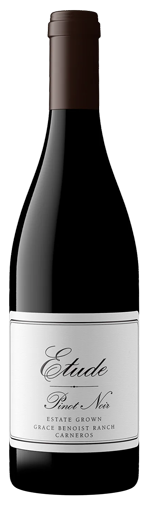
The Etude Carneros Pinot Noir is a true reflection of the winery’s estate vineyard, Grace Benoist Ranch. A blend of the best grapes from individual vineyard parcels on the Ranch, this wine tells the story of a particular vintage from a very unique place.
Vibrant and lively, this ethereal ruby red Pinot Noir is full of lifted red berry aromas alongside flavors of strawberry compote, Bing cherry, pink peppercorn, and delicate hibiscus flower with nuances of earth and spice. The mouthfeel is savory and rich with fine-grained tannins and finishes long and fresh with hints of cinnamon and clove, a signature characteristic often found in Grace Benoist Ranch Pinot Noirs. Silky and supple with a lean line of acidity, making it ideal for enjoying now, or cellar away, for further development of the complex layers of flavor.
The Vineyard: The Etude Carneros Pinot Noir originates from their estate vineyards located in the far northwest corner of the Carneros appellation, near the southwest corner of Sonoma. Unlike the majority of Carneros, which features soils composed of clay from uplifted bay bottoms, the soils at Grace Benoist Ranch are diverse and influenced by volcanic origins. These well-drained, rocky upland soils, combined with the vineyard’s extreme western location near the Pacific Ocean and San Pablo Bay, create an ideal environment for cultivating Burgundian varieties.
The vineyard parcels at Grace Benoist Ranch are carefully aligned with the diverse soil types and varying contours of the ranch’s topography. Each vineyard averages just eight acres, with dense spacing to promote low per-vine yields of intensely concentrated fruit. The ranch is farmed to Etude’s rigorous standards using environmentally responsible viticultural practices. It is sustainably managed and certified by both the California Sustainable Winegrowing Alliance and Fish Friendly Farming. Grace Benoist Ranch encompasses four smaller vineyards—Laniger, Deer Camp, Temblor, and Heirloom—which feature five principal soil types and 20 distinct Pinot Noir clones.
Production: The 2019 harvest started one to two weeks later than previous years, mostly due to February rains, but because the vines were in their winter dormancy, it did not affect the 2019 crop. Spring continued to be wet with some rain during flowering, followed by cool temperatures that allowed the grapes to mature gradually. Most grapes ripened at lower sugars, thanks to the extended, cool growing season, and winemakers were pleased with the full flavors, fresh acidity and superb balance of the 2019 fruit. Wildfires in October did not impact this year’s harvest as the vast majority of the grapes were already brought in, resulting in a crop size pretty much on par with previous years.
Winemaking: For more than a decade Jon has fashioned Etude wines with a simple creed: Inspired winegrowing diminishes the need for a winemaker to intervene in the cellar. Whether sourcing from the estate Grace Benoist Ranch in Sonoma’s Los Carneros, or vineyards like Fiddlestix and North Canyon in famed growing regions of California’s Central Coast, his focus is on coaxing the very best from the vineyard. It shows in every glass of Etude.
About the Winery: Etude is located in the Carneros region, which is the only American Viticultural Area (AVA) located at the crossroads of two major regions: Napa and Sonoma. Los Carneros, named in tribute to the livestock that roamed its hills from the late 1800s to the mid-20th century, was officially designated as an AVA in 1983. The year before, Etude was founded by winemaker Tony Sotor, whose leadership, along with the efforts of the Etude winemaking team, played a pivotal role in defining not only the boundaries of this new AVA but also the distinctive characteristics and quality of its grapes. These qualities continue to set Los Carneros apart from other AVAs in both Napa and Sonoma. As a cooler climate wine region, Los Carneros benefits from fog and maritime breezes flowing in from the Pacific through the San Pablo Bay and Petaluma Gap. This natural cooling slows vine growth and photosynthesis, allowing for a prolonged hang time that results in concentrated flavors, optimal sugar and phenolic ripeness, and balanced acidity in the grapes. To learn more about the winery, click here.
Violet-ruby in color. The nose reveals fresh red and black fruit aromas like cherries, plums and fruits of the forest, along with a floral hint. In the mouth, this wine is juicy with smooth tannins and medium body. The finish is well-balanced and presents notes of sweet red fruit. This wine is very approachable and a great option for sharing.
Varietal: 100% Cabernet Sauvignon Analysis: 14% alcohol / volume Appellation: DO Alto Cachapoal Valley, Chile Vineyards: Estate grown and bottled Winemaker: Emiliano Dominguez Battochia
WINEMAKING: Made with estate grown grapes from a ravine in the Andean foothills of the Cachapoal Valley. The grapes were hand-harvested into 12-kg boxes. Following cluster selection, they were destemmed and fell directly into the stainless steel tank without the use of pumps. A 3-day pre-fermentative maceration was followed by alcoholic fermentation for 10 days at a temperature of between 64.4ºF and 68ºF. Ninety percent of the wine remains in stainless steel for the malolactic fermentation, while the other 10% is racked into third-use French oak barrels. The wine is aged for at least six months and then bottle-aged for a further six months prior to release.
Mosaiko is a blend from blocks of Cabernet Sauvignon, with each contributing different characteristics to achieve a youthful wine that is characteristic of the region.
ABOUT CALYPTRA VINEYARDS & WINERY: In 1989, Dr. Jose Miguel Zarhi Troy, a plastic surgeon and wine enthusiast, initiated a vineyard project by planting the first Chardonnay vines on his property in the Alto Cachapoal Valley. Over time, his passion project expanded to include various vine varieties and a winery, producing some of Chile’s top-tier wines. In 2018, Dr. Zarhi extended the Calyptra Winery venture by partnering with Lic. Fernando Rodriguez Merino, an IT businessman from Argentina who is deeply involved in the wine, hospitality, and gastronomic industry since 2007. This collaboration led to the acquisition of a plot in Los Árboles de Villegas en Tunuyán, a prime wine-growing region in the Uco Valley at 1,250 meters above sea level. Learn more here.
Try this wine with the following recipe…
Grilled Portobello Steaks with Chimichurri and Onion Strings
1 to 2teaspoonspicy red chili such as bird’s eye chili, finely minced or red chili flakes (to taste)
sea salt and ground black pepper, to taste
Grilled Portobello Steaks
6portobello mushroom caps
½ cup vegetable oil
2tablespoonlow-sodium soy sauce or tamari
2teaspoonliquid smoke
Mushroom “Steak” Spice
2tablespoonmustard seed, slightly crushed in mortar & pestle
2tablespoongranulated garlic
2tablespoondill weed
2tablespoonbrown sugar
2teaspoonkosher salt
2teaspoondried minced onion flakes
2teaspoondried minced garlic flakes
2teaspoonwhole black peppercorns, crushed in mortar & pestle (or ground black pepper)
DIRECTIONS:
Make the chimichurri by combining all the ingredients in a bowl. Refrigerate while you prepare the portobello steaks and onion strings. Don’t make this too far in advance as it will brown.
Trim the stems from the mushroom caps.
In a small bowl combine vegetable oil, low-sodium soy sauce, and liquid smoke.
Combine all of the mushroom steak spices in a separate bowl big enough to fit the mushroom caps.
Brush the oil mixture over each portobello mushroom on each side. Then coat both sides in the steak spice covering it thoroughly. Repeat with remaining mushrooms. Place them on a baking sheet or platter.
Heat a cast iron grill pan over medium-high heat. When hot, place 2 to 3 mushrooms top down and grill for 2 minutes. Turn the mushrooms slightly about 45 degrees to get cross hatched grill marks. Grill for another 2 minutes. Flip and grill the underside of the mushroom for 2 minutes. Turn the mushrooms slightly and cook for another 2 minutes. Set aside to let the mushrooms rest.
If you have another cast iron, you can place it on top of the mushrooms while grilling to help press the moisture out. See the recipe from Hot for Food for further instructions.
The color has a saturated core and luminous crimson rim. The nose is abounded with red and sweet spices of paprika, sumac, cinnamon, rose water, saffron, red currants, Iranian barberries, and pomegranate. It has a steely-coolness and ferrous minerality. French oak announces itself, cedar-y and structural, all proudly supporting a saturated mulberry and summer berry core. It’s reminiscent of scents from the pâtisserie: dark cherry pie, and milk chocolate mousse dusted with freeze dried raspberries.
The palate is defined, yet approachable. It has a silkiness to it with a gorgeous texture that glides effortlessly across the palate. Succulence, mouth-watering and appetite-inducing acidity, a find graphite core confirms the varietal’s identity. There is power lurking beneath, a dense black fruit drive—which is somewhat unexpected, yet most welcome. This confident wine can be enjoyed now or cellar for a decade or more.
Analysis: 14.5% alcohol / volume AVA: Napa Valley Varietal: Cabernet Sauvignon pH: 3.73 Total Acidity: 6.33 g/L Maturation: 17 months in French oak (40% new) Peak Drinking: Now-2036 Awards:
94+ Points – Erin Larking – Robert Parker’s The Wine Advocate
94 Points – Lisa Perrotti – Brown, The Wine Independent
Winemaker’s Notes: Steeped in Penfolds winemaking tradition yet still embracing modernity, Bin 704 seeks to redefine Napa Valley Cabernet through a Penfolds lens. Being mindful of varietal nuances, regional essence and silk-like textural definition, the wine is nurtured in French barriques for maturation. Impressive is the cyclical nature of viticulture and winemaking and Penfolds recognizes that different hemispheres often end up being the mirror image of the other. The name Bin 704 draws inspiration from the “mirror” or “reverse” image of its Australian Bin 407 stablemate, a wine which also respects varietal expression.
Vintage Conditions: Excellent winter rainfall ensured the soil was fully saturated at the beginning of the growing season. Spring was cooler and wetter than recent years, resulting in a two-week delay to bud-burst and flowering. May rainfall was especially helpful in maintaining the soil moisture profile. Warm summer weather had the vines moving along well making up for the slow start to the season. August was characterized by warm days and cool nights, optimal conditions for veraison. Harvest across the region was one to two weeks later than usual with yields close to long-term average. A good vintage for Cabernet Sauvignon, with grapes showing bright acidity, powdery tannins, and strong varietal flavors.
About the Winery: Penfolds is one of Australia’s most iconic wineries, founded in 1844 by Dr. Christopher and Mary Penfold. With a history spanning over 175 years, the winery has built a legacy of crafting world-renowned wines. Penfolds blends tradition with innovation, focusing on quality, multi-regional sourcing, and a diverse portfolio that spans a wide range of varietals. The winery’s commitment to excellence has made it a symbol of premium Australian wine on the global stage.
The Bin 704 Cabernet Sauvignon, for example, is sourced from Napa Valley, marking the winery’s venture into crafting wines beyond Australia. Napa’s renowned terroir, known for producing exceptional Cabernet Sauvignon, offers a new canvas for Penfolds’ winemaking philosophy. By combining Napa’s rich soils with their expertise, Penfolds seeks to maintain the same meticulous standards they uphold in their Australian wines. Bin 704 is a reflection of the winery’s tradition of multi-regional sourcing, blending Napa’s signature characteristics with Penfolds’ distinctive style. Learn more here.
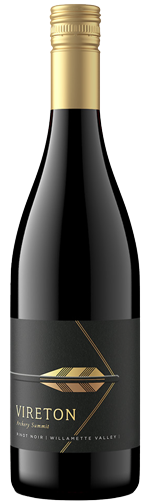
The bouquet is layered, with a fruity core of raspberry, cranberry, and red currants surrounded by oak and earthen spice. Silky tannins and fresh fruit jam nudge the palate, giving way to hints of warm baking spices. A model Willamette Valley wine, the Vireton Pinot Noir is juicy, fruit-forward, kissed with slight new oak nuances while wonderfully balanced. Enjoy now through the next 5-10 years.
The world-renowned Willamette Valley has become one of the most prized winegrowing regions on earth
Oregon is unique and offers its own distinctive voice
Viticulture & Production: The wine puts the beauty of the Willamette Valley on a pedestal. The grapes were hand-harvested and sorted before being fermented in a combination of stainless steel, concrete, and wooden open-top vessels. For added character and nuance, they incorporated 25% whole cluster fruit in the fermentation. The tanks were pumped over twice daily until about two-thirds of the way through fermentation. At that point, they conducted daily tasting to coax the wine to finish fermentation with pump overs and manual punch downs. The wine was then pressed and put to barrel, aged for 10 months in 17% new oak to frame the bright fruit profile inherent to the unique profile from the high elevation, volcanic soils of the Willamette Valley.
Winemaker’s Notes: Vireton Pinot Noir walks boldly into the Willamette Valley and returns with the unexpected, a kind of down-to-earth, everyday level of luxury. Not tethered to any one vineyard site, this outgoing wine instead reflects the merits of an entire region. It’s a testament to the power of multiple voices within one storied region and the strength in numbers that follows. In wine, just as in life, it’s the most intrepid who end up with the most fulfilling experiences. Vireton celebrates those experiences, whether you’re toasting another Tuesday, or celebrating something much bigger.
About the Winery: Archery Summit, founded by Gary Andrus in 1993, is a distinguished winery located in the Dundee Hills of Oregon’s Willamette Valley, renowned for its exceptional Pinot Noir. Andrus, a veteran winemaker with a successful background in Napa Valley, was captivated by the region’s potential for producing high-quality wines that reflect the unique terroir. Archery Summit focuses on site-specific wines, sourcing grapes from five estate vineyards and three grower sites across four American Viticultural Areas (AVAs). With a commitment to showcasing the refined flavors of place, Archery Summit continues to elevate the reputation of Willamette Valley wines on the global stage. Learn more here.
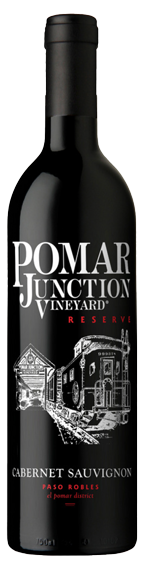
This Reserve Cabernet Sauvignon is a hand selection of three outstanding barrels from the Merrill’s Family estate vineyard. These barrels showed exceptional ripe blackberry and currant flavors and extraordinary mouth-feel. Two years in French Oak contributed to giving this wine excellent aging potential.
Varietal: 100% Cabernet Sauvignon Analysis: 13.8% alcohol / volume pH: 3.77 TA: 0.063 g/l RS: 0.33% Appellation: El Pomar District AVA, Paso Robles, California Vineyard: Pomar Junction Aging: 21 months Cooperage: 35% new French oak Winemaker: Jim Shumate
Winemaker Notes: Made entirely from estate grown grapes, this Cabernet was handpicked from personally selected acres grown on extraordinary hillsides with limestone Linne Colado soils. The cool Templeton Gap breezes moderate summer temperatures producing extremely dark-colored yet smooth, elegant wines.
About the Winery: Located in the El Pomar District in the heart of the Paso Robles AVA, Pomar Junction Vineyard & Winery is family owned and operated by the Merrill Family. Here, they grow premium grapes, focusing on small lot, food friendly wines with sustainable vineyard management techniques. The winemaking experience is further enhanced by their Head Winemaker and Cal Poly SLO Enology Professor, Jim Shumate. Learn more about the Merrill Family and Jim Shumate here.
Try this wine with the following recipe…
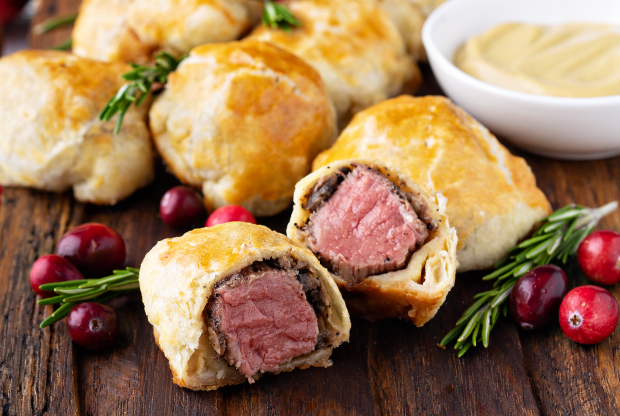
Beef Wellington Bites
INGREDIENTS:
For the Beef Pieces:
1 pound beef tenderloin
½ teaspoon salt
¼ teaspoon black pepper (or to taste)
1 tablespoon olive oil
For the Mushroom Filling:
1 tablespoon olive oil
½ onion, minced
2 cups finely chopped button mushrooms
1 tablespoon regular soy sauce
black pepper, a generous pinch
1 teaspoon dried oregano
½ cup pitted black olives
For Beef Wellington Bites:
1 pound puff pastry
mustard, to taste
1 small egg, beaten
DIRECTIONS:
Cut beef into 1-inch pieces and season with salt and black pepper.
Heat oil in a skillet/frying pan and brown half of the beef pieces on high heat on all sides, about 1-2 minutes max! Transfer onto a plate lined with a paper kitchen towel and repeat with the other half. Set aside.
Preheat oven to 400° Fahrenheit.
Meanwhile: In the same skillet, heat a little oil, add minced onion and sliced mushrooms, and sauté for 10 minutes on medium-low heat, stirring occasionally. Add soy sauce, oregano, black pepper and stir well.
Transfer the mixture to a food processor and add olives (make sure there are no pits in them). Process until smooth-ish.
Unfold/unroll puff pastry sheet and cut it into about 3 – 3½ inch squares. Spread some mustard in the center of each square, then spread some mushroom mixture over.
Top with a piece of beef. Grab 2 opposite tips of the pastry and fold them over the beef. Repeat with the other two corners/tips. Make sure to press down the corners so they don’t open during cooking.
Transfer the parcel onto a baking tray lined with baking parchment. Repeat with the rest of them. Brush them with beaten egg.
Bake in a preheated oven at 400º Fahrenheit for 10-15 minutes or until the pastry is puffed and golden brown.
Best served warm with a dipping sauce of your choice.
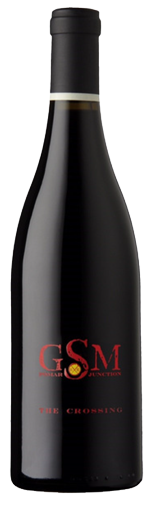
A classic Rhône blend and excellent food-pairing wine, this GSM has a floral nose with hints of black currant, black cherry, blueberry and a hint of leather and tobacco. A savory mouthfeel is supported by flavors of red and black fruits, sweet spices, with a finish of supple tannin.
Varietal: 46% Syrah, 27% Grenache, 27% Mourvèdre Analysis: 14% alcohol / volume pH: 3.60 RS: .35% Aging: 19 months Cooperage: 30% new French oak Cases: 247 Winemaker: Jim Shumate Food Pairing: Pairs well with tomatoes, garlic, and either game or domestic meats like duck, lamb, or beef.
Vineyards: Pomar Junction Vineyards has a unique terroir, as their limestone soils, cooling Templeton Gap breezes and expert sustainable farming techniques (SIP Certified Vineyards) combine to produce their outstanding wines. The El Pomar District is at the center of the greater Paso Robles AVA. Its name is derived from “pomum”, latin for edible fruit and commonly referred to as “orchard” in Spanish. As early as 1886, nut orchards were the most common in the area and by 1968 there were over 1300 acres of almonds and 36 acres of walnuts. Today, many of the aged orchards are being replaced by vineyards. Learn more >
About the Winemaker: A Southern California native, Jim Shumate now lives in Paso Robles with his wife and children. He graduated from Cal Poly with a degree in Enology, and eventually developed and managed the Cal Poly pilot winery that opened in 2008. In the early stages of his career, he was greatly influenced by legendary winemaker, Chuck Ortman. Jim became Senior Lab & Barrel Technician, Cellar Master and Consulting Winemaker at a few different wineries before accepted the position of Winemaker at Pomar Junction in July of 2011. Read more >
About the Winery: Dating back at least eight generations, the Merrill family has been growing and producing grapes on California’s Central Coast since the 19th Century. Originally, the family was growing grapes for other wineries in California – from premium small producers to large international brands. Today, Dana Merrill and his wife Marsha, along with their son, Matthew, and winemaker, Jim Shumate farm the vineyards and produce elegant wines of their own.Learn more here >
Try this wine with the following recipe…
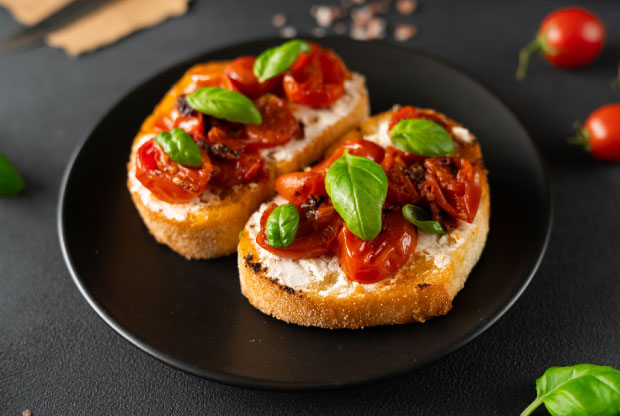
Slow-Roasted Cherry Tomato Bruschetta
INGREDIENTS:
1 ½ pounds cherry tomatoes (about 4 cups)
6 medium garlic cloves
5 thyme sprigs
1 teaspoon fennel seeds
1 teaspoon kosher salt
1 tablespoon sherry vinegar, ¾ cup extra-virgin olive oil, divided
½ (8-oz.) baguette, sliced diagonally (about 8 slices)
4 ounces goat cheese log, softened
small fresh basil leaves
DIRECTIONS:
Preheat oven to 350°F. Toss together tomatoes, garlic, thyme, fennel seeds, salt, vinegar, and ¼ cup of the oil in an 11- x 7-inch baking dish. Roast; stirring once, until tomatoes are tender and skins blister, 25 to 30 minutes. Cool 10 minutes.
Meanwhile, place baguette slices in a shallow baking pan, and drizzle with ¼ cup of the oil. Bake at 350°F until slightly browned, 8 to 10 minutes. Carefully remove and discard blistered peels from cooled tomatoes, if desired. Spread goat cheese on warm baguette slices, and place on a serving platter. Top with tomatoes, drizzle with remaining ¼ cup oil, and sprinkle with basil leaves.


 Tandem Winery
 Spanish Skewers
 Join our WINE CLUB and enjoy these amazing wines and pairing recipes each month. Plus, you’ll receive 10% off all retail wine purchases!
 Tandem Winery
 Balsamic Grilled Portobello Mushrooms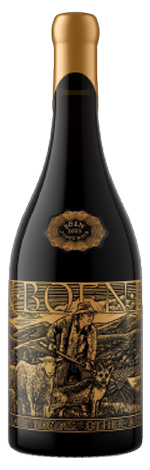

 St. Supéry Estate Vineyards & Winery
 Pomar Junction Vineyard & Winery
Reserve Zinfandel
Pomar Junction Vineyard & Winery
Reserve Zinfandel
 Slow Cooker Korean Pulled Pork Sliders
 Bodega Renacer
 Authentic Cacio e Pepe (classic Roman dish)
 Penfolds
 Etude
Etude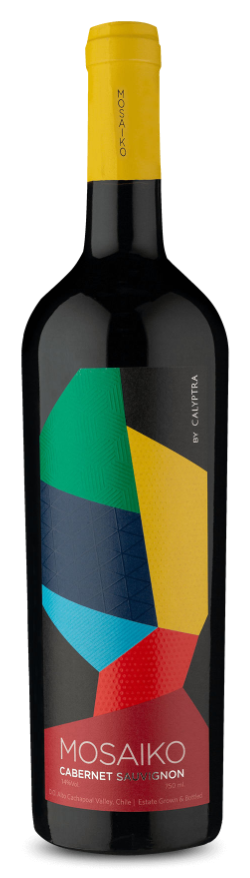 Calyptra Vineyards & Winery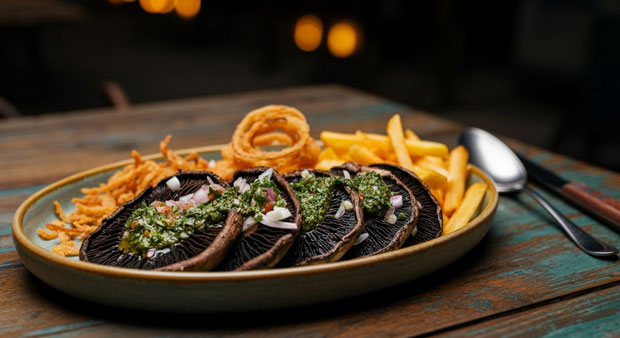
 Penfolds
 Archery Summit
 Pomar Junction Vineyard & Winery
 Beef Wellington Bites
 Pomar Junction Vineyard & Winery
 Slow-Roasted Cherry Tomato Bruschetta
 WineStyles Tasting Station