1/3cupfresh chopped herbs, such as thyme or oregano(I like a mix of both)
1/2teaspooncrushed red pepper flakes
kosher salt and black pepper
1poundshort cut pasta
3/4cupbasil pesto, homemade or store-bought
2–3cupfresh baby spinach
8ouncesshredded or torn mozzarella or burrata cheese
3ouncesthinly sliced prosciutto(optional)
fresh basil, for serving
DIRECTIONS:
Preheat the oven to 400°F. Spray a 9 x 13-inch Pyrex deep baking dish with cooking spray.
Cover the bottom of your Pyrex dish with olive oil. In the pan, toss together the cherry tomatoes, olive oil, garlic, herbs, crushed red pepper flakes, and a large pinch of salt and pepper. Transfer to the oven and roast for 10-15 minutes or until the tomatoes collapse.
Meanwhile, bring a large pot of salted water to a boil. Cook the pasta according to package directions until al dente. Drain and add the pasta back to the pot. Immediately toss with the pesto, spinach, and half of the cheese. Add the tomatoes and all the juices from the tomatoes and gently toss to combine. Season with freshly ground black pepper and salt. Transfer the pasta back into the Pyrex dish used to roast the tomatoes.
Evenly sprinkle the remaining cheese over top the pasta, arrange the prosciutto, if using, over the cheese. Transfer to the oven and bake for 15 to 20 minutes, or until the cheese has melted and the prosciutto is crisp. Remove from the oven and garnish with fresh basil. Enjoy!
A red wine made from Negroamaro organic certified grapes. It is deep ruby red in color. On the nose it is intense of red fruits and berries, while on the palate it is well balanced and fruity. It is suited to all courses, but pairs exceptionally well with roasts, cheeses and pasta.
Varietal: 100% Negroamaro Analysis: 13% alcohol / volume Description: IGT Red Puglia Yield: 100,000 kg. per hectare Vinification: Nine days maceration with skins, temperature controlled fermentation
ABOUT DUCA CARLO GUARINI: For centuries, Guarini has cultivated their vineyards in the Puglia region of Italy. Their mission is to protect the heritage of the wines in this region, with organic, native grapes vinified in red, rosé and white. All of their wines are mono-varietal, organic and expertly made to respect and express the land where they grow. Learn more about their history here.
Join our WINE CLUB and enjoy these amazing wines and pairing recipes each month. Plus, you’ll receive 10% off all retail wine purchases!
In a mixing bowl whisk together vegetable oil, lime juice, garlic, chili powder, cumin, paprika, cayenne and season with salt and pepper to taste (about 3/4 tsp salt 1/4 tsp pepper).
Place fish into a dish or gallon size resealable bag and pour marinade over fish (if using a bag seal bag and gently move bag around to evenly coat fish with marinade), allow to marinate in mixture 20 minutes (and no longer than 30 minutes).
Preheat a grill to medium-high heat. Brush grill grates with oil and place fish on grill. Grill until cooked through, about 3 minutes per side (cook time will vary based on thickness of fish). To view oven or stovetop methods, click here.
While the fish is cooking whisk together sour cream, mayonnaise, lime juice, and garlic powder in a small bowl. Season with salt to taste.
Break fish into pieces, layer over warm tortillas. Top with cabbage, avocado, cilantro, cheese if using, and fish taco sauce.
Duca Carlo Guarini Burdi Bianco IGT Puglia Scorrano, Italy
SILKY WINE STYLE
Burdi Bianco wine is light straw-yellow in color. It is intense and fruity on the nose, while on the palate it is fresh, fruity and balanced. This wine is paired well with fish and seafood.
Varietal: 100% Bombino Analysis: 12% alcohol / volume Yield: 120000 kg. per hectare Vinification: Two hour’s cold maceration with skins, temperature controlled fermentation
ABOUT DUCA CARLO GUARINI: Since 1114, the Guarini Family has rooted their vineyards in the Apulia region of Italy, between Lecce and Brindisi, overlooking the Adriatic sea. Today, they own 700 hectares of property, farming grapes, olive groves and other grains and vegetables, including fiber and seed hemp. For centuries, they have kept their family’s traditions without sacrificing innovation. Learn more about their estate here.
Join our WINE CLUB and enjoy these amazing wines and pairing recipes each month. Plus, you’ll receive 10% off all retail wine purchases!
2–3 lbs lamb chops, lamb loin chops or sirloin steaks
Grillable veggies – your choice of Zucchini, summer squash, bell pepper, onion, eggplant, mushrooms, etc.
Spray olive oil (or use regular)
15–20 fresh Mint leaves
Harissa Spice Rub:
1 tablespoon cumin
1 tablespoon coriander
1 tablespoon smoked paprika
1 tablespoon granulated garlic
2 teaspoons salt
1 teaspoon dried mint
1 teaspoon whole caraway seeds (optional)
Harissa Yogurt:
1 cup plain, full-fat Greek yogurt
1 tablespoon harissa paste (store-bought or homemade Harissa paste) more to taste
1 teaspoon smoked paprika – optional
DIRECTIONS:
Preheat Grill to med-high.
Cut lamb chops into single chops or portions. (Use a sharp chef’s knife and slice in between the bones.) Pat dry.
Mix spices and salt together in a shallow bowl (big enough to fit chop)
Dip both sides of each chop, as well as fatty edge, into the Harissa rub, tap the excess off and place on a sheet pan.
If grilling veggies, lightly toss with olive oil, salt and pepper, and grill these first. Cover, set aside until serving.
Grill the lamb chops. Spray the grill with olive oil spray. Place the chops down and grill 3 minutes (covered) or until good grill marks appear (don’t fiddle with them too much). Spray the top of lamb chops with olive oil, and turn them over. Turn the heat down to medium and grill another 3 minutes. Then, place the fatty edge of the lamb chop on the grill, so they are sitting upright, on their side, leaning them up against each other. Cover and cook another 2 minutes or so, to melt off that fatty layer. (These are delicious served medium, but feel free to cook through on lower heat if that is your preference.) Remove from grill, cover with foil until ready to serve.
Mix the yogurt with the harissa paste, starting conservatively, adding more to taste. Each Harissa paste has different levels of heat. Chef Sylvia Fountaine likes to a whisk in a teaspoon of smoked paprika to bump up the smoky flavor – up to you.
To serve, cut the grilled veggies into bite-size pieces, and place them on a platter. Top with the grilled lamb chops. Garnish with fresh mint leaves.
Serve the Harissa yogurt on the side or spoon a little on each chop.
Serve with a cooked grain like quinoa, basmati rice or even couscous.
Notes: If serving with a cooked grain, make sure to season it. ( Olive Oil, salt, pepper, lemon zest, and fresh parsley is nice.) You could serve it on the same platter, underneath the veggies and lamb, or serve it on the side.
The Burdi Primitivo IGT Puglia Rosso wine is an every day wine, made from organic certified grapes. It is deep ruby red in color, and on the palate it is fruity and soft. This wine is ideal with any kind of food, especially pasta, grilled or roasted meat, and seasoned cheese.
Varietal: 100% Primitivo
Analysis: 13.5% alcohol / volume
Description: IGT Red Puglia Yield: 100,000 kg. per hectare
Vinification: Five Days maceration with skins, temperature controlled fermentation
ABOUT DUCA CARLO GUARINI:
The Guarini family has lived in Puglia since 1040, when their ancestors moved from Normandy, arriving in Terra d’Otranto. In 1114, Accardo Guarini, Count of Valesio, founded his vineyard overlooking the Adriatic sea in the Pìutri estate. Since then, the Guarini family continues to take care of the same vineyards, maintaining the traditions founded many centuries ago. Learn more here.
Join our WINE CLUB and enjoy these amazing wines and pairing recipes each month. Plus, you’ll receive 10% off all retail wine purchases!
1lb.boneless skinless chicken breasts, sliced into small strips, or 1 lb extra large shrimp,peeled and deveined
2 tbspvegetable oil
¼ cuppacked dark-brown sugar
¼ cupsoy sauce
2 tbsprice vinegar
1 tbsplime juice
1 tbspfish sauce
1red bell pepper,sliced into thin strips and strips halved
1 ½cupsmatchstick carrots
2clovesgarlic
5green onions, whites minced, greens sliced into 1-inch pieces
2cupsbean sprouts
3large eggs
½ cupunsalted peanuts,chopped
1/3cupcilantro,chopped
red pepper flakes and sesame seeds(optional)
DIRECTIONS:
Prepare rice noodles according to directions listed on package. In a mixing bowl, whisk together brown sugar, soy sauce, rice vinegar, lime juice and fish sauce, set aside.
While noodles are cooking, heat oil in a wok or a 12-inch deep sauté pan set over medium-high heat. Add chicken and sauté until cooked through, about 6 minutes. If using shrimp cook about 1 ½ minutes per side or until opaque.
Transfer to a plate, leaving oil in pan. Add bell pepper and carrots sauté 1 – 2 minutes then add garlic, green onions and bean sprouts sauté 1 minute longer.
Push veggies to edges of pan and crack eggs into center. Cook and scramble until eggs have cooked through. Add in chicken, noodles and sauce and toss everything together and cook 1 – 2 minutes.
Serve warm topped with cilantro, peanuts and optional red pepper flakes and sesame seeds.
False Bay Vineyards Peacock Wild Ferment Chenin Blanc Stellenbosch, South Africa
SILKY WINE STYLE
Aromas of peach, lime and green apple on the nose. These elegant flavors carry through onto the palate with a lovely freshness and a long, elegant finish. Enjoy this wine with a variety of dishes, including seafood, chicken risottos and Thai cuisine.
“Chenin Blanc is regarded as the workhorse of the South African wine industry. It produces the bulk of our generic white wines. There are, however, some gems lurking amidst the flurry of Chenin blanc vineyards. Our goal is to identify these gems and allow them to be expressed in our Peacock Wild Ferment Chenin Blanc. Our Peacock Wild Ferment Chenin Blanc grapes stem from the Helderberg ward on the coastal outskirts of Stellenbosch (the home of Waterkloof). Over time, these old bush-vine vineyards (20—50 years old), planted in Chenin friendly soils, have found their natural balance and it definitely shows in the wine.” – False Bay Vineyards
HARVEST AND PRODUCTION: False Bay Vineyards follows a minimal intervention winemaking philosophy. Their grapes are tasted at regular intervals to ensure optimal taste and ripeness level. The grapes are hand-harvested and whole bunch pressed in a modern basket press. Wine undergoes natural clarification over a 24 hour period, without any added enzymes or settling agents. From here, the juice is fermented in stainless steel, concrete eggs and 600L old barrels with “wild yeasts” driven from the grapes; this process allows the flavors of the vineyard to be expressed in the wine. Due to the natural balance of the grapes, no additional tartaric acids are needed. The wine is fermented for about three months and then it is left on the secondary lees for another month before bottling.
ABOUT FALSE BAY VINEYARDS: Waterkloof Winery’s sister company, False Bay Vineyards, produces two collections: the earlier drinking, yet refined Peacock Wild Ferment range, named after the brightly plumed birds conspicuous in and around Waterkloof’s vineyards and the False Bay wine range of easy-drinking yet quality driven wines. Named after South Africa’s most iconic bay, which frames much of the country’s premium wine-lands, False Bay Vineyards, was born from a desire to make ‘real’ wine affordable. Learn more about False Bay Vineyards here.
4 1 1/4-to-1 1/2-inch-thick boneless rib-eye or New York strip steaks (about 12 ounces each) or filets mignons (8 to 10 ounces each), trimmed
2 tablespoons canola or extra-virgin olive oil
Kosher salt and freshly ground pepper
DIRECTIONS:
About 20 minutes before grilling, remove the steaks from the refrigerator and let sit, covered, at room temperature.
Heat your grill to high. Brush the steaks on both sides with oil and season liberally with salt and pepper. Place the steaks on the grill and cook until golden brown and slightly charred, 4 to 5 minutes. Turn the steaks over and continue to grill 3 to 5 minutes for medium-rare (an internal temperature of 135°F), 5 to 7 minutes for medium (140°F) or 8 to 10 minutes for medium-well (150°F).
Transfer the steaks to a cutting board or platter, tent loosely with foil and let rest 5 minutes before slicing.
False Bay Vineyards
Peacock Wild Ferment Cabernet Sauvignon Stellenbosch, South Africa
BOLD WINE STYLE
A wine that portrays typical varietal character along with a lot of elegance and accessibility. On the nose you can enjoy subtle red berries, a hint of chocolate and green spices. The palate has a lifted freshness and soft tannins which are well integrated- the fruit also carries through well to the aftertaste. It’s great enjoyed on its own, but also pairs well with a variety of dishes ranging from a simple tomato-based pasta dish to a juicy sirloin steak.
“Cabernet Sauvignon has always been seen as a big, bold and very tannic wine…the king of the reds. It is traditionally marketed as a wine to keep for at least three years before even thinking of opening a bottle. But at Waterkloof we believe it does not necessarily have to be big and gutsy to make an impression. We look for vineyard sites that are able to produce wines with notable elegance and freshness, allied with a fine texture.” – False Bay Vineyards
HARVEST AND PRODUCTION:
The grapes for our Peacock Wild Ferment Cabernet Sauvignon are sourced from the cooler slopes of the Helderberg ward on the coastal outreaches of Stellenbosch. Deep red soils provide moisture and nutrients, which give this Cabernet its supple, dark berry character. This cooler area also allows a longer ripening period, which imparts balanced flavors and elegant tannins to this red varietal. False Bay Vineyards use very minimal intervention during their winemaking process. The grapes are tasted regularly to determine the optimal ripeness and taste. Wines are hand-harvested after the grapes are de-stemmed. The juice is naturally fermented using “wild yeasts”, allowing for the flavors of the vineyard to be further expressed in the bottle. The skins are juice are mixed using two punch-downs or two pump-overs per day. The wine is aged in older 225L barrels for 9 months, after which it underwent a light filtration and a small dosage of sulphur is added before finally bottled. No other additions such as tartaric acid or enzymes were added.
ABOUT FALSE BAY VINEYARDS:
Named after South Africa’s most iconic bay, which frames much of the country’s premium wine-lands, False Bay Vineyards, was born from a desire to make ‘real’ wine affordable. The sister company of Waterkloof Winery, False Bay Vineyards, produces two collections: the earlier drinking, yet refined Peacock Wild Ferment range, named after the brightly plumed birds conspicuous in and around Waterkloof’s vineyards and the False Bay wine range of easy-drinking yet quality driven wines. Learn more about False Bay Vineyards here.
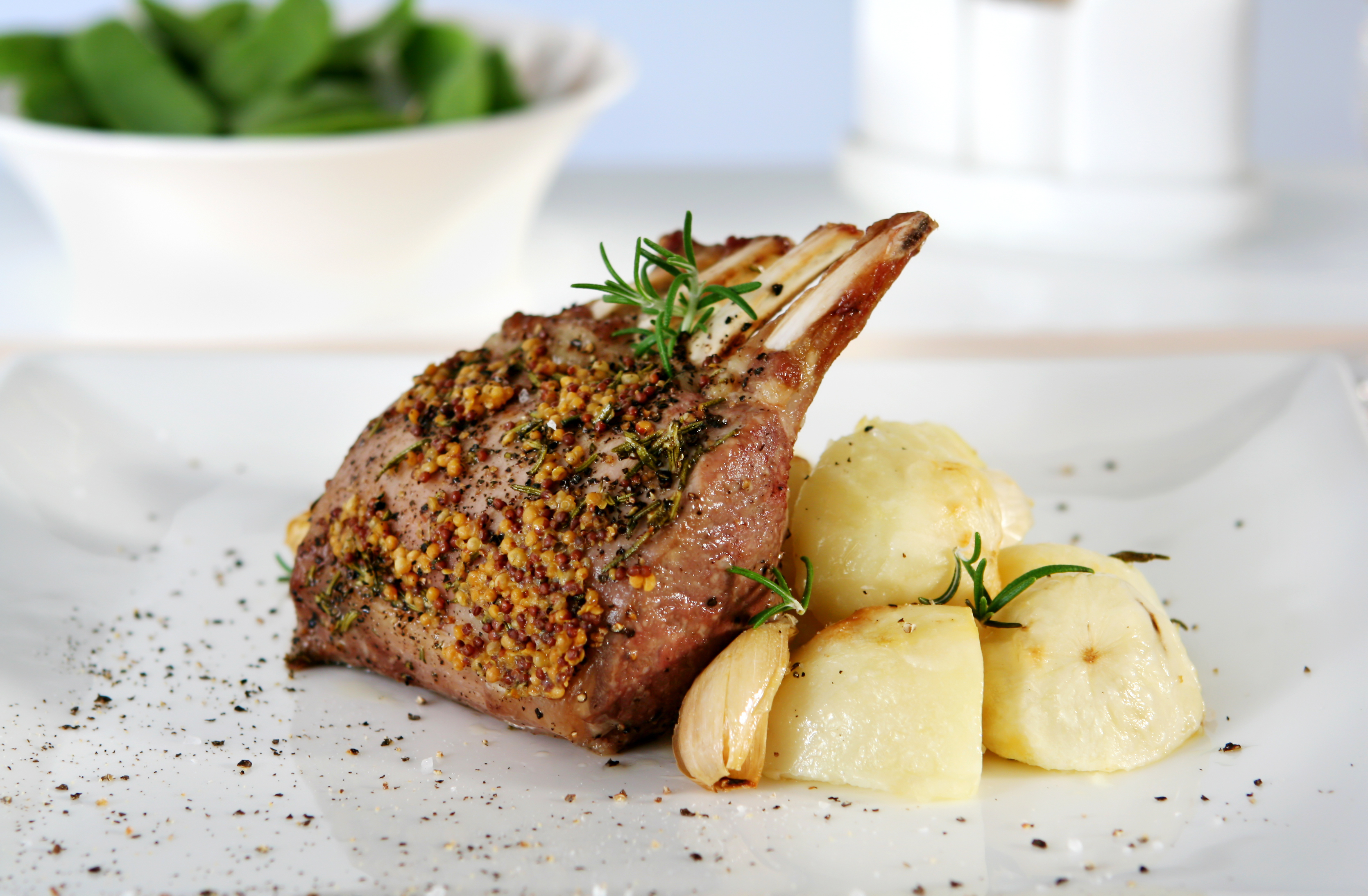
Season the lamb with salt and pepper and sprinkle lightly with thyme. In a very large skillet, heat the olive oil until shimmering. Add the lamb chops and garlic and cook over moderately high heat until the chops are browned on the bottom, about 3 minutes. Turn the chops and garlic and cook until the chops are browned, about 2 minutes longer for medium meat. Transfer the chops to plates, leaving the garlic in the skillet.
Add the water, lemon juice, parsley and crushed red pepper to the pan and cook, scraping up any browned bits stuck to the bottom, until sizzling, about 1 minute. Pour the garlic and pan sauce over the lamb chops and serve immediately.
Waterkloof Circle of Life Red Stellenbosch, South Africa
BOLD WINE STYLE
A perfectly integrated blend with great length, combining the spiciness of the Syrah, the fresh fruits of the Petit Verdot and juiciness from the Merlot. The introduction is fresh and fruity with good acidity, evolving into riper flavors and herbaceous notes, and with elegant tannins and light acids on the finish. It is very versatile and will complement numerous dishes, but the winery recommends enjoying it with a hearty piece of lamb.
Varietal: 26% Syrah, 24% Merlot, 26% Petit Verdot and 24% Cabernet Franc
Analysis: 13-14% alcohol / volume
pH: 3.52 TA: 5.2 g/l VA: 0.7
Residual Sugar: 2.3 Production: 17,400 bottles produced
Circle of Life tells the story of Waterkloof: A once conventionally farmed vineyard with great potential, that – since Paul Boutinot took over the property – has been transformed into a living, breathing organic and biodynamic vineyard by Farm Manager Christiaan Loots and his team. Waterkloof winery strives to produce distinctive, yet balanced wines using traditional, organic and biodynamic methods. They work with nature, not against it. Chickens, sheep and work-horses have unique and integral parts within the vineyard. Their soils are free of chemicals, and instead are kept healthy using plant extracts, fungi and bacteria from their own organic compost. The winery continuously works to understand their vineyards to harness the individual characteristics of each vineyard block. Waterkloof’s objective with Circle of Life was to produce two blends that encapsulate all the varying terroir characteristics and grape varietals found on Waterkloof.
HARVEST AND PRODUCTION: All grapes are hand-picked and sorted in the vineyards, then brought to their cellars by their work-horses. The grapes are then hand-sorted again at the winery to ensure only the best berries are being used. The sorted grapes are then placed into wooden fermenters using their gravity system. This fermentation process starts naturally with yeast present on the grapes to enhance the flavors from the vineyards. Throughout the fermentation process, the winery performs soft punch downs twice a day to gently and slowly extract the tannins. The wines will spend around 30 days on the skins – give or take depending on taste. After the maceration time on the skins, the wine is ran down using gravity, no pumping is incorporated. The grape skins also fall through into the basket press and are softly pressed to gently extract every last bit of wine, aroma and color. The varietals are then aged separately in French oak for about 18 months. After the aging process, Waterkloof blends the Syrah (26%), Merlot (24%), Petit Verdot (26%), and Cabernet Franc (24%) together, then keeps in wooden fermenters for another 9 months. This wine is unfined and gently filtered.
ABOUT WATERKLOOF: In 1993 Paul Boutinot commenced his search for a vineyard site with the potential to produce truly fine wine with a defining sense of origin. The classic areas, capable of growing naturally balanced grapes such as the Cote d’Or, Chablis, Paulliac, Barolo, etc. were either unavailable or unattainable (rich men’s toys), so he had to find a new classic. It took ten years to narrow the search down to a small area on the south-facing slopes of the Schapenberg, overlooking False Bay in the Cape. As soon as he was led up a steep ravine opening out into a hidden amphitheater of potential, all his experience and intuition told him: ‘THIS IS IT!’ Just like that, Waterkloof was born, and the hard work began. Learn more about the history of Waterkloof here.
This mushroom pasta pairs beautifully with the notes from the Merlot and Cabernet Franc blend of Château Roc de Candale. We have found a French recipe from the Saint-Émilion region in France, however, for ingredients more easily accessible in the United States, this Creamy Pasta with Mushrooms from Bon Appétit is a good alternative to try.
INGREDIENTS:
1.1 lbs (500 g) fresh Tagliatelle pasta
1/3 cup (25 g) dried morels (or substitute dried porcini or shiitake mushrooms)
1 cup (250 g) fresh Paris mushrooms (substitute white or Crimini mushrooms)
1 leek (white part)
1 yellow onion
16.9 fl. oz. or about 2 cups (50 cl) light cream (about 18% fat content)
sunflower oil
nut oil
salt and pepper
DIRECTIONS:
The day before, rehydrate the mushrooms in water for half an hour. Rinse to remove sand and then soak them again in 2 cups (50 cl) of fresh cream. Place the preparation in the refrigerator overnight.
The next day, drain the mushrooms and keep the liquid cream. Peel and cut the Paris mushrooms into thin strips. Slice the leek and onion.
Sauté the onion, leek and mushrooms in an oiled pan. Add salt and pepper. Wet it if necessary.
After ten minutes, add the fresh cream, filtered through a fine sieve. Stir regularly and adjust seasoning. Cook for 10 minutes.
When cooked, boil a large pot of salted water. Cook the Tagliatelle.
Once the pasta is cooked and drained, serve immediately, if you like, with a drizzle of walnut oil from Périgord.
Château Roc de Candale has a bright purple color. The flattering bouquet is charming thanks to fine notes of spices. The wine is immediately pleasing with notes of fresh, ripe and juicy fruits. Château Roc de Candale offers sophisticated and spontaneous enjoyment.
Varietal: 90% Merlot, 10% Cabernet Franc
Analysis: 13.5% alcohol / volume Harvest: By hand, in small crates Average Yield: 25 hl/ha Vinification: Soaking, pigeages (punching down the cap), and malolactic fermentation in barrels Fermentation: 30 days Vats: Wooden Aging: 12 months in barrels Production: 23,000 Bottles Oenologist Consultant: Stéphane Derenoncourt
ABOUT THE VINEYARD Château Roc de Candale was previously called Vieux Château Haut Béard. Its vineyard is close to that of Château de Candale and is planted at the foot of Saint-Emilion’s south-facing slope. The former owner brought together the two estates when he acquired Vieux Château Haut Béard after having purchased Château de Candale. Today, each growth has its own vineyard and cellar. In this way, the identity and style of each of them are preserved. Château Roc de Candale is planted on a more clay-silt terroir which gives the wine greater suppleness in its early years. Being less complex than its neighbor, it is a wine for more immediate enjoyment. Learn more here.
ABOUT DECOSTER VINEYARDS:
Their story began in 2004 when Thibaut and Magali became wine-growers at Clos des Jacobins, though they had little ties to the world of wine-growing. Both came from Limoges, and they studied business and marketing in France and England. Eventually, Thibaut moved to the Bordeaux area and was taken on as a vineyard worker at a wine estate in Léognan. There, for a period of 3 years in the field, he practiced all the vine-growing tasks required to produce high-end reds and whites. In 2003, an opportunity came along for Thibaut and Magali to set up in Saint-Émilion. Clos des Jacobins and Château La Commanderie were up for sale, and one year later Thibaut and Magali were the new owners of the estates. Learn more about their story here.
1 teaspoon Old Bay seasoning (up to 1 and ½ teaspoons for a spicier kick)
1 teaspoon fresh lemon juice, plus more for serving
1/8 teaspoon salt
1 pound fresh lump crab meat*
2/3 cup Saltine cracker crumbs (about 14 crackers)
Optional: 2 Tablespoons (30g) melted salted or unsalted butter
DIRECTIONS:
Whisk the egg, mayonnaise, parsley, dijon mustard, Worcestershire sauce, Old Bay, lemon juice, and salt together in a large bowl. Place the crab meat on top, followed by the cracker crumbs. With a rubber spatula or large spoon, very gently and carefully fold together. You don’t want to break up that crab meat.
Cover tightly and refrigerate for at least 30 minutes and up to 1 day.
Preheat oven to 450°F (232°C). Generously grease a rimmed baking sheet with butter or nonstick spray or line with a silicone baking mat.
Using a ½ cup measuring cup, portion the crab cake mixture into 6 mounds on the baking sheet (don’t flatten). Use your hands or a spoon to compact each individual mound so there aren’t any lumps sticking out or falling apart. For extra flavor, brush each with melted butter. This is optional but recommended!
Bake for 12-14 minutes or until lightly browned around the edges and on top. Drizzle each with fresh lemon juice and serve warm.
Cover leftover crab cakes tightly and refrigerate for up to 5 days or freeze for up to 3 months.
Pierre Jean Sauvignon Blanc Côtes de Gasgone, France
SILKY WINE STYLE
Classically French with lively aromas of wildflower, lemongrass, apple and pear with a nuance of flint. Delicious flavors of mandarin orange, peach, apple and pear lead to a crisp, long finish with racy acidity and more of that flinty terroir. This wine is an ideal aperitif or will complement almost any light summer cuisine.
Varietal: 100% Sauvignon Blanc Analysis: 11% alcohol / volume Appellation: Côtes de Gascogne Closure: Screw cap Pairing: Serve between 50˚F-53.6˚F with aperitif, fresh fish, haddock, seafood, or salads
Côtes de Gascogne is located just south of Bordeaux, in the Gascony district and specializes in white wines. Most are local grape varieties but better-known varietals such as Sauvignon Blanc are borrowed from Bordeaux (to the north). About 60% of its wines are exported and young sommeliers have recently rediscovered this wine region. In 1979, an association of Vin de Pays (country wine) was established and today includes 1400 wine farmers. The Pierre Jean brand is named after one of Yvon Mau’s grandsons, who developed the design for the bottle. The Pierre Jean series consists of very accessible wines that are a party every day. The beautifully styled bottle of course also contributes to this.
Join our WINE CLUB and enjoy these amazing wines and pairing recipes each month. Plus, you’ll receive 10% off all retail wine purchases!
Preheat oven to 375°F (190°C). In a 9-inch pie pan, toss shallots with oil to coat. Season with salt and pepper. Roast until shallots are deep brown and very tender, stirring occasionally, about 30 minutes.
In a large saucepan, combine beef broth and port. Bring to a boil. Cook over high heat until the volume is reduced by half, about 30 minutes. Whisk in tomato paste. Set aside.
Pat beef dry; sprinkle with thyme, salt and pepper. In a large roasting pan, set over medium heat on the stove top, sauté bacon until golden. Using a slotted spoon, transfer bacon to paper towels. Add beef to pan; brown on all sides over medium high heat, about 7 minutes.
Transfer pan to oven. Roast beef until meat thermometer inserted into center registers 125°F (50°C) for medium rare, about 25 minutes. Transfer beef to platter. Tent loosely with foil.
Spoon fat off top of pan drippings in roasting pan. Place pan over high heat on stove top. Add broth mixture, and bring to boil; stir to scrape up any browned bits. Transfer to a medium saucepan, and bring to simmer. Mix 1 ½ tablespoon butter and flour in small bowl to form smooth paste; whisk into broth mixture, and simmer until sauce thickens. Whisk in remaining butter. Stir in roasted shallots and reserved bacon. Season with salt and pepper.
Cut beef into ½ inch thick slices. Spoon some sauce over, and garnish with watercress.
Château de Bel-Air Merlot, Cabernet Franc, Cabernet Sauvignon Lalande de Pomerol, France
MELLOW WINE STYLE
On the nose, Château de Bel-Air presents notes of red fruit and floral aromas; on the palate, a harmonious balance between flesh and tannins means it can be enjoyed after just a few years of cellaring. A delicate wine that is a perfect partner for refined dishes.
Viticulture: Culture Raisonnée, soil tilling or cover cropping
Harvest: Mechanical, with sorting in the cellar
Winemaking: Parcellary, in thermo-regulated concrete vats
Mentioned in the Cocks & Feret guides as one of the best wines of the appellation as early as 1922, Château de Bel-Air is situated on a sunny plateau that gently slopes southward. The historical quality of its wines and its privileged position, which guarantees the vineyard ideal sun exposure year-round, inspired owner Michel de Laet Derache to acquire the property in 2011. The vines, averaging 40 years of age, are planted on a terroir of gravel brought from the volcanic Massif Central by rivers during the quaternary era, with layers of iron rich clay. In order to best express the nuances of the site, the vineyard is managed and vinified plot by plot, with a respect for the different ages of the vines, varietals, and rootstocks. Vinification takes place in thermo-regulated concrete tanks. The wine is then mostly aged in oak barrels (45% new) for 12-18 months.
Goldschmidt PLUS Yoemen Cabernet Sauvignon comes from a small mountain vineyard just east of the town of Geyserville, California. It’s a superb vintage for Alexander Valley Cabernet Sauvignon. Nick Goldschmidt hand bottled it directly from the barrels. It’s very refined with deep, almost opaque, purple-black color and outstanding flavor development. Showcasing bold aromas of dusty plum, black cherry, graphite and flint nuanced with black pepper. There are hints of blueberry and black licorice, which lie in perfect balance to its generous structure and very dense, yet silk tannin profile. This wine is very concentrated but marvelously flavorful.
Analysis: 14.8% alcohol / volume Appellation: Alexander Valley, CA Vineyard: Yoeman Varietal: 100% Cabernet Sauvignon pH: 3.6 TA: 6.9 g/L Clones: Heritage, 337 Average Vine Age: 35 years Harvest: Hand-picked Harvest Date: October 1, 2015 Yield: 2.5 tons per acre Filtering: Unfined/Unfiltered Aging: Allier Oak, tight-Grain, 43 months, 100% new Production: 99 cases Critical Acclaim:
2011 – 94 Points, Anthony Diaz Blue
2008 – 93 Points, Wine Enthusiast
2007 – 94 Points, Wine Enthusiast
2006 – 93 Points, Wine Enthusiast
2005 – 93 Points, Wine Enthusiast
2004 – 91 Points, Wine Enthusiast
ABOUT THE VINEYARD: The vineyard slopes to the southeast and is comprised of well-draining glacial loam. Soft morning sun promotes slower grape maturation and longer “hang times” in this secluded micro-climate. Rarely do vineyard conditions afford a winemaker the opportunity to make a wine such as this.
VINTAGE NOTES: “We were challenged this year by a warm winter, a cool spring, and three summer heat waves, but the gorgeous fruit at harvest released our worries. Yields were down we were blessed with great quality and consistency. Small clusters with some of the smallest berries we’ve ever seen. Very concentrated but marvelously flavorful!” – Nick Goldschmidt and the Goldschmidt winery
Goldschmidt Vineyards Lone Tree Vineyard Cabernet Sauvignon Alexander Valley, California
BOLD WINE STYLE
The magnum bottle is signed by winemaker, Nick Goldschmidt. Forefathers Lone Tree Cabernet Sauvignon comes from a 3 acre parcel just north of Geyersville. Deep ruby-black in color. It highlights blackberry, cassis, and plum aromas with nuances of malted chocolate and tobacco. On the palate, there are savory tastes of black cherry and black currant with smooth, finely-structured tannins. This wine is beautifully weighted and will continue to develop complexity well into 2025.
Bottle Size: Magnum 1.5 L (equivalent to two standard 750 ml bottles) Analysis: 14.3% alcohol / volume Appellation: Alexander Valley, CA Vineyard: Lone Tree Varietal: 100% Cabernet Sauvignon pH: 3.6 TA: 6.8 g/L Yield: 1.8 tons per acre Aging: Demptos Allier, 70% French, 30% American; 16 months, 18% new Racked: Gravity racked three times Production: 660 six-packs Critical Acclaim:
2017 – Best of Class, LA Wine Competition
2015 – 93 Points, North Coast Wine Comp.
2014 – 95 Points, The Tasting Panel
2012 – 90 Points, Wine Enthusiast
2010 – 90 Points, Wine Enthusiast
2009 – 92 Points, Wine Enthusiast
2008 – 90 Points, Wine Enthusiast
2007 – 93 Points, Wine Enthusiast
2006 – 90 Points, Wine Enthusiast
2004 – 93 Points, Wine Enthusiast
2003 – 90 Points, Wine Enthusiast
ABOUT THE VINEYARD: This mountain vineyard faces east avoiding hot afternoon temperatures. East-facing slopes are a relatively rare occurrence in the Alexander Valley, as most are either heavily forested or too steep to plant. Up 800 feet in elevation, this vineyard runs cooler than others along the valley floor, allowing grapes to ripen very slowly at first. Starting in September the morning fogs roll in and cover the valley completely. Lone Tree is above the fogline and gets abundant sunshine for the remainder of the season. The overall season is longer than the others though and the longer hang-times translate into more complexity and depth. Learn more about the vineyard and its production here.
VINTAGE NOTES: “Bud-break occurred three weeks ahead of normal but March and April remained warm with no signs of frost. In May, however, the weather changed considerably. Unusually cool and somewhat damp days lingered for the first two weeks during fertilization of the vines’ flowers. This caused a lot of shatter in the developing clusters, which led to fewer flowers and ultimately less berries. Warm weather returned through the rest of the season with a heat spike in early September. A tiny crop ensued and with it tiny berries. Some of the berries were the smallest we’d ever seen! Definitely a vintage for the record books in terms of yield but equally noteworthy for its depth of flavor and extraordinary concentration.” – Nick Goldschmidt and the Goldschmidt winery
ABOUT THE WINEMAKER: Nick Goldschmidt was born and educated in New Zealand and trained in Australia. In 1989, after spending 18 months of winemaking in Australia, New Zealand, California and South America, Nick returned to California with an amazing range of winemaking experience. In 1990, Nick and his wife Yolyn settled down in Healdsburg, California becoming Simi’s Chief Winemaker and then Vice President in 1996. In 1998 Nick and Yolyn established their own line of wines with the release of Goldschmidt Vineyards and Forefathers, with the goal of focusing on site specific vineyards from around the world. Having produced so many world-class wines around the globe, Nick knew exactly the vineyard sites he would choose for his wines. The wines are all single vineyards, 100% varietal, handcraft, small production artisan wines. Learn more about Goldschmidt Wineryhere.
Love to collect amazing wines?
Learn more about our quarterly Collectors Club >click here