Ridge Vineyards Tasting Event

Ridge Vineyards Tasting EventOctober  Winery Spotlight
Tasting Event
>> RSVP at your local WineStyles <<
Ridge Vineyards, California

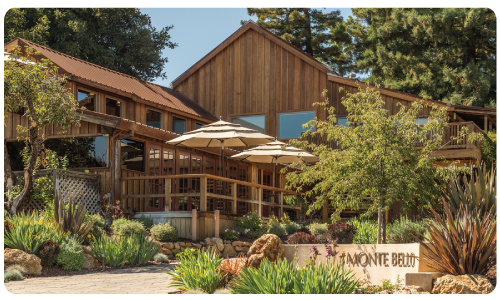
The history of Ridge Vineyards begins in 1885, when Osea Perrone, a doctor who became a prominent member of San Francisco’s Italian community, bought 180 acres near the top of Monte Bello Ridge. He terraced the slopes and planted vineyards; using native limestone, he constructed the Monte Bello Winery, producing the first vintage under that name in 1892. This unique cellar, built into the mountainside on three levels, is Ridge’s production facility. At 2600′, it is surrounded by the “upper vineyard.”

“We decided to farm organically because we believe it leads to better grapes and higher quality wines. This approach in the vineyard, plus our traditional approach to winemaking, will provide the finest possible wines for our customers.” –  Paul Draper, CEO/winemaker.
montebello

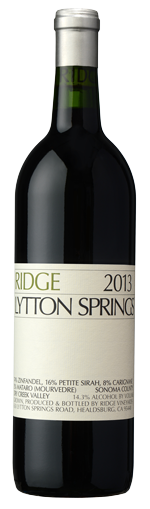
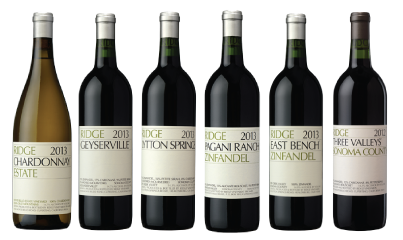
13zls-bottle-shotRidge-Vineyards-LogoLytton Springs, in Sonoma County, became part of the Ridge estate in 1991. A quarter century’s experience with this vineyard had convinced us that it was an exceptional piece of ground. Forty consecutive vintages of Geyserville attest to yet another stunning combination of location and varietals. Though born in the early sixties to the post-Prohibition world of modern California winemaking, Ridge relies on nature and tradition rather than technology. Our approach is straightforward: find intense, flavorful grapes; intrude upon the process only when necessary; draw the fruit’s distinctive character and richness into the wine.  While Ridge is by no means a large grower,  they are the largest grower of organically farmed grapes in Sonoma County, and in the Santa Cruz Mountains appellation.

Limited Seating Available – Reserve your seat ASAP!
Ridge-wines

Contact your local WineStyles
Ridge-Vineyards-Logo

Chateau Rouviere Wine Pairing Recipe

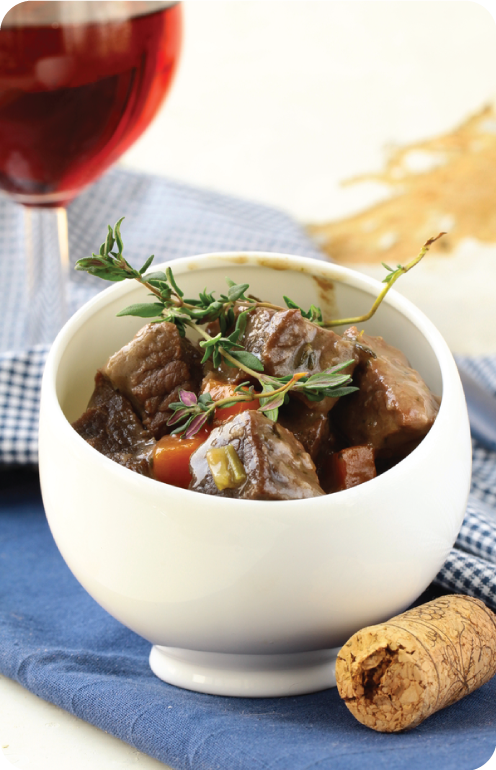
Braised Beef & Carrots

braised-beefINGREDIENTS:
•  2 lbs (1 kg) stewing beef
•  2 onions
•  1 slice belly pork, diced
•  cooking fat
•  1 small can tomato purée
•  bay, thyme, sage
•  1 cube beef stock
•  2 garlic cloves
•  6 carrots, peeled and sliced
•  salt and pepper to taste

DIRECTIONS:
Cut the meat into equal pieces.  Heat the fat, and then sauté the meat in a cast iron casserole dish.

Once all of the meat pieces are browned on all sides, remove them from the casserole, and brown the chopped onions and diced belly pork.

Dissolve the beef stock cube in ¼ liter (2 cups) of water.

Put the meat back into the casserole, pour in the stock, tomato purée, peeled and sliced carrots, garlic and herbs.

Season with salt and pepper, stir and leave to stew for 90 minutes on low heat.   Serves: 6.   Recipe courtesy of Vinadeis Winery, France.

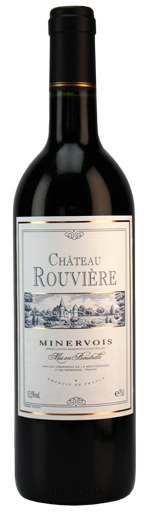
Chateau_Rouviere_SMmellowChateau Rouviere
Grenache, Syrah, Mourvedre
Minervois, France

At Landure, in the cradle of Cathar history, Marielle and Luc Rouvière are perpetuating the family tradition. “We also unearthed fragments of Gallo-Roman amphorae which were used to transport wine by ship,” explains Luc Rouvière.   In 1649, the Abbey of Fontfroide sold the estate’s land to one of Luc’s ancestors.  More than two hundred years later, Luc’s great-great-grandfather founded the Château in 1870, during the region’s golden age of wine-making. The Minervois appellation was recognized in 1985 and Luc and Marielle moved to the estate in order to continue its conversion. In 1998, Val d’Orbieu selected the couple for their top quality wines matured in oak barrels, firmly establishing their reputation. This GSMC pairs well with red meats, game and cheeses.winemaker-Olivier-Dauga

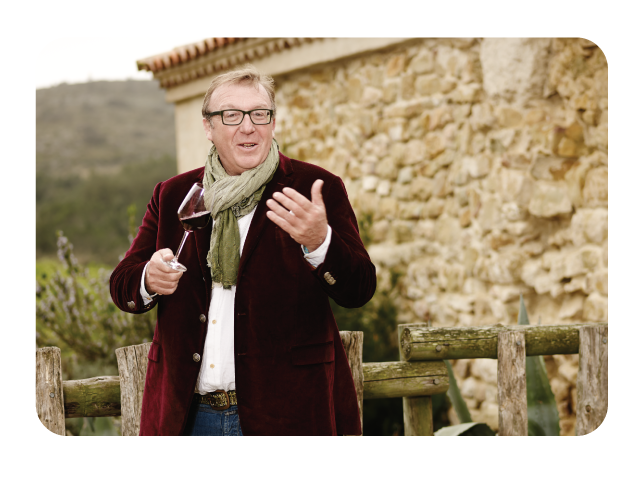
“Lovely deep dark ruby color.  A subtle nose of blackberry, raspberry and garrigue aromas.  On the palate this wine is harmonious with soft tannins and spicy finish.” – Olivier Dauga, winemaker

Winemaker: Olivier Dauga
Appellation: Minervois, France
Varietal Blend:  40% Grenache, 40% Syrah, 10% Mourvedre, 10% Carignan
Analysis: 13% alcohol / volume, 3.5 pH, 6.3 g/l TA
Critical Acclaim: Reviewed and approved by Doug Frost, Master Sommelier and Master of Wine


Grenache Blanc Pairing Recipe

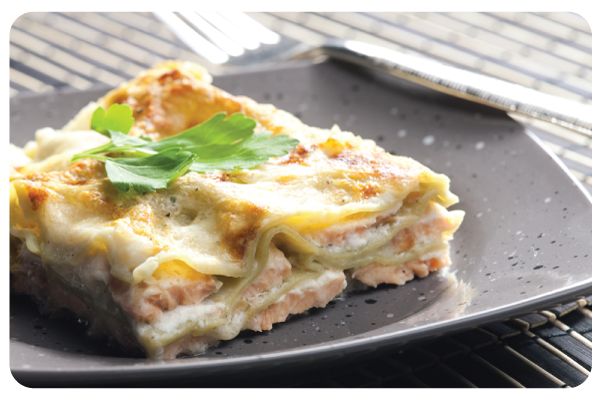
Fish Lasagna
fish-lasgana
INGREDIENTS:

•  Lasagne sheets
•  18 – 21 oz (500-600g) varied fish fillets (salmon, mackerel, Pollack, etc).
•  2 jars tomato sauce (home-made tomato sauce is best)
•  1 tub of soft cream cheese flavored with tomato
•  2 tablespoons crème fraiche (thick, heavy creme with buttermilk)
•  2 tablespoons mustard
•  grated Gruyère (or mozzarella)
•  salt and pepper

DIRECTIONS:
Cook the fish in a court-bouillon or steam it (or even microwave it).  Mix the flaked fish with cream cheese, mustard and crème fraiche, season with salt and pepper.

Start to assemble the lasagne; a layer of tomato sauce, a layer of fish mixture, a layer of lasagne sheets….and repeat the process.

Finish with a layer of tomato sauce and sprinkle over grated Gruyère or mozzarella.

Bake in the oven at 390°F (200°c) for around 35 minutes.  Serves 4. Recipe courtesy of Vinadeis of France.

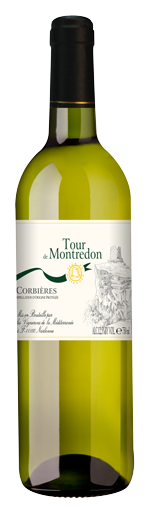
Chx-Tour-de-Montredon_Blanc_SMSilky_StickerTour de Montredon
Grenache Blanc
Corbieres, France

The Montredon Cooperative Winery was established in 1938. It is situated in a splendid location of the Corbieres region amidst impressive surrounding hills. The vineyards cover 8 hectares near the Labade Hills. The parcels are sheltered from the wind; this enables the grapes to reach exceptional levels of maturity and concentration. The vines are grown on a mosaic of terroirs with many geological nuances – limestone, clay, shale and pebble.  Winemaker Dauga, can also be viewed as an artist and an author, expressing the terroir and producing real, authentic, well-made styles of wine. Enjoy this Grenance Blanc with fish, shellfish and seafood.

winemaker-Olivier-DaugaA beautiful pale yellow color. The nose developed aromas of flowers and anise.  Fresh and fruity, this wine is long and rich on the palate”, winemaker Olivier Dauga.

Winemaker: Olivier Dauga
Appellation: Corbieres, France
Varietal Blend:  60% Grenache Blanc, 20% Roussanne, 20% Marsanne
Analysis: 12% alcohol / volume, 3.1 pH, 6.9 g/l TA
Critical Acclaim: Reviewed and approved by Doug Frost, Master Sommelier and Master of Wine


September Wine Club pairing recipe

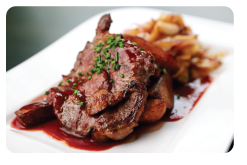
Pork Chops with Dijon Sauce
pork-chops-dijon
INGREDIENTS:

•  1 tbsp butter
•  1 tbsp olive oil
• 4 center-cut rib or loin pork chops, boneless or bone-in (whatever you prefer), about 1 ½ inch thick
• salt
• freshly ground black pepper
• ½ cup chopped shallots or green onions
• 1 cup dry white wine
• ¾ cup chicken stock*
• ¾ cup heavy cream
• 2 tbsp Dijon mustard
• 1 tbsp chopped parsley (optional)
*For gluten-free, use homemade chicken-stock or gluten-free packaged stock

DIRECTIONS:
Pat the pork chops dry with paper towels. Sprinkle salt and pepper all over them. Heat the olive oil in a large skillet over medium-high heat. Stir in the butter. As soon as the butter has melted, add the pork chops to the pan and sear them, about 2-3 minutes on each side. Reduce the heat slightly if the chops brown too quickly.

Remove the pork chops from the pan and pour off most of the fat. Add the green onions or shallots and cook them on med-high heat until softened, about 1 minute. Add ¼ cup of the wine and bring to a boil, deglazing the pan by scraping the brown bits from the bottom of the pan. Stir in the stock and return chops to the pan. Bring sauce to a simmer, reduce heat, cover and cook until chops  are cooked through (145°F internal temp), about 10 to 15 minutes.

Remove the pork chops to a warm platter; cover with foil to keep warm. Add the remaining half cup of wine. Increase the heat to high to boil the pan juices. Reduce the juices by half, about 3 minutes. Add the heavy cream and boil 3 minutes more,until sauce reduces and thickens, and scraping the pan with a wooden spoon leaves a trail. Remove from the heat and whisking the mustard and parsley. If you want, add more mustard to taste.  Place chops on a bed of sauce and serve. Serves 4.  Recipe courtesy of Simply Recipes.

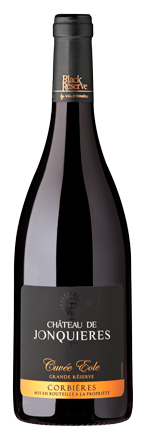
Black-Réserve_JONQUIERESBold_stickerChateau de Jonquieres
Cuvee Eole Grand Reserve
Grenache Syrah
Corbieres, France

Located just outside Narbonne (ancient capital of a Gallo-Roman province), Château de Jonquières stands in the middle of the Mediterranean scrubland. The vineyard is classified as appellation Corbières, a land of gorges and wild hills, a landscape of contrasts with rocks sculpted by the wind. Château de Jonquières is the property of Val d’Orbieu. Olivier Dauga, winemaker, accompanies winegrowers and oenologists to create these exceptional cuvées to embody the values of character, dynamism, roots and generosity in these wines, a pure product of the viticulture of the Languedoc. We invite you to discover these black diamonds, the first in a long line of exceptional vintages from Val d’Orbieu. Pairs well with pork roasted herbs, steak au poivre, or rabbit with mustard.
winemaker-Olivier-Dauga“With a beautiful deep ruby color, this wine offers a fine, delicate nose with aromas of red berries and a hint of oak. Clean and elegant on the palate, it reveals classic fruit flavors and soft notes of spices and oak”, winemaker Olivia Dauga.

Winemaker: Olivier Dauga
Appellation: Corbieres, France
Varietal Blend:  59% Grenache, 41% Syrah
Analysis:
14.5% alcohol / volume, 3.6 pH, 6.2 g/l TA
Critical Acclaim:
87 pts. Robert Parker’s Wine Advocate 2014. Reviewed and approved by Doug Frost, Master Sommelier and Master of Wine.

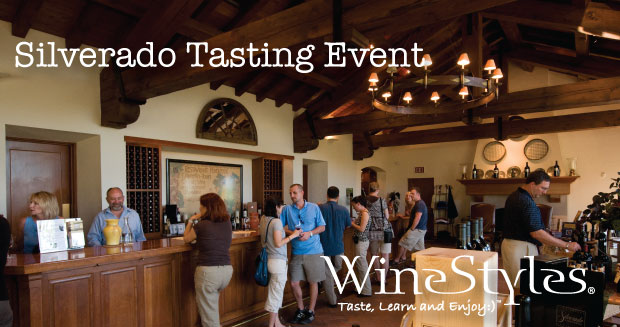
Silverado Tasting Event

Silverado_Tasting_RoomSeptember Winery Spotlight
Tasting Event
>> RSVP at your local WineStyles <<

Silverado Vineyards
Napa, California

Silverado_Tasting_Wine

The winery’s name, Silverado, comes from an abandoned mining town at the top of Napa Valley.  A century later, the widow, daughter and son-in-law of Walt Disney began carefully laying the foundation of what would be come Silverado Vineyards in 1976. A few years later, they also acquired a vineyard in the Stags Leap District – known for the quality of it’s Cabernet Sauvignon. Silverado Vineyards now farms six distinctive, family owned vineyards in the Napa Valley and Carneros, three of which are historic sites from these proprietor owned vineyards. Please join us for a Winery Spotlight tasting, featuring Silverado wines. 

The winegrowers . . . are perhaps the most fascinating aspect of terroir . . . Starting with a vision, they activate the links that connect Earth with vine and fruit, guide the transformation of fruit into wine, oversee its maturation, and only then present the liquid that completes the circle, connecting us with the Earth from which the wine arose.” –  Jonathan Swinchatt and David G. Howell,  The Winemaker’s Dance.

   Good wine is about people, from every hand that helps create Silverado’s Cabernet to every current and future friend who lifts a glass of  wine around the dinner table.   100% of the estate is sustainability farmed: 15% is farmed organically; 70% is Certified Napa Green; 50% is preserved in the Land Trust exclusively for open space and agriculture use. 50% of the winery is powered by solar panels. Proud of their accomplishments, Silverado is just getting started.  They also donate time, money and wine to over 70 organizations annually that need our help to keep their communities safe, healthy, learning and enjoying the pleasures of artistic endeavor.

For Silverado, sustainable is not simply a farming method. It is an approach to all of their activities. It is the driving force behind everything they do to ensure that this winery and estate are here for generation of customers and neighbors to enjoy.  Please join us for a special tasting event with Silverado.

Limited Seating Available – Reserve your seat ASAP!

Silverado_WinesContact your local WineStyles to RSVP!
Spicy Italian Pork Cutlets

spicy-italian-porkINGREDIENTS:
•  ½ cup extra virgin olive oil, divided
•  4 boneless pork chops, pounded to ½ inch thick
• salt and pepper to taste
• 4 cloves garlic, thinly sliced
• 1 large tomato, diced
• 1/3 cup chicken broth
• ½ cup dry white wine
• 3 tablespoons minced fresh parsley
• ½ teaspoon red pepper flakes

DIRECTIONS: Heat 2 tablespoons olive oil in a skillet over medium-high heat. Season the pork chops with salt and pepper, and quickly sear on both sides. Remove from heat, and set aside.

Heat the remaining olive oil in the skillet over medium-high heat, and saute the garlic about 30 seconds. Mix in the tomato, chicken broth, wine, parsley, and red pepper flakes. Cook and stir until thickened, about 2 minutes.  Return the pork chops to the skillet, and continue cooking 5 to 10 minutes, to an internal temperature of 145℉ degrees(63℃).   Serve pork with the tomato and broth mixture from the skillet.  Makes 4 servings.

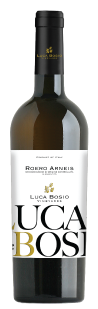
Silky_StickerLuca_Bosio_ArneisLuca Bosio Vineyards
Roero Arneis
Piedmont, Italy

The Arneis grapes for this wine are grown in the Canale Village of the Roero region of Piedmont.  This area is in the Southeastern section, close to Turin, in the foothills of the Alps at 200-400 ft. above sea level.  The average vine is 20 years and they are grown in sandy soil, at a density of 5,000 plants per hectare.  After harvesting, the grapes spend 24 hours at low temperature in contact with the skin to increase complexities of the aromas.  They are then pressed and the must is fermented in temperature controlled steel tanks.  The wine spends five months on the lees and a final three months ageing in the bottle before shipping. This wine is a perfect accompaniment to white meats like chicken and pork, as well as fish and savory vegetable dishes.

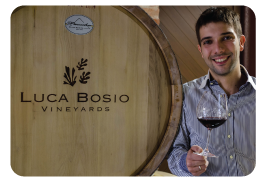
“This wine is clean and bright with floral and tropical aromas.  The palate follows through with notes of pineapple, apricot and peach ending with a crisp and refreshing finish,” Luca Bosio, winemaker

Luca Bosio, winemaker

Luca Bosio, winemaker

Winemaker: Luca Bosio
Appellation: Roero, Piedmont, Italy
Varietal Blend:  100% Arneis
Analysis: 13% alcohol / volume

August Wine Club pairing recipe

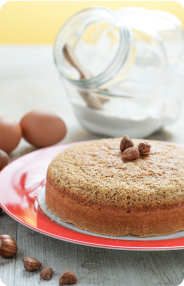
Hazelnut CakeTorta di Nocciole (Hazelnut Cake)

INGREDIENTS:
• 8 tablespoons unsalted butter, melted; OR 6 tablespoons melted unsalted butter and 2 tablespoons hazelnut oil (see NOTES)
• 2 ¼ cups toasted, skinned hazelnuts, cooled (see NOTES)
• ¼ cup unbleached all-purpose flour
• 1 packet lievito pane degli angeli or 2 teaspoons baking powder (see NOTES)
• 4 eggs, separated
• 1 cup sugar
• Pinch of fine salt
• Confectioners’ sugar for dusting
• Warm heavy cream sweetened with sugar (optional)

DIRECTIONS:
• Heat the oven to 350℉. Coat a 9-inch cake pan with about 1 tablespoon of the melted butter. Place a round of parchment paper in the bottom of the pan and coat the parchment with butter. Set the remaining melted butter aside.
• Process the cooled toasted hazelnuts in a food processor fitted with the metal blade until they are finely ground. Take care not to let them get pasty. Transfer them to a bowl and stir in the flour and baking powder. Set aside.
• In a large bowl, whisk together the egg yolks and sugar. The mixture will be very thick and cling to the whisk. Drizzle in the remaining melted butter (or melted butter and hazelnut oil, if using), a little at a time, whisking until the butter has been fully incorporated.
• Using a sturdy silicone spatula, stir the hazelnut-flour mixture into the egg yolk-butter mixture. It will be as thick as nut paste. This is fine.
• In a clean, stainless steel bowl, beat the egg whites and salt until stiff peaks form. Scoop about ½ of the egg whites into the bowl with the nut paste mixture and begin stirring and folding it in with the spatula. This will help to loosen the batter a bit. Add half of the remaining egg whites, folding rather than stirring them into the batter to prevent them from deflating too much (the batter will still be thick and sticky). Finally, add the last of the whites and continue folding until they are incorporated into the batter. The batter will be thick but spreadable. Scrape it into the prepared pan and smooth out the top.
• Bake the cake for 40 – 45 minutes, until puffed and browned on top and the center is no longer jiggling (a cake tester inserted in the center should come out clean). Be careful not to jostle the cake when you’re checking for doneness.  Transfer the cake to a cooling rack,in the pan for 30 minutes. Invert the cake onto a plate and peel off the parchment. Re-invert and let cool completely. Serve dusted with confectioners’ sugar and with warm sweetened cream for drizzling.
NOTES:  Hazelnut oil is not cheap, but an optional splurge to enhance the nut flavor of the cake.  To toast and skin hazelnuts: Heat the oven to 350℉. Spread the shelled nuts on a rimmed baking sheet and bake 10 minutes, or until the skins have begun to crack. Wrap the hot nuts in a clean kitchen towel and let stand 1 minute. Roll the nuts back and forth in the towel to loosen and rub off the skins. Not all the skins will come off, which is fine. Let cool before processing. Lievito pane degli angeli is a vanilla-scented powdered leavening agent used in Italian baking. It’s sold in packets and found in most Italian groceries. You can substitute 2 teaspoons baking powder.

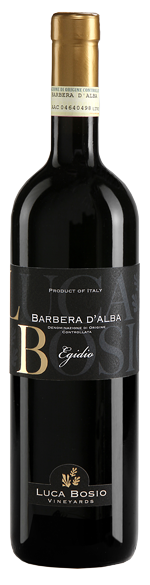
Luca_Bosio_Barbera_Alba_BottlemellowEgidio
Luca Bosio Vineyard
Barbera D’Alba
Piedmont, Italy

In the center of the Langhe, among the hills celebrated in Cesare Pavese’s poems, you can find Luca Bosio Vineyards winery, in a world where technology and rural tradition coexist. Egidio was the founder of the Bosio’s farm, father of the owner Valter, profound expert of the wines of that zone.  The grapes from this wine come from vineyards located in Santo Stefano Belbo and Alba Villages.  The average age of the vines is 40 years.  Grapes are pressed and the must is fermented in steel  tanks after a short period in contact with dry ice to increase complexity and aroma.  This wine is a perfect accompaniment to read meats, braised beef and pork, as well as an array of Italian cheeses, pastas and risotto.

Luca Bosio, winemaker

Luca Bosio, winemaker

“Ruby red in color, this Barbera exhibits aromas of red fruit chocolate and vanilla.  The aromas follow through the round and smooth palate. A well integrated wine with silky tannins leading to a smooth finish.” – Luca Bosio, winemaker

Winemaker: Luca Bosio
Appellation: Piedmont, Italy
Varietal Blend:  100% Barbera
Analysis: 14% alcohol / volume, 3.5 pH, 5.5 g/l TA
Critical Acclaim: Reviewed and approved by Doug Frost, Master Sommelier and Master of Wine

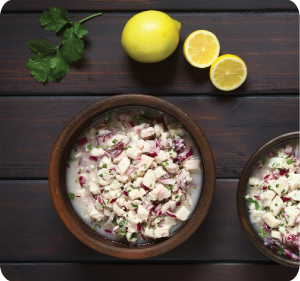
Chilean Salsa Mariscal wine pairing recipe

A specialty of small Chilean coastal villages, Mariscal is a raw salsa that can take many different forms. It’s perfect as a simple topping on a fresh oyster or turned into a vibrant sauce punctuated by fresh parsley and cilantro.

Chilean Salsa Mariscal

chilean-salsaINGREDIENTS:
• 1/2 cup Olive Oil
• 1/3 cup finely chopped onion
• 1/3 cup finely chopped parsley
• 1/3 cup finely chopped cilantro
• 1 jalapeno, seeded and finely chopped
• 1 scallion, finely chopped
• juice of 1 lemon
• kosher salt and freshly ground black pepper

DIRECTIONS: Place all the ingredients in a medium-sized mixing bowl, and toss to combine well. Allow the salsa to sit for 10 to 15 minutes, so the flavors can combine. Spoon over raw oysters and clams or toss with your favorite cooked seafood like shrimp, scallops, or mussels.

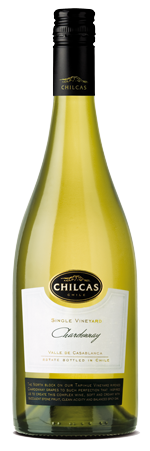
CHL_ChardonnaySilky_StickerChilcas
Single Vineyard
Chardonnay
Casablanca, Chile

Chilcas aims to produce wines that match perfectly with food, elegant wines that express the grape variety complemented with oak, where the fruit is always the star.  Fruit is mostly hand-harvested, with some machine harvesting to ensure that grapes are picked at optimal ripeness. The Chardonnay grapes for this wine come from ten-year-old vines on Chilcas’ estate La Esperanza and Rio Bonito vineyards. Here, in the Central Valley, the Mediterranean climate and maritime influence, combined with a significant day-night temperature variation, provide excellent conditions for growing aromatic varieties such as Chardonnay.

Camilo-winemaker“The 2014 Chilcas Single Vineyard Chardonnay displays a light greenish-yellow color with golden hues. Very intense on the nose, this wine unveils elegant characters of stone and tropical fruits such as pineapple, mango, kiwi and peach. The palate is balanced with a lovely harmony among fruit notes, freshness and integrated sweetness,” Camilo Viani, winemaker.

Winemaker: Camilo Viani
Appellation: Casablanca Valley, Chile
Varietal Blend:  100% Chardonnay
Analysis: 13% alcohol / volume

July Wine Club pairing recipe

Chilean-EmpandasEmpanadas de Pino
(Chilean Empanadas)

In Chile, the most traditional empanada filling is called “pino”. Pino is a seasoned mixture of ground beef, onions, raisins, black olives, and hard boiled eggs. The empanada dough is quick and easy to make, and can be made ahead and stored in the refrigerator. The pino tastes best if made the day before and allowed to rest overnight before filling the empanandas.

INGREDIENTS:
• Empanada dough
• 3 large onions, chopped
• 1 pound ground beef
• 2 teaspoons cumin
• 1 teaspoon chile powder
• 1 tablespoon paprika
• 1 beef bouillon cube, dissolved in ½ cup hot water
• 2 tablespoons flour
• ¼ cup raisins
• ¼ cup chopped olives
• 2 hard boiled eggs, sliced
• 1 egg yolk
• 2 tablespoons milk

DIRECTIONS: Cook the onions and garlic in the vegetable oil and butter until softened. Add the ground beef, cumin, chile powder, paprika, beef bouillon, and salt and pepper to taste. Cook the beef, stirring and crumbling the meat, until browned. Add the flour and continue to cook for 5 or 10 minutes more. Remove the meat mixture and let cool. The beef mixture will keep up to 2 days in the refrigerator.

Shape the empanadas: Separate the dough into golf ball size pieces, and roll into smooth balls. Let rest for 5 minutes. On a floured surface, roll each ball of dough into a 6 inch diameter circle, about ½ inch thick. Add 1 tablespoon of the beef filling, a few raisins and some chopped olives, and a slice of hard-boiled egg to the middle of the circle.  Brush the edges with water and fold the pastry in half over the filling, to make a semi-circle.  Seal the edges by pressing down with your fingers. Brush the sealed edge lightly with water, then turn the edge toward the middle and press with your fingers to seal.

Mix the egg yolk with 2 tablespoons milk, and brush the empanadas with the mixture.  Bake at 350°F for 25-30 minutes, or until golden brown.

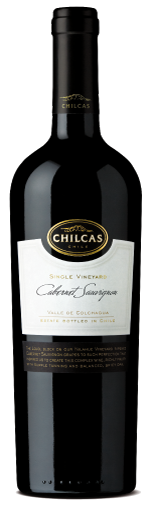
CHL_CabernetSauvignonBold_stickerChilcas
Single Vineyard
Cabernet Sauvignon
Colchagua Valley, Chile

Nestled in the foothills of the Andes Mountains, in the shadow of the Descabezado Volcano, lies the Chilcas flagship Maule Valley San Rafael Vineyard. Named for a native Chilean bush with fine pigment that grows in the region, Chilcas wines exude a sense of place and strong varietal expression. With an emphasis on the Maule Valley, Winemaker Camilo Viani aims to produce the finest wines from more than 400 acres of estate vineyards in the Maule, Curico, Colchagua and Casablanca Valleys and across three tiers of wines – Reservas, Icons and Single Vineyards. A true steward to the land, Chilcas is intensely committed to sustainability and, as part of the VIA Wines family, has been certified sustainable under Wines of Chile´s Sustainability program.

Camilo-winemaker“The Single Vineyard Cabernet Sauvignon is deep ruby-red in color. On the nose, there are aromas of cherry, strawberry and black currant that mingle elegantly with complex cedar, olive, and black tea characters. Background notes include all spice, chocolate and smoke. This is a wine with great structure and volume, firm tannins and a long finish.”

Winemaker: Camilo Viani
Appellation: Colchagua Valley, Chile
Varietal Blend:  593% Cabernet Sauvignon, 4% Malbec, 3% Petit Verdot
Analysis: 14.5% alcohol / volume

Central Coast Sauvignon Blanc pairing recipe

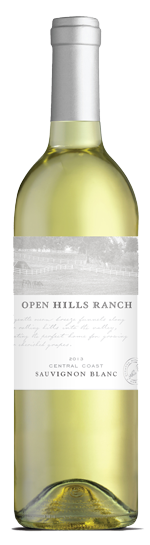
Open-Hills-Ranch_SB-bottle-render-300Silky_StickerOpen Hills Ranch
Sauvignon Blanc
Central Coast, CA

With so much terroir diversity in California, there’s a perfect place to grow nearly every kind of grape. In fact, you’ll find more than 100 varieties, giving  winemakers the latitude to create complex varietals and unique, expressive blends. Since the 1700’s, immigrants from all over the world have settled in California, bringing their vines and their skills with them. Hard-earned secrets of soil, climate and vine have been passed from generation to generation, providing California wine with its unique legacy and spectacular range. Always crisp and refreshing, California vintners like to put their own spin on this classic varietal, with flavors that range from vibrant lemongrass and herb, to tart green apple, round melon and fig. Enjoy this wine with oysters, gnocchi with Gorgonzola sauce, or a dessert pastry.

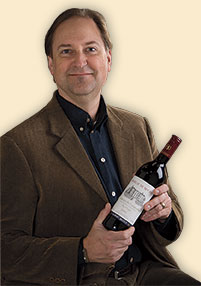
DougFrost“Sauvignon Blanc doesn’t have to be grassy like so many New Zealand versions of the grape; California has been growing the grape for longer and offers a more elegant style. Instead of green beans or asparagus (as the Kiwis love it), this shows melons, citrus, white pepper, limes and a bit of lemongrass.”  – Doug Frost, Master Sommelier and Master of Wine.

Winemaking Team: Roxie Ward, Travis Proctor, Anna Clifford
Appellation: Central Coast, California
Varietal Blend:  100% Sauvgnon Blanc
Analysis: 14.3% alcohol / volume


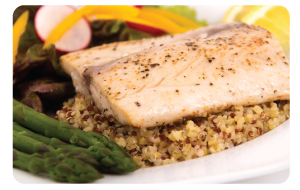
mahiWood Fired Mahi

MAHI INGREDIENTS:
• Two, 8 oz pieces mahi
• Salt and pepper
• 2 tbsp olive oil

DIRECTIONS: Heat a medium sauté pan with 2 tbsp olive oil in a wood fire (an oven will work just fine). The smokiness adds a wonderful flavor. Meanwhile season mahi lightly with salt and pepper.  Place mahi gently in preheated pan and place back into oven for about 2 minutes. Check sear and flip once golden brown. Finish cooking in oven for about another 5-8 minutes. Remove and set aside.

LEMON BEURRE BLANC INGREDIENTS:
• 1 to 2 shallots, chopped fine
• 8 oz white wine
• 2 oz lemon juice
• 1 tbsp heavy cream
• 12 tbsp cold unsalted butter, cubed
• Salt and pepper, to taste

DIRECTIONS: Combine the shallots, white wine, and lemon juice in a non-reactive saucepan over high heat and reduce to 2 tbsp.  Add the cream to the reduction. Once the liquid bubbles, reduce the heat to low.  Add the butter, one cube at a time, whisking first on the heat and then off the heat. Continue whisking butter into the reduction until the mixture is fully emulsified and has reached a rich sauce consistency. Season with salt and pepper.

QUINOA: Cook about 1 ½ cups quinoa according to package instructions.

GRILL ASPARAGUS INGREDIENTS:
•  12 asparagus spears
• 2 tbsp olive oil
• Salt and pepper to taste

DIRECTIONS: Lightly rub asparagus with oil. Season to taste with salt and pepper. Place asparagus on preheated grill and allow to cook until slightly charred.  To serve, place quinoa on plate, top with mahi, beurre blanc and arrange asparagus nicely around circumference of dish. Garnish with lemon wedge if desired. Recipe compliments of Chef Brian Reigle of Terravant Winery Restaurant.