December Bubbly Club: Iowa

Bubbly Wine Clubraptor ridge winery rose 2015 anniversaryRaptor Ridge Winery
Brut Rosé Méthode Champenoise
Anniversary Estate Cuvée Pinot Noir
Willamette Valley, Oregon

BUBBLY WINE STYLE

Since 1996, when the Shull’s planted Harbinger Vineyard high in the Chehalem Mountains, the site produces a lean expression of Pinot Noir in all but the warmest vintages. With over 2400 vines per acre, this single-guyot trellised site is densely planted by Oregon Standards. The top of the vineyard is about 800 feet above sea level, providing cool nights and slow ripening of the 100% Pinot Noir plantings. In the particularly cool vintage of 2011, a switch went on in Scott Shull’s brain…sparkle it! Henceforth, their approach to this 21-year old vineyard has been to focus on classic Méthode Champenoise. In 2015 Raptor Ridge Winery decided to increase the production by adding Tuscowallame Estate Pinot Noir, which comes from their highest block and contains a mixture of clones. Both vineyards are farmed identically. The base wine ferments and rests en tirage for about three years, before disgorgement and dosage to complete the wine for final bottling.

Appellation: Willamette Valley, Oregon
Analysis:
12.5% alcohol / volume
TA: 7.5 
pH: 3.37
Brix: 20.8
Case Production: 360
De-stem: 100%
Cold Soak: 96 hours

ABOUT THE RAPTOR RIDGE WINERY:
Owned and operated by Scott and Annie Shull, the duo have been nurturing Raptor Ridge for 26 years – from a “garage” winery, to the clearing of their vineyard in 2000 and the opening of their tasting room in 2010. The Shull’s winegrowing focuses on quality, consistency and intrigue. Their wines express simplicity, while also having layers of sensory complexity on the palate and mind. Learn more about their journey here.


gaspard bulles sparkling rose

Gaspard
Bulles Sparkling Rosé
Loire Valley, France

BUBBLY WINE STYLE

“Bulles”, meaning “bubbles” in French, is the perfect name for this wine. This sparkling, fruity Rosé is full of red berries. It makes for a perfect aperitif wine, great for any celebration, or while snacking on other nibbles.

Grapes: Pineau d’aunis
Vineyard: Clay and Limestone
Vines: 80 year-old vines, sustainable growing practices

WINEMAKING:
The grapes are handpicked, pressed. The first fermentation occurs with natural yeast in tanks. The wine is then filtered and bottled with liqueur de tirage to start the second fermentation in bottles. The wine is disgorged and topped up with more wine, zero sugar added. Total time in cellar is 36 months.

ABOUT THE GASPARD:
Gaspard is one of
Jenny & Françoishouse labels, these wines come from their exclusive cooperation with carefully selected winemakers in France and beyond. The growers they are partnered with work sustainably and organically to produce the purest wine. These Loire Valley wines focus on the nature of the wine, while also staying in a friendly budget to their consumers. All wines are made with tradition and use the most popular varieties of their regions. Learn more about their story here.

Bubbly Wine ClubLearn more about our Bubbly Club >


Maison Louis Latour Pinot Noir Les Pierres Dorées

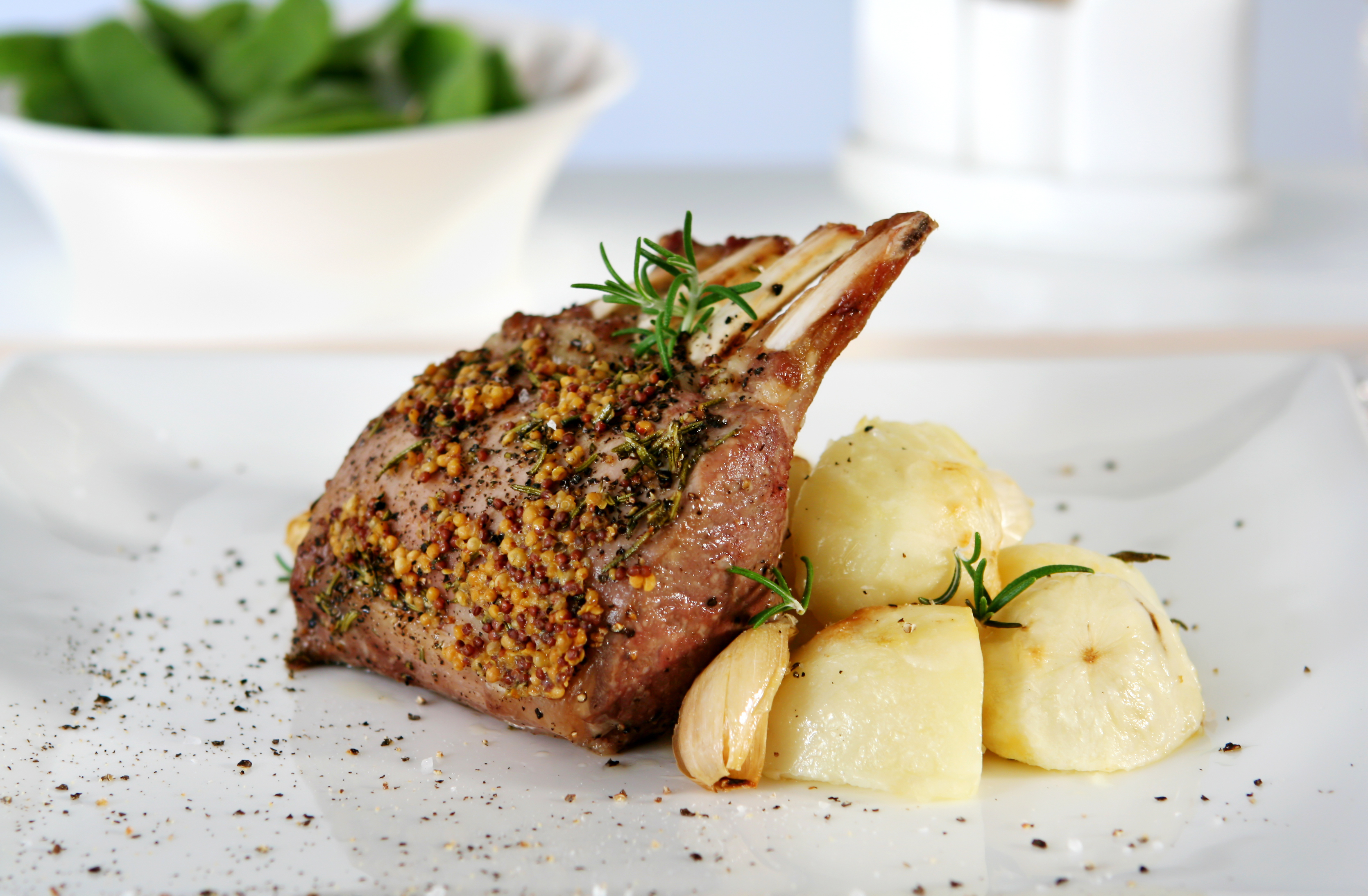
Rack of LambGarlic-Crusted Roast Rack of Lamb

INGREDIENTS:

  • 1 head of garlic (cloves peeled)
  • ¼ cup rosemary leaves
  • ¼ cup extra-virgin olive oil
  • 2 racks of lamb, frenched (2 pounds each)
  • salt and freshly ground pepper

DIRECTIONS:

  1. In a mini food processor, combine the garlic, rosemary and olive oil and process until the garlic is finely chopped. Season the lamb racks with salt and pepper and rub the garlic-rosemary oil all over them. Set the racks fat side up on a large rimmed baking sheet and let stand for 1 hour.
  2. Preheat the oven to 450°F. Roast the lamb in the upper third of the oven for 15 minutes. Turn the racks and roast for 10 minutes longer for medium-rare meat. Transfer the racks to a carving board, stand them upright and let rest for 10 minutes.
  3. Carve the racks in between the rib bones and transfer to plates. Serve right away.

© Recipe courtesy of Kenny Rochford from Food & Wine.

DECEMBER WINE CLUB:

pinot noir les pierres dorees
Louis Latour
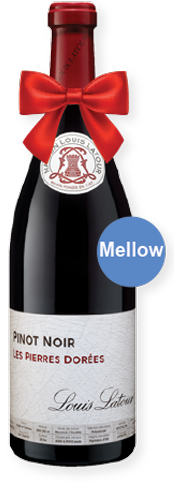
Pinot Noir Les Pierres Dorées
Burgundy, France

MELLOW WINE STYLE

The Les Pierres Dorées Pinot Noir has an intense, bright red color with red-garnet hues. On the nose, there are notes of flowers, red berries and soft spices. On the palate, it is round and full-bodied. It has a great deal of freshness with long under notes of black fruits.

Varietal: Pinot Noir
Analysis:
13-13.2% alcohol / volume
Region: Beaujolais, France
Village: Les Pierres Dorées
Appellation: Burgundy
Average Vine Age:
7 years
Soil: Clay and limestone with Iron-oxide
Harvest: Mechanical
Fermentation: Traditional in open vats
Aging: 10 to 12 months aging in stainless steel vats and oak barrels
Barrels: Louis Latour cooperage, French oak, medium toasted
Cellaring Potential: 5-7 years
Serving Temperature: 57.2-60.8ºF
Food Pairing: Rack of lamb, quail with grapes, red tuna tartare, sea bass, goat cheese, red fruit soup
Critical Acclaim:
James Suckling 2018, 89 pts

WINERY NOTES:
Maison Louis Latour once again exports its Burgundian know-how outside of the Côte d’Or. After the great successes of Ardèche and Var, they decided to repeat the experience in the heart of Beaujolais with the planting of 20 hectares of Pinot Noir. The calcareous soil rich in iron oxide gives a very particular ochre color, and the high altitude contribute to produce a surprising wine which associates richness and freshness with a beautiful aromatic complexity. This region offers beautiful argilo-calcareous soils, the plots selected by Maison Louis Latour form two islands and are situated on the villages of Morancé and Theizé. With a continental moderate climate, vineyards benefit from an ideal period of sunshine but the temperatures are relatively fresh due to an elevation between 280 and 400 meters.

ABOUT MAISON LOUIS LATOUR:
Founded in 1797, Maison Louis Latour has been apart of Burgundian history for more than two centuries. Authentic and independent, the winery is now run by the 11th generation of the founding family. The family is determined to preserve the winery’s unique heritage. Today, the Latour’s family Domaine spreads over 50 hectares of exceptional vineyards. Learn more about their history here.

Wine club logoJoin our WINE CLUB and enjoy these amazing wines and pairing recipes each month. Plus, you’ll receive 10% off all retail wine purchases!

Learn More >


December Wine Club Pairing Recipe

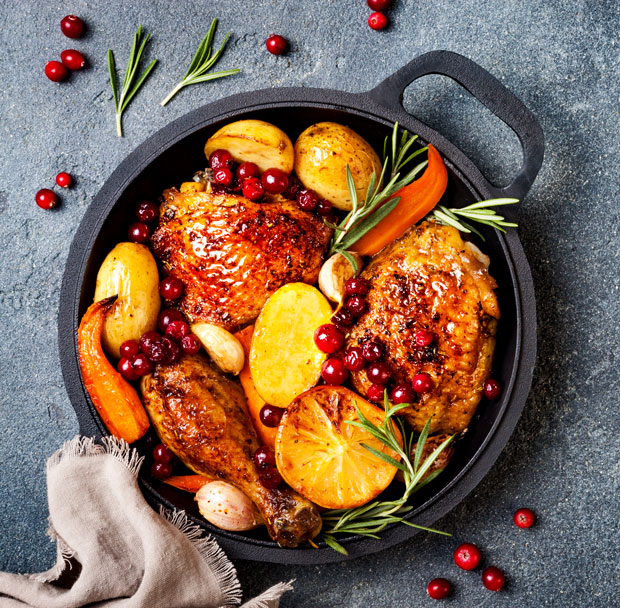
Skillet Cranberry Roasted Chicken and Potatoes

INGREDIENTS:

  • 4 skin-on chicken breasts or thighs
  • 1/4 cup olive oil, divided
  • 1 tablespoon chopped fresh thyme
  • 1 1/2 teaspoons chopped fresh rosemary
  • 2 cloves garlic, minced or grated
  • zest + juice of 1/2 lemon
  • kosher salt and pepper
  • 1 pound baby potatoes, halved
  • 3 carrots, chopped
  • 1 cup white wine or chicken broth
  • 1 1/2 cups fresh cranberries
  • 2 tablespoons brown sugar
  • 2 tablespoons balsamic

DIRECTIONS:

  • Preheat the oven to 425°F.
  • Rub the chicken with 2 tablespoons olive oil, the thyme, rosemary, garlic and lemon zest. Season with salt and pepper.
  • Heat a large oven safe skillet over medium-high heat. Add 2 tablespoons olive oil. When the oil shimmers, add the chicken, skin side down, and sear until golden, about 5 minutes. Flip and cook 5 minutes more. Remove the chicken from the skillet. Add 2 tablespoons butter, the potatoes, carrots, and a pinch each of salt and pepper. Cook, stirring often, until slightly softened, about 5 minutes. Pour in the wine, deglazing the pan and scraping up any browned bits off the bottom. Simmer the wine for 5 minutes or until reduced slightly. Remove from the heat and nestle the chicken into the potatoes. Add the lemon juice.
  • In a small bowl, toss together the cranberries, brown sugar and balsamic vinegar. Sprinkle the cranberries over the chicken. Transfer to the oven and roast for 20-25 minutes or until the chicken is cooked through and the potatoes are tender. Plate the chicken and potatoes and drizzle with the sauce left in the pan. EAT!

© Recipe courtesy of Tieghan Gerard from Half Baked Harvest.

DECEMBER WINE CLUB:

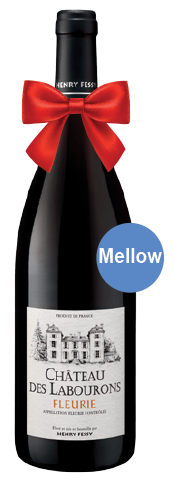
fleurie chateau des dorees wine bottleHenry Fessy
Fleurie Château des Labourons

Burgundy, France

MELLOW WINE STYLE

Ruby red in color with light hints of purple, the nose has intense flavors of blackberry and blackcurrant. On the palate, the Fleurie “Château des Labourons” is concentrated, with supple and silky tannins. It has a beautiful finish with slightly peppery and violet notes.
 
Château des Labourons dominates the beautiful hillsides of the Fleurie appellation. It is located three kilometers further up the hill from the hamlet of Les Labourons. The combination of the altitude, slope, exposure and quality of the soil have created a promising terroir in the heart of the Fleurie Cru. Château des Labourons’ current architecture dates from the 19th century. It was rebuilt from ashes after a devastating fire, but still retains some of its original architectural character. This Château has a long history, over five generations of the “de Lescure” family, and it was already producing wine by the 18th century.
 
Varietal: 100% Gamay
Analysis: 13.5% alcohol / volume
Appellation: Beaujolais, France
Soil Composition: Igneous rock – mainly pale pink granite that breaks down into coarse “blockfields”
Harvest: Manual
Average Vine Age: 40 Years
Pruning: Gobelet
Density of Vines: 10,000 vines/ha
Critical Acclaim: 
  • James Suckling – February 2017 – 92 pts
  • Wine Spectator – July 2017 – 88 pts
  • Wine Enthusiast – May 2017 – 88 pts
  • Jancis Robinson – UK – January 2017 – 16.5 pts
  • Guide Bettane & Desseauve – Septembre 2016 – 14 pts
  • Concours Général Agricole – Février 2016 – Médaille d’Or
Suggested Food Pairings: Roasted chicken, grilled meats and cheese
Serving Temperature:
57.2-59°F
Winemaking: The château selects the best grapes, then carries out non-carbonic vinification in open vats. Afterwards, the grapes go through pneumatic pressing and fermentation, the wine is matured in old oak tuns before bottling.
 
ABOUT HENRY FESSY:
The Fessy Family has been based in the heart of the Brouilly appellation since 1888. They have purchased parcels of vineyards in most of the Crus and Beaujolais-Villages over the years, creating an enviable domaine of nearly 70 hectares of vineyards. Their philosophy is to work with sensitivity and intelligence to produce highly characterful wines with little to no intervention. Learn more about the winery here.
 

Wine club logoJoin our WINE CLUB and enjoy these amazing wines and pairing recipes each month. Plus, you’ll receive 10% off all retail wine purchases!

Learn about our Memberships >


Maison Simonnet-Febvre Chablis Premier Cru Vaillons

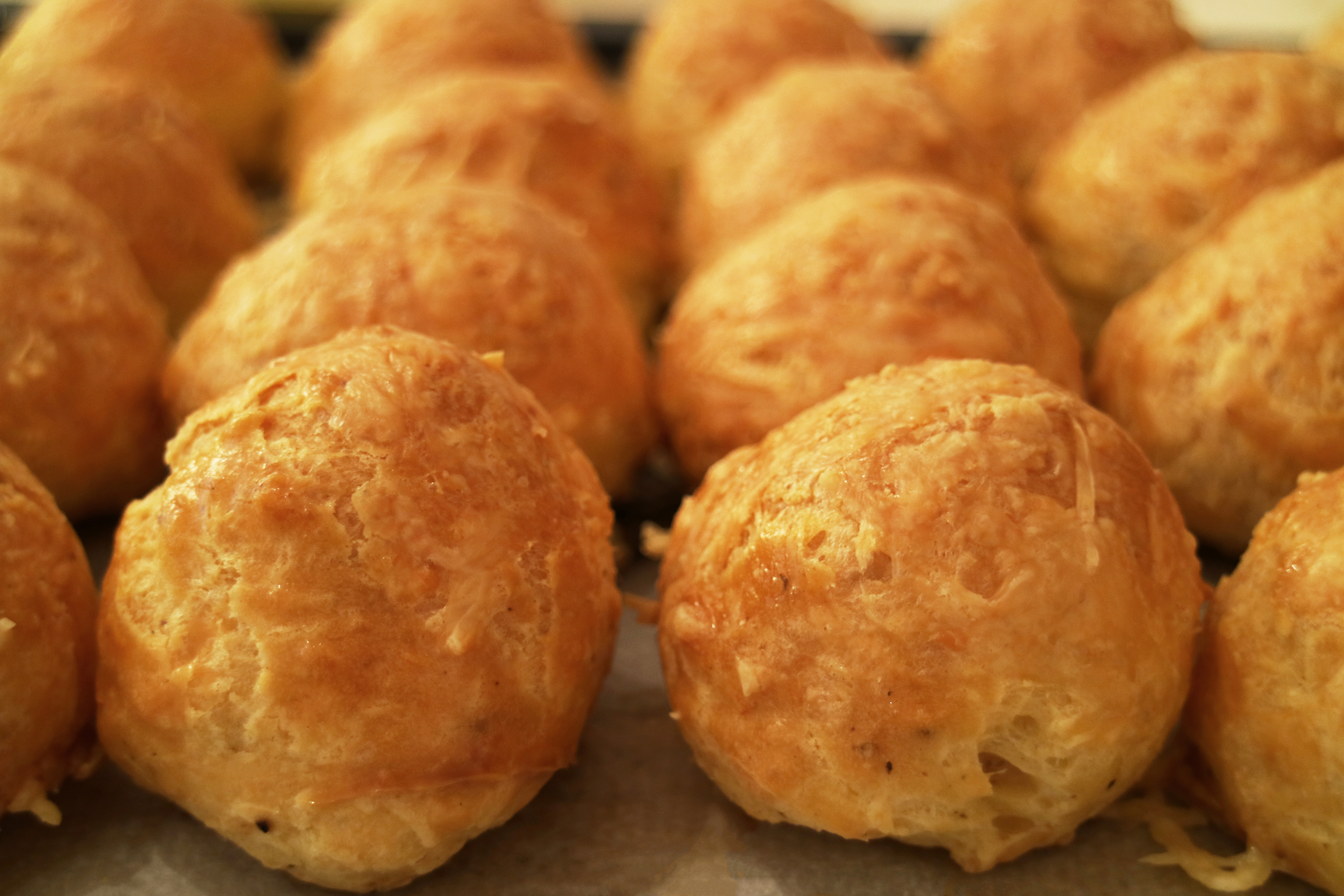
GougèresGougères

INGREDIENTS:

  • 6 tablespoons (¾ stick) unsalted butter, cut into pieces
  • ¾ teaspoon kosher salt
  • pinch of nutmeg
  • 1¼ cups all-purpose flour
  • 4 large eggs
  • 6 ounces (1½ cups) grated Comté cheese or Gruyère
  • ½ teaspoon freshly ground black pepper
  • 1 large egg yolk

DIRECTIONS:

  1. Preheat oven to 400°F. Bring butter, salt, nutmeg, and 1 cup water to a boil in a medium saucepan, stirring until butter is melted. Remove from heat, add flour, and stir to combine.
  2. Cook mixture over medium heat, stirring vigorously with a wooden spoon, until mixture pulls away from sides of pan and forms a ball, about 2 minutes. Continue to cook, stirring vigorously, until a dry film forms on bottom and sides of pan and dough is no longer sticky, about 2 minutes longer. Remove pan from heat and let dough cool slightly, about 2 minutes. Mix in whole eggs one at a time, incorporating fully between additions. Mix in cheese and pepper.
  3. Scrape dough into a piping bag fitted with a ½” round tip (alternatively, use a plastic bag with a ½” opening cut diagonally from 1 corner). Pipe 1” rounds about 2” apart onto 2 parchment-lined baking sheets. Whisk egg yolk and 1 tsp. water in a small bowl; brush rounds with egg wash.
  4. Bake gougères until puffed and golden and dry in the center (they should sound hollow when tapped), 20–25 minutes.
  5. NOTE: Dough can be made 4 hours ahead. Cover and chill. Gougères can be baked 2 hours ahead; reheat before serving.

© Recipe courtesy of Mimi Thorisson of Bon Appétit.

DECEMBER WINE CLUB:

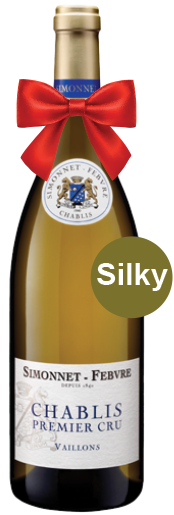
chablis premier cru vaillonsMaison Simonnet-Febvre
Chablis Premier Cru “Vaillons”
Burgundy, France

SILKY WINE STYLE

The Chablis Premier Cru “Vaillons” has notes of citrus and white flowers. The mouth is long and complex with a pronounced, lingering mineral finish.

Varietal: 100% Chardonnay
Analysis:
13% alcohol / volume

Appellation: Premier Cru
Soil: Kimmeridgian marl & limestone
Vinification: Stainless steel tanks between 62.6-69.8°F
Aging: 12 months in stainless steel, on lees; then 4-5 years
Average Age of the Vines: 35 years
Yield: 58 hl/ha
Serving Temperature: 50-53.6°F

ABOUT THE VINEYARD:
This vineyard is situated on the left bank of the Serein river, and has an ideal southwesterly aspect. The soils of the left bank are less clay-like than those of the right bank. This wine is one of the most highly-rated left-bank Chablis from Maison Simonnet-Febvre.

ABOUT MAISON SIMONNET-FEBVRE:
Founded in 1840, Maison Simonnet-Febvre has become one of the oldest traditional Chablis wineries in the area. Originally named Febvre-Forgeot, after founder, Jean Febvre, married the daughter of a broker named Forgeot. In 1894, after the death of Jean Febvre, his daughter Melanie took over the company with her husband, Amedee Simonnet, and so, the company changed to benefit the person who would take the reins. Over the years, the winery continued to grow as it has been passed down from generation to generation. Learn more about their family winery here.

Wine club logoJoin our WINE CLUB and enjoy these amazing wines and pairing recipes each month. Plus, you’ll receive 10% off all retail wine purchases!

Learn More >


September Bubbly Club: Iowa

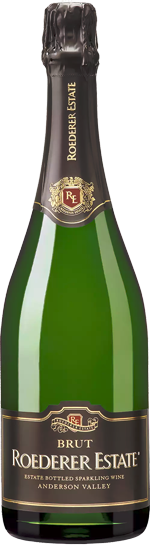
Bubbly Wine Clubroederer-estate-brut-multi-vintage-bottleRoederer Estate
Brut
Anderson Valley, California

BUBBLY WINE STYLE

The Roederer Estate Brut is crisp and elegant with complex flavors of pear, spice and hazelnut and is fresh, yet has great depth. It is lightly fruity with great finesse.

Analysis: 12.5% alcohol / volume
Appellation: Anderson Valley
Varietals:
Approximately 60% Chardonnay, 40% Pinot Noir
pH: 3.1
Residual Sugar:
12 g/L
Aging: Aged a minimum of two years on the yeast
Awards:

  • 93 Points – Wine Enthusiast, December 1, 2020
  • 93 Points – The Wine Advocate, September 2020
  • 93 Points – Decanter, July 2020
  • 92 Points – Decanter, January 2020 
  • 92 Points, Smart Buy – Wine Spectator, August 31, 2019
  • 90 Points – Wine & Spirits, August 2019
  • 92 Points, Best Buy – Wine & Spirits, August 2018
  • 93 Points, #27 Top 100 Wines for 2018 – Wine Spectator, July 31, 2018

ABOUT ROEDERER ESTATE:
Founded in 1982, Roederer Estate is among a very few California sparkling wine houses that only sources estate-grown fruit and builds upon a centuries-old tradition of winemaking. Nestled in Mendocino County’s Anderson Valley, the Estate’s proximity to the Pacific Ocean allows the grapes to mature slowly on the vine and develop full varietal character. Learn more about the Estate here.


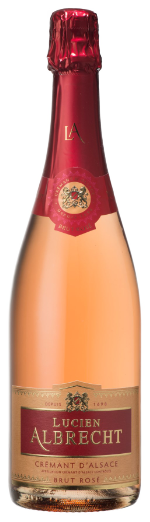
Cremant-dAlsace-Lucien-Albrecht-Brut-Rose_eLucien Albrecht
Le Crémant d’Alsace Rosé Brut
Alsace, France

BUBBLY WINE STYLE

The Crémant Rosé has nice pink reflections and salmon tones supported by an elegant effervescence. On the palate, there are notes of delicate red fruit that bring roundness and body together to make a complete wine.

Analysis: 11.98% alcohol / volume
Varietal: 100% Pinot Noir
Residual Sugar:
9.8 g/L
Total Acidity: 3.18 g/L
Vinification: 100% hand harvested, extended and soft pressed, 6-8 weeks controlled fermentation in stainless steel, then laid on racks for a minimum of 12 months.
Aging Capacity: Enjoy it now or keep it up to 3 years
Serving Temperature: 44.6ºF-46.4ºF
Pairings: Excellent for festive occasions.
Awards:

  • Silver Vinalies Internationales 2020
  • 90 points – Wine Enthusiast 2020

ABOUT CRÉMANT D’ALSACE APPELLATION D’ORIGINE CONTRÔLÉE:
“Crémant d’Alsace Appellation d’Origine Contrôlée was created in 1976 to distinguish the wines obtained by the sparkling champagne method. The term “crémant” comes from Champagne where it was fallen in disuse. It was the recognition of the efforts made by several Alsatian winemakers, including the Maison Lucien Albrecht.” – Lucien Albrecht

ABOUT THE WINERY:
The Maison Lucien Albrecht’s origins can be traced back to 1698 when Balthazar Albrecht settled in Orschwihr, a small Alsatian village ideal for it’s growing conditions. Eight generations later, the family continues to work in these same unique terroirs creating world renowned wines. Passed down from father to son, each generation has adapted its wine-growing and wine-making methods gradually to get the very best out of the terroir, while still producing authentic wines, characteristic to Alsace. Learn more about the family history here.

Bubbly Wine ClubLearn more about our Bubbly Club >


August Sweet Club Iowa


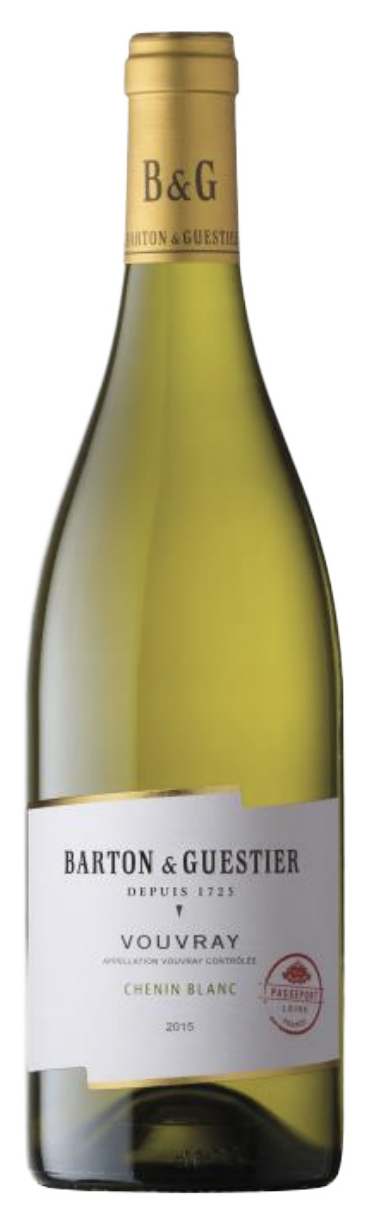
Sweet Wine ClubBarton & GuestierBarton & Guestier
Vouvray Passeport
Loire Valley, France

NECTAR WINE STYLE

Bright clear yellow in appearance, the Vouvray Passeport has a fruit driven nose with subtle aromas of white flowers mixed with peach, pear, pineapple and carambola. On the palate, it is well balanced between fruit and flint, with a nice, refreshing finish.

Varietal: 100% Chenin Blanc
Region: Loire Valley, France – near the town of Tours
Classification: Appellation Vouvray Contrôlée
Soil: Clay and limestone base with sandy patches, where Chenin grows its best
Climate: Oceanic, mild and humid
Vinification: Pressing of the grapes with overnight settling – controlled alcoholic fermentation to preserve residual sugar
Viticulture: Low yields, hand tending, careful selection and minimal interference in the natural ripening of the grapes
Pairing: This wine is very versatile. It can be paired well with anything from cheese to appetizers, salads, fish, barbecue, or even spicy food or curry dishes. Best served between 46ºF and 50ºF.
Critical Acclaim:

  • Double Gold Medal – Wine Tasting Competition (WSWA) 2016 – USA – 2015 vintage
  • Double Gold Medal – York World Wine & Spirits Comp 2016 (2015 vintage)
  • Vivino Wine Style Awards 2017
  • “Best Buy” – Wine Enthusiast (2014 vintage)
  • 91 points Ultimate Wine Challenge ‘Finalist’ (2013 vintage)

WineStyles Wine and Cheese Pairing: Sweet wines from our ‘Nectar’ section pair well with an aged cheese. Learn more about our wine and cheese pairings here.

ABOUT THE WINERY: 
In 1725, Irishman, Thomas Barton settled in Bordeaux, France to start is company – now, the city’s oldest active wine house. His grandson Hugh teamed up with Frenchman, Daniel Guestier, and in 1802 their partnership became official. Since then, the company has reached over 130 countries. Learn more about their story here.


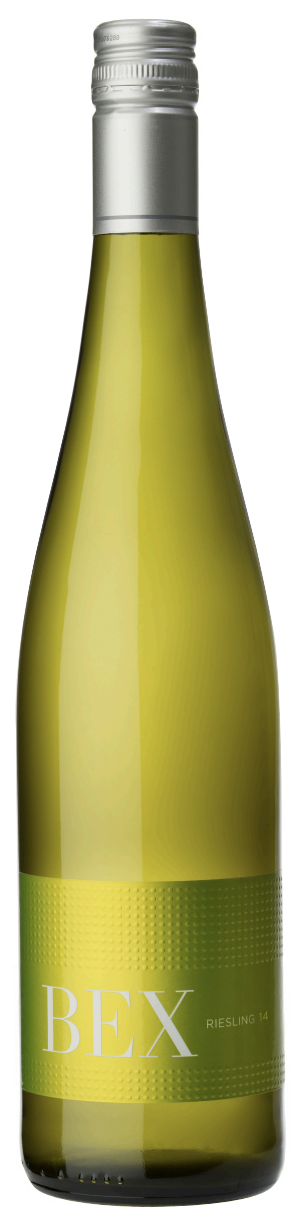
BEXBEX Winery
Riesling
Nahe, Germany

NECTAR WINE STYLE

The BEX Riesling is brilliant straw color. On the nose, there are aromas of orange blossom, lime and white grapefruit, while on the palate there are mouthwatering flavors of lime and mandarin orange. The wine finishes with notes of minerals and citrus zest.

Analysis: 10.0% alcohol / volume
Varietal: 100% Riesling
Appellation: Nahe, Germany
RS:
2.4%
pH: 3.23
TA: .82 g/100ml
Aging: Fermented at cool temperatures (52)F-55)F), then aged in stainless steel tanks to enhance the wines fresh fruit characteristics

Closure: Twist off to preserve the zesty citrus and bright stone fruit nuances. This allows a slight effervescence to be sealed in, lifting the soft aromas out of the glass.
Pairing: Enjoy as an aperitif, pair with a light or spicy cuisine, or serve as a finale with a dessert
Critical Acclaim:
Exceptional – “Best Buy” – 90 points: Beverage Testing Institute, Oct 2015

WineStyles Wine and Cheese Pairing: Sweet wines from our ‘Nectar’ section also pair well with an herbal cheese. Learn more about our wine and cheese pairings here.

WINEMAKER NOTES – 2014 VINTAGE:
“The 2014 growing season was early and fast! Riesling shoots appeared on April 12, three weeks before the norm. Flowering was ahead of schedule and the vines ripened nicely through August when a period of strong rains occurred. Luckily Mother Nature delivered a nice dry September helping the grapes to reach full maturity. The hallmark of 2014 Riesling are sassy wines – crisp and lively with well-integrated acidity.” – BEX Winery

ABOUT THE WINERY:
Located 25 miles south of Mosel, in the Nahe (pronounced Nah-heh) region of southwest Germany; BEX Winery works to produce wines highlighting the distinct flavors of its land. Nahe is the most geologically diverse growing region in Germany. It’s known for its red slate/diverse soils, mild climate, and moderate rainfall – making distinct Rieslings with fresh fruit and floral aromas. Learn more about BEX Winery
here.


Sweet ClubLove the Sweet life?
“Wine” not try our Sweet Club! 

Click here to learn more >


July Bubbly Club: Iowa

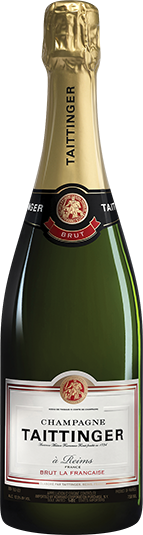
Bubbly Wine ClubChampagne_Taittinger_Brut_La_Francaise-bottleTaittinger
Brut La Française
Champagne, France

BUBBLY WINE STYLE

The Taittinger Brut La Française is pale gold in color with fine, persistent bubbles. On the nose, there are delicate aromas of peach, white flowers, vanilla pods, and brioche and the on the palate there are flavors of fresh fruit and honey. Excellent with foods such as seafood and white meat.

Analysis: 12.3% alcohol / volume
Varietal: 40% Chardonnay, 35% Pinot Noir, 25% Pinot Meunier
Appellation: Champagne, France
Aging: 3-4 years on lees
Winemaker: Alexandre Ponnavoy

WINEMAKER NOTES:
Taittinger Brut La Française is a blend of Chardonnay, Pinot Noir and Pinot Meunier wines from at least 35 villages. The high proportion of Chardonnay (40%) is unique among fine nonvintage Champagnes. The presses are located in the vineyard for immediate pressing of the fruit after the manual harvest, and the resulting must is cold fermented under temperature-controlled conditions. After resting until the end of winter, the wine is blended, and then the final cuvée undergoes a second fermentation in the bottle in Taittinger’s cool cellars. The aging of Brut La Française on the lees for almost 4 years, more than double the legal minimum of 15 months. This extra time in the cellars allows the wine to reach the peak of aromatic maturity, and the result is a delicately balanced Champagne, known for its consistently excellent quality.

ABOUT THE WINERY:
The Taittinger family has managed the Champagne House for nearly a century. Pierre-Emmanuel Taittinger, grandson of the founder, has maintained this commitment for 40 years and today he shares it with his son, Clovis and his daughter, Vitalie who both work beside him. Their aim is to always achieve excellence with their work. “Having our family name on a bottle places demands and responsibilities on every minute. It conveys both the skills and knowledge of the past and a commitment to the future,” Clovis Taittinger.  Champagne Taittinger is one of the few remaining family owned and operated Champagne houses. The firm is distinguished for its extensive vineyard holdings of 752 acres, including prestigious Grand Cru vineyards in the Côte des Blancs and Montagne de Reims regions. Unlike most large houses, Champagne Taittinger relies primarily on estate grapes for its portfolio of Champagnes. Also unique are the higher proportion of Chardonnay in its wines that gives Taittinger its signature style, and the time devoted to aging the wines before release—most often greatly exceeding the legal requirement, in a practice that also has become a Taittinger hallmark.
 Learn more about the family business here.

Bubbly Wine ClubLearn more about our Bubbly Club >


Château Roc de Candale

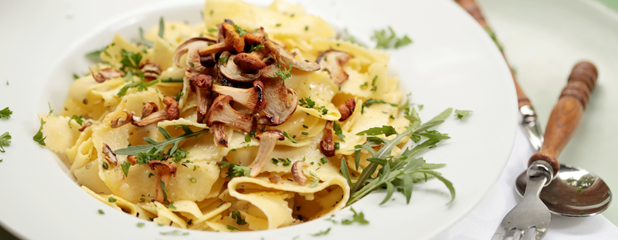
tagliatelles-aux-morilles-et-champignons-de-paris-entete

© Photo by Les Vins de Saint-Emilion

Tagliatelle with Morels and Paris Mushrooms

This mushroom pasta pairs beautifully with the notes from the Merlot and Cabernet Franc blend of Château Roc de Candale. We have found a French recipe from the Saint-Émilion region in France, however, for ingredients more easily accessible in the United States, this Creamy Pasta with Mushrooms from Bon Appétit is a good alternative to try.

INGREDIENTS:

  • 1.1 lbs (500 g) fresh Tagliatelle pasta
  • 1/3 cup (25 g) dried morels (or substitute dried porcini or shiitake mushrooms)
  • 1 cup (250 g) fresh Paris mushrooms (substitute white or Crimini mushrooms)
  • 1 leek (white part)
  • 1 yellow onion
  • 16.9 fl. oz. or about 2 cups (50 cl) light cream (about 18% fat content)
  • sunflower oil
  • nut oil
  • salt and pepper

DIRECTIONS:

  1. The day before, rehydrate the mushrooms in water for half an hour. Rinse to remove sand and then soak them again in 2 cups (50 cl) of fresh cream. Place the preparation in the refrigerator overnight.
  2. The next day, drain the mushrooms and keep the liquid cream. Peel and cut the Paris mushrooms into thin strips. Slice the leek and onion.
  3. Sauté the onion, leek and mushrooms in an oiled pan. Add salt and pepper. Wet it if necessary.
  4. After ten minutes, add the fresh cream, filtered through a fine sieve. Stir regularly and adjust seasoning. Cook for 10 minutes.
  5. When cooked, boil a large pot of salted water. Cook the Tagliatelle.
  6. Once the pasta is cooked and drained, serve immediately, if you like, with a drizzle of walnut oil from Périgord.

© Recipe courtesy of Les Vins de Saint-Emilion.

APRIL WINE CLUB:

Mellow style logoChateau-Roc-de-Candale-bottle-webMagali & Thibaut Decoster Vineyards
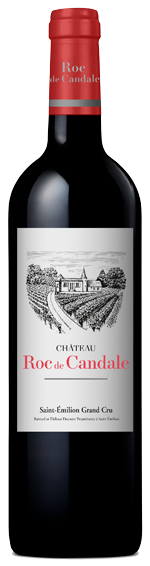
Château Roc de Candale

Saint-Émilion Grand Cru, France

MELLOW WINE STYLE

Château Roc de Candale has a bright purple color. The flattering bouquet is charming thanks to fine notes of spices. The wine is immediately pleasing with notes of fresh, ripe and juicy fruits. Château Roc de Candale offers sophisticated and spontaneous enjoyment.

Varietal: 90% Merlot, 10% Cabernet Franc
Analysis:
13.5% alcohol / volume
Harvest: By hand, in small crates
Average Yield: 25 hl/ha
Vinification: Soaking, pigeages (punching down the cap), and malolactic fermentation in barrels
Fermentation: 30 days
Vats: Wooden
Aging: 12 months in barrels
Production: 23,000 Bottles
Oenologist Consultant: Stéphane Derenoncourt

ABOUT THE VINEYARD
Château Roc de Candale was previously called Vieux Château Haut Béard. Its vineyard is close to that of Château de Candale and is planted at the foot of Saint-Emilion’s south-facing slope. The former owner brought together the two estates when he acquired Vieux Château Haut Béard after having purchased Château de Candale. Today, each growth has its own vineyard and cellar. In this way, the identity and style of each of them are preserved. 
Château Roc de Candale is planted on a more clay-silt terroir which gives the wine greater suppleness in its early years. Being less complex than its neighbor, it is a wine for more immediate enjoyment. Learn more here. 

ABOUT DECOSTER VINEYARDS:

Their story began in 2004 when Thibaut and Magali became wine-growers at Clos des Jacobins, though they had little ties to the world of wine-growing. Both came from Limoges, and they studied business and marketing in France and England. Eventually, Thibaut moved to the Bordeaux area and was taken on as a vineyard worker at a wine estate in Léognan. There, for a period of 3 years in the field, he practiced all the vine-growing tasks required to produce high-end reds and whites. In 2003, an opportunity came along for Thibaut and Magali to set up in Saint-Émilion. Clos des Jacobins and Château La Commanderie were up for sale, and one year later Thibaut and Magali were the new owners of the estates. Learn more about their story here. 

Wine club logoJoin our WINE CLUB and enjoy these amazing wines and pairing recipes each month. Plus, you’ll receive 10% off all retail wine purchases!

Learn More >

April Wine Club Pairing Recipe

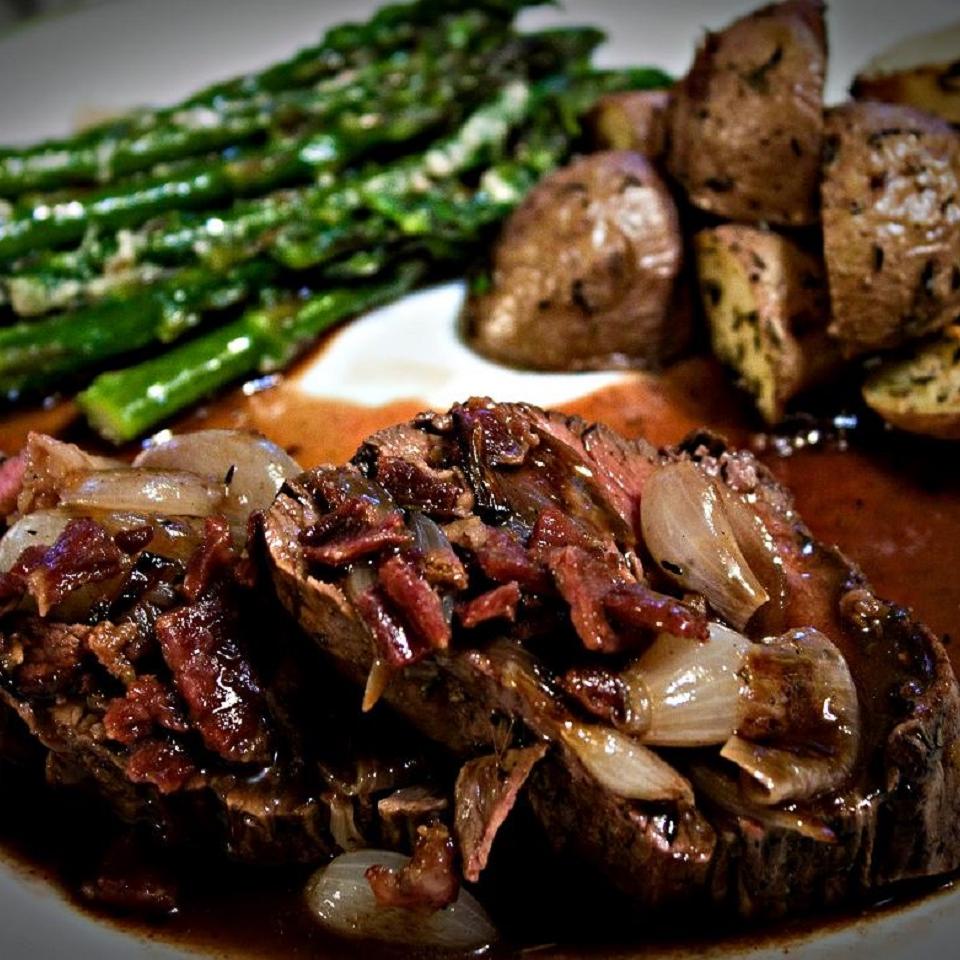
Beef Tenderloin with Roasted Shallots

Beef Tenderloin with Shallots

© Photo by All Recipes

INGREDIENTS:

  • ¾ pound shallots, halved lengthwise and peeled
  • 1 ½ tablespoons olive oil
  • salt and pepper to taste
  • 3 cups beef broth
  • ¾ cup port wine
  • 1 ½ teaspoons tomato paste
  • 2 pounds beef tenderloin roast, trimmed
  • 1 teaspoon dried thyme
  • 3 slices bacon, diced
  • 3 tablespoons butter
  • 1 tablespoon all-purpose flour
  • 4 sprigs watercress, for garnish

DIRECTIONS:

  1. Preheat oven to 375°F (190°C). In a 9-inch pie pan, toss shallots with oil to coat. Season with salt and pepper. Roast until shallots are deep brown and very tender, stirring occasionally, about 30 minutes.
  2. In a large saucepan, combine beef broth and port. Bring to a boil. Cook over high heat until the volume is reduced by half, about 30 minutes. Whisk in tomato paste. Set aside.
  3. Pat beef dry; sprinkle with thyme, salt and pepper. In a large roasting pan, set over medium heat on the stove top, sauté bacon until golden. Using a slotted spoon, transfer bacon to paper towels. Add beef to pan; brown on all sides over medium high heat, about 7 minutes.
  4. Transfer pan to oven. Roast beef until meat thermometer inserted into center registers 125°F (50°C) for medium rare, about 25 minutes. Transfer beef to platter. Tent loosely with foil.
  5. Spoon fat off top of pan drippings in roasting pan. Place pan over high heat on stove top. Add broth mixture, and bring to boil; stir to scrape up any browned bits. Transfer to a medium saucepan, and bring to simmer. Mix 1 ½ tablespoon butter and flour in small bowl to form smooth paste; whisk into broth mixture, and simmer until sauce thickens. Whisk in remaining butter. Stir in roasted shallots and reserved bacon. Season with salt and pepper.
  6. Cut beef into ½ inch thick slices. Spoon some sauce over, and garnish with watercress.

© Recipe courtesy of Christine L. from All Recipes.

APRIL WINE CLUB:

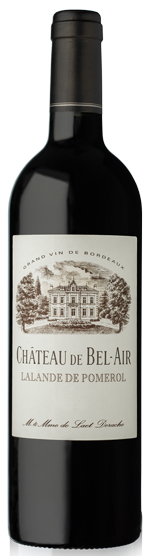
Mellow style logoChateau-de-Bel-Air-Lalande-de-Pomerol-bottle-webChâteau de Bel-Air
Merlot, Cabernet Franc, Cabernet Sauvignon

Lalande de Pomerol, France

MELLOW WINE STYLE

On the nose, Château de Bel-Air presents notes of red fruit and floral aromas; on the palate, a harmonious balance between flesh and tannins means it can be enjoyed after just a few years of cellaring. A delicate wine that is a perfect partner for refined dishes.
 
Varietal: 73% Merlot, 19% Cabernet Franc, 8% Cabernet Sauvignon
Analysis: 13-14% alcohol / volume
Viticulture: Culture Raisonnée, soil tilling or cover cropping
Harvest: Mechanical, with sorting in the cellar
Winemaking: Parcellary, in thermo-regulated concrete vats


Mentioned in the Cocks & Feret guides as one of the best wines of the appellation as early as 1922, Château de Bel-Air is situated on a sunny plateau that gently slopes southward. The historical quality of its wines and its privileged position, which guarantees the vineyard ideal sun exposure year-round, inspired owner Michel de Laet Derache to acquire the property in 2011. The vines, averaging 40 years of age, are planted on a terroir of gravel brought from the volcanic Massif Central by rivers during the quaternary era, with layers of iron rich clay. In order to best express the nuances of the site, the vineyard is managed and vinified plot by plot, with a respect for the different ages of the vines, varietals, and rootstocks. Vinification takes place in thermo-regulated concrete tanks. The wine is then mostly aged in oak barrels (45% new) for 12-18 months. 

Wine club logoJoin our WINE CLUB and enjoy these amazing wines and pairing recipes each month. Plus, you’ll receive 10% off all retail wine purchases!

Learn about our Memberships >


February Bubbly Club

Bubbly Wine ClubGustave_Lorentz_Cremant_dAlsace_Brut_Rose_Fact_new-format_JCGustave Lorentz
Crémant d’Alsace Brut Rosé
Alsace, France

BUBBLY WINE STYLE

The Cremant d’Alsace Rosé is made from Pinot Noir, which is full of charm and elegance. It makes a refined aperitif and an ideal cocktail or reception drink. Fresh and discreetly fruity, it inspires a host of gastronomic matches. This refined wine also works with hot and cold seafood appetizers, chicken, pork and other white meats & game, as well as some desserts. Serve chilled.

Analysis: 12.3% alcohol / volume
Varietals: 100% Pinot Noir
Total Acidity: 5.6 g/l
Residual Sugar: 7.8 g/l
Producer: Gustave Lorentz
Region: AOC Alsace
Country: France

WINEMAKING:
The grapes are carefully selected and vinified according to “Methode Champenoise.” After traditional fermentation “vin de base” in tanks, a second fermentation (“prise de mousse”) takes place in the cool cellars. It does not undergo malolactic fermentation. Aging is done “sur lie” between 14 and 18 months, with daily bottle rotation, going from a horizontal to vertical position, in order for the yeast deposit to accumulate in the neck of the bottle. At the time of “degorgement,” the neck is frozen and, enclosed in ice, the sediment is ejected by natural pressure, after which the bottle is corked and wired.

ABOUT THE WINERY:
Founded in 1836, Maison Gustave Lorentz owned 33 hectares of land on the hillsides of Bergheim in the heart of the Alsace wine region, 12.8 hectares of which are classified Grand Cru Altenberg de Bergheim, and 1.75 hectares Grand Cru Kanzlerberg. The first mention of the Lorentz family in the commune of Ribeauvillé dates back to the end of the Thirty Years’ War in the second half of the 17th century. They were innkeepers or coopers as well as ‘gourmets’, the old name given to wine merchants, which afforded them an important status in the local community. In 1748, winegrower and blacksmith Jean-Georges Lorentz was the first to settle in Bergheim, which later became the heart of our domaine. His son, Pierre Lorentz, was married to the youngest daughter of the Mayor of the time (Nicolas Schmitt). Generations passed with the birth of Jacques Lorentz in 1798 and Charles Lorentz in 1836. This same year, Maison Lorentz was founded in the commune of Bergheim. Today, Georges Lorentz has the honor of managing the estate, seven generations later.
To learn more about Gustave Lorentz Winery and family, click here.

Gustave Lorentz Vineyard

© Photo by: Gustave Lorentz Winery


Alma 4 Alma 4
Blanc de Blanc
Uco Valley, Mendoza, Argentina

BUBBLY WINE STYLE

Alma 4’s Blanc de Blanc Chardonnay is greenish yellow in color with slight tints of gold. It has persistent and delicate chains of small bubbles. The nose is quite shocking. It has strong flavors of fruits, such as fresh pear, as well as some citrus notes of mandarin peel and Kinoto. The fruit is balanced, the yeast is subtle, and the wood flavor is complex. On the mouth, it is creamy and fully. There is a harmony of sugar to acidity with an exotic fruit finish. It is long and complex. Intense and fresh. This sparkling wine is tasted with the 5 senses.

Analysis: 12.5% alcohol / volume
Varietals: 100% Chardonnay
Residual Sugar: 4.7 g/l
Acidity: 7.05 g/l
Region: Mendoza, Argentina
Appellation:
Uco Valley
Vineyard: Sustainably farmed – 1200-1550 meters in elevation
Production:Traditional method (Champenoise) using direct pressing. Fermentation begins at 59-64.4ºF for 20 days. 15% of Chardonnay is fermented in French oak barrels. No malolactic fermentation. The second fermentation is in bottles between 57.2º F and 60.8º F.
Disgorgement:
Performed manually
Time on Yeasts: 40 months

ABOUT THE WINERY:
Alma Cuatro (or Alma 4) began in 1999 as an experimental sparkling wine-making project led by four young people from Mendoza, with a strong investigative spirit: Mauricio, Agustín, Marcela and Sebastián. With passion, perseverance, friendship and work, these four friends came together to create a line of sparkling wines made by second fermentation in the bottle — combining innovation with the avant-garde method.
Learn more about these four friends and owners here.

Alma 4 Friends

© Photo by Alma 4

Bubbly Wine ClubLearn more about our Bubbly Club >